When sourcing precision metal components, manufacturers often face a choice between anodized CNC machining services and brass die casting. This article provides a direct, data-driven comparison to help you select the right process for your project. All information aligns with industry standards from ASTM and ISO, ensuring verifiable and actionable guidance.
01Core Differences: Anodized CNC Machining vs. Brass Die Casting
Source: ASTM B580-79(2019) for anodizing, NADCA Product Specification Standards for die casting.
02When to Choose Anodized CNC Machining Services
Select anodized CNC machining when you need:
Tight tolerances: Bearings, valve bodies, or optical mounts requiring ±0.005mm.
Low to medium volume: Prototypes to 5000 pcs. No mold cost makes it economical.
Hard, wear-resistant surface: Hard anodizing (Type III) produces a ceramic-like layer (Al₂O₃) that resists abrasion better than brass. For example, a pneumatic cylinder piston machined from 6061-T6 and hard anodized lasts 3x longer in salt spray tests than untreated brass (ASTM B117, >500 hours vs. <150 hours for brass).
Light weight: Aluminum is 1/3 the density of brass (2.70 g/cm³ vs. 8.53 g/cm³).
Common applications
Aerospace fittings (must meet AMS 2470/2471/2472)
Medical device housings (biocompatible after sealing)
Electronics heat sinks (anodizing improves thermal emissivity)
03When to Choose Brass Die Casting
Brass die casting is the better choice when:
High volume production: 10,000+ pcs. The per-part cost drops significantly after amortizing the mold.
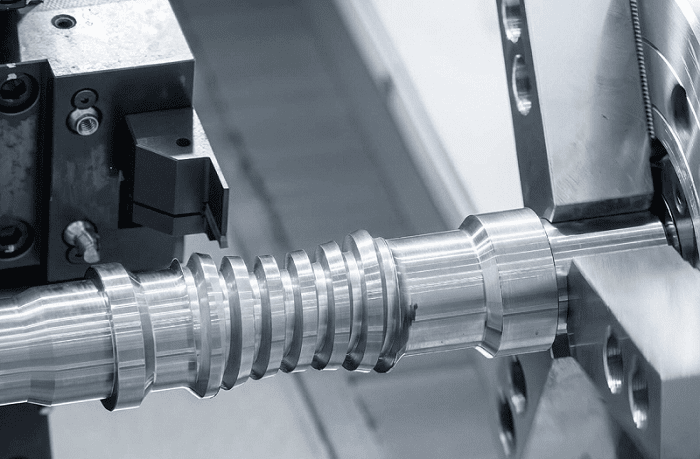
Conductivity requirements: Brass has excellent electrical (28% IACS) and thermal conductivity. For example, electrical connectors or water meter housings.
Complex shapes with thin walls: Die casting can produce walls as thin as 0.8mm, while CNC machining would require multiple setups and leave sharp internal corners.
Corrosion resistance without coating: Brass naturally resists corrosion in many environments (e.g., marine fittings). Note: Brass cannot be anodized. Any color or hardness requirement must be met by plating or lacquering.
Real-world example
A faucet manufacturer needed 50,000 valve bodies per year. Brass die casting produced each part at $0.42, while CNC machining from bar stock cost $2.10 per part. The mold cost $8,000, which was recovered within the first 20,000 units.
04Critical Limitation: Brass Cannot Be Anodized
This is a non-negotiable fact based on electrochemistry. Anodizing requires a metal that forms a porous oxide layer under controlled electrolysis. Aluminum, titanium, and magnesium work. Brass (copper-zinc alloy) does not form a self-ordered porous oxide; instead, it dissolves or forms a non-adherent film.
If you need an anodized finish, you must use aluminum CNC machining or aluminum die casting. Do not request anodized brass – it does not exist.
For brass color or hardness, alternative surface treatments include:
Electroplating (nickel, chrome, or gold)
Physical vapor deposition (PVD)
Clear or colored lacquer (less durable)
05Cost Comparison at Different Volumes
Costs based on average US/European shop rates as of 2025. Actual quotes vary by geometry and location.
06Step-by-Step Decision Framework
Follow this process to select the right service:
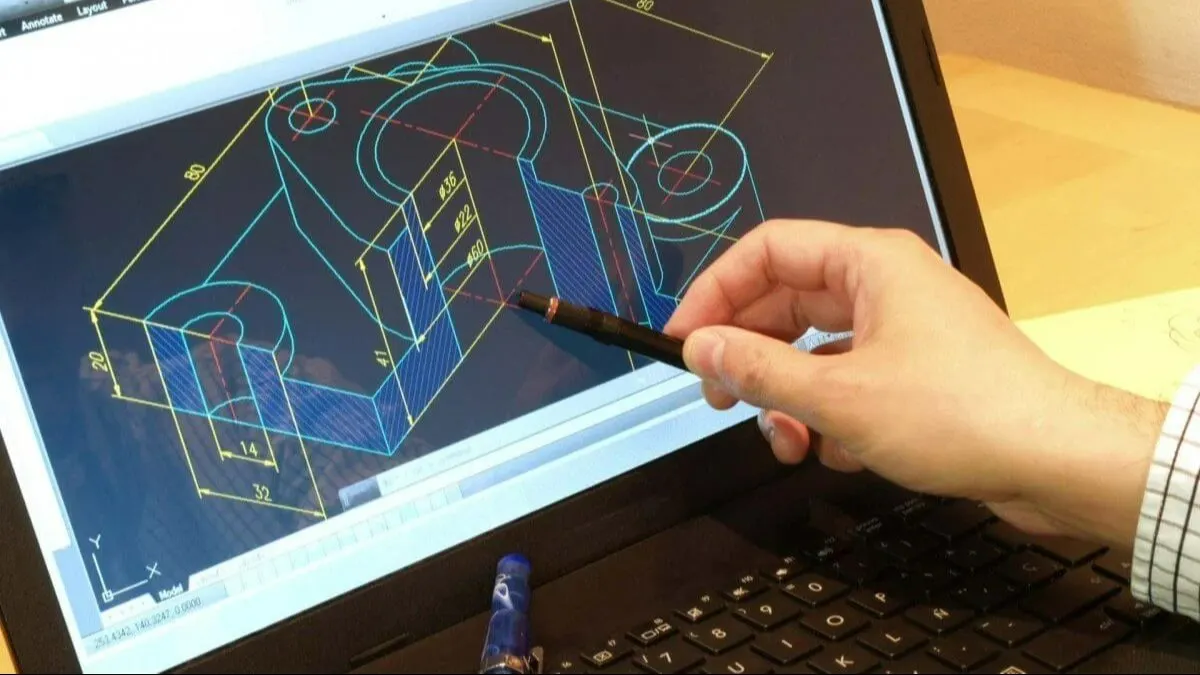
Step 1: Do you require an anodized surface (hardness, color, or electrical insulation)?
Yes → Use anodized CNC machining on aluminum. Stop here.
No → Proceed to Step 2.
Step 2: What is your annual volume?
Below 1000 pcs → Use anodized CNC machining (aluminum) or raw brass CNC machining.
1000-5000 pcs → Compare quotes. Both may be viable.
Above 5000 pcs → Brass die casting is likely cheaper.
Step 3: Check tolerance requirements.
Required tolerance ≤ ±0.01mm → Use CNC machining (any material). Die casting cannot hold this.
Tolerance ≥ ±0.05mm → Die casting is acceptable.
Step 4: Verify material properties.
Need non-sparking, high density, or machinability without lubricant? → Brass.
Need lightweight, high strength-to-weight ratio, or anodizing? → Aluminum CNC machining.
07Quality Verification Standards
When ordering anodized CNC machining, request:
Material cert: Mill test report per ASTM B209 (aluminum)
Anodizing cert: Thickness (µm), seal quality (dye spot test per MIL-A-8625 Type III), hardness (if specified)
Dimensional report: CMM data for critical features
When ordering brass die casting, request:
Material cert: Chemical composition per ASTM B584 (e.g., C36000 = 61.5% Cu, 35.5% Zn, 3% Pb)
Mechanical test: Tensile strength (min 310 MPa for C36000)
Pressure test: If housing fluids, specify leak test (e.g., 100 psi air under water)
08Common Mistakes to Avoid
Mistake 1: Asking for “anodized brass die casting” – impossible. Correct approach: Use aluminum CNC machining with hard anodize, or use brass with clear lacquer.
Mistake 2: Ordering die casting for prototypes – mold cost is wasted if design changes. Always prototype with CNC machining first.
Mistake 3: Ignoring internal radii – CNC mills require end mill radius (typically 1-3mm) in internal corners. Die casting can produce sharp corners (0.2-0.5mm radius).
Mistake 4: Over-specifying anodizing thickness for tight threads – Type III anodizing adds 25-50µm per surface, which can close up threaded holes by 0.05-0.1mm. Mask threads or specify pre-plate machining.
09Actionable Recommendations
Based on the above facts, here are clear action steps:
If your part requires a hard, colored, or insulating surface → Use anodized CNC machining on aluminum. Brass die casting is not an option.
If your volume is under 1000 pieces → Choose CNC machining (aluminum or brass). You will save mold costs and get parts in 1-2 weeks.
If your volume exceeds 10,000 pieces with loose tolerances (±0.05mm) → Brass die casting will reduce your per-part cost by 50-80% after the first production run.
Always request a design for manufacturability (DFM) review before committing to either process. A reputable service provider will identify potential issues with draft angles (for die casting) or tool access (for CNC machining).
Final conclusion: There is no single “best” process. The right choice depends on your volume, tolerance, and surface finish requirements. Use the decision framework in Section 6 to make a data-driven selection. For further verification, consult the latest ASTM, NADCA, or ISO standards listed in the references.