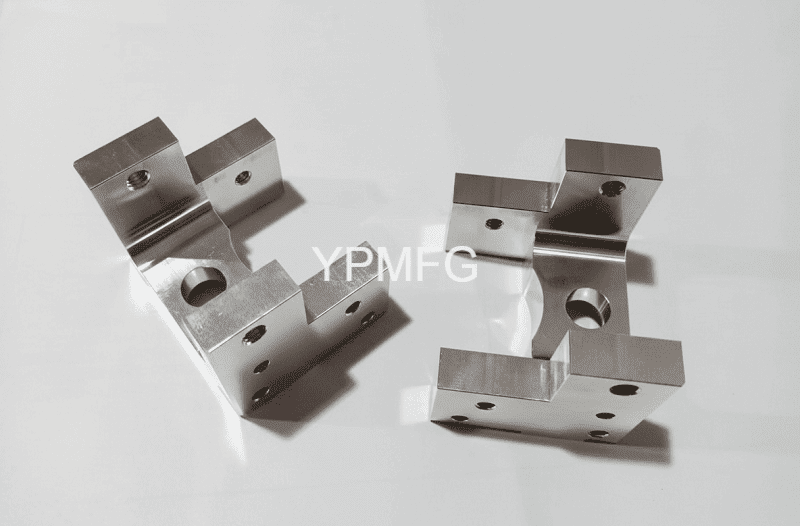
In the summer of 2018, I was in an off-campus training workshop, clutching oily gloves in my hands. Then, I walked around three pieces of equipment covered with aluminum shavings. However, even so, I still can't figure out the difference between CNC and milling machine that are rumored in the circle. Then, the instructor directly threw me a work order and asked me to mill grooves on the aluminum plate. On that day, I accidentally scratched my hand, and there are still small marks to this day. At that time, my mind was filled with scattered fragments of knowledge collected from the Internet. For a while, some people said that there was no difference between the two things; but for a while, some people said that they were completely different types of things. As a result, I can't find a clear logic of judgment at all.
01The entry-level stage of confusion
When I first entered the workshop, all I encountered were traditional milling machines. I had to shake the handwheel in three directions and hold the feed handle to move the tool. The amount of each tool travel had to be read with the naked eye and a caliper. There was a master in the same group who had been working for thirty years. He could clearly feel the slightest error even if his hands shook. At that time, our workshop was making a batch of small aluminum heat sinks, and it took 20 minutes to get one just by hand-processing at a single station. The seven or eight milling machines in the workshop were filled with white aluminum chips for most of the day. At that time, the term CNC had just begun to appear sporadically in the industry. When old technicians talked about the newly arrived electronic control equipment, they shook their heads and said that young people were proficient in playing it. They could not let go of their old hand-cranking skills and could not do tricks. For a while, I completely confused CNC milling and traditional manual milling machines. I felt that what they were called was just the difference between the old and new names in the industry. I couldn't understand the difference at all, and I didn't understand anything at all.
02Practical operation stage
At that time, the workshop was updating its processing equipment and received two processing units controlled by independent CNC systems. After starting up, the first thing I did was to learn to type G code to run the simulation program. At that time, my hands were full of stains, and I clutched the operating instructions tightly. I kept flipping through until the lights on the half-floor went out, and then I finally sorted out the basic tool path. I was deeply impressed by the impeller jig that was used to process a complex curved surface. I used an old-fashioned hand-operated milling machine to grind it, but it took two days to mill out a smooth curved edge. However, I put it on the CNC equipment and set up the path operation program. The part was directly processed in just two hours, and the tolerance was firmly within the range of 0.02 wire. During this period of time, I developed a very intuitive feeling. Ordinary traditional milling machines rely entirely on human skills to determine their own output upper limit. However, processing equipment with electronic control systems relies on pre-compiled logic. No matter who is operating it, the proficiency level can basically not widen the gap at the quality control end!
This year, after processing hundreds of batches of steel parts with different hardnesses, as well as aluminum alloy parts, and even photosensitive resin parts, the pitfalls I stepped on were accumulated into a whole notepad with a frosted cover. Only then did I slowly explore the clear boundaries between the applicable scenarios of the two types of equipment, and have a clear division.
03Project selection stage
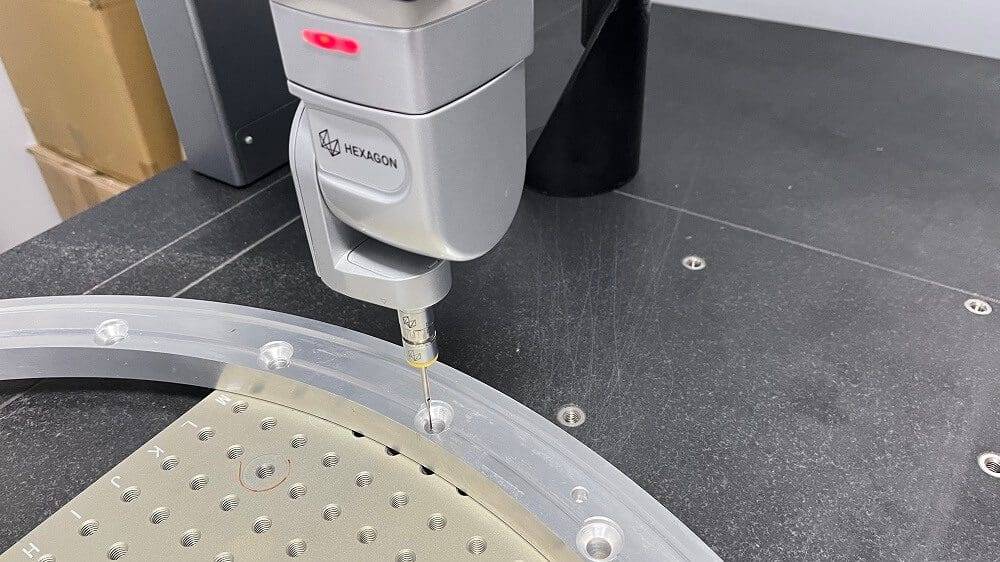
We received a mass production order at that time, and we had to process 30,000 sets of sheet metal forming pads with exactly the same structure at one time. The initial order plan was to reserve 20 old milling machines, and it took half a month to rush the goods. It is estimated that the scrap rate will definitely reach five points, not to mention whether skilled technicians can survive. Later, the team gritted their teeth and adjusted six CNC machining units, running them online 24 hours a day, and finally completed the entire set of work three days in advance. After counting, the scrap rate was less than two thousandths. After all, the total production expenses were cut by nearly 30% from the original plan. After collecting the last workpiece that day and cleaning up the workshop, the pile of aluminum shavings was thicker than the soles of shoes. When the co-workers gathered together to drink soda, everyone truly understood that the two types of things are not in opposition to each other and that one can replace the other. Each has its own suitable joint, so there is no need to rigidly argue about which one is better or more advanced.
During the order-taking process, I also received an urgent order for a single customized prototype. The customer was eager to request a test tooling made of special alloy. In total, less than ten test workpieces were needed to be milled. At this time, if you stood in front of the machine tool and clicked on the program for half an hour, it would be better to use a traditional milling machine. It can be completed in just two or three cuts after ten minutes, and the workpiece can be delivered in half an hour, which directly increases the efficiency three times. Until now, after repeated comparisons, I finally understood where the core of the selection logic is stuck. There is no distinction between right and wrong. It all depends on the need, rather than the rhetorical gimmick of who crushes whom.
04 Current practical summary stage
At present, in the industry circle, many newcomers to the industry start to talk over words and like to argue when they encounter problems related to machine names. Some people stubbornly insist that CNC refers to a complete set of equipment that can run a numerical control system. However, others think that milling The machine is just a milling machine, but it does not distinguish whether it is an electronically controlled or a manual milling machine. In fact, there is no need to dig out those literal, eight-part essay-like definitions. You must know that it falls into the actual workshop environment for verification, which is ten thousand times more important than just talking nonsense! Over the years, from the beginning of my internship to when I became the leader of the technical team, I took stock of the work order lists that were as high as a waist ruler. I personally handled and decomposed more than a thousand processing operations. The general guidelines for 100% compliance and perfect completion are nothing more than a few basic logics: First, we must clearly distinguish whether the processing operation is a customized small order or a mass production of large parts. If you want to complete the work simply and neatly, there is no need to get too hung up on the concept of specific names.
Now, the first lesson for new technicians in our workshop is that I always hold a piece of blank and stand next to two types of processing machine tools at the same time. I don’t need to explain the complicated and mysterious principles to demonstrate how to make a finished product. The differences are clearly displayed on the table, and no one will be confused for a long time. Our team has always maintained a reliable and in-depth partnership with yPMFG, and has a standardized reference plan for the entire processing process. Many of the contents are practical experience gained during this period of practice.
The order in which tasks are prioritized is the first step to determine the requirements attributes.
1. If it is a very small batch of manual repairs, it is preferable to use a traditional manual milling machine, which is trouble-free and efficient. There are no complicated twists and turns, and you can start the work directly and then complete the work.
2. If a medium-sized batch or a regular set of workpieces exceeding this scale is digitally processed, they are immediately thrown directly to the CNC processing unit and run for a whole day. The workpiece status is very stable, and there is no need to monitor and make adjustments.
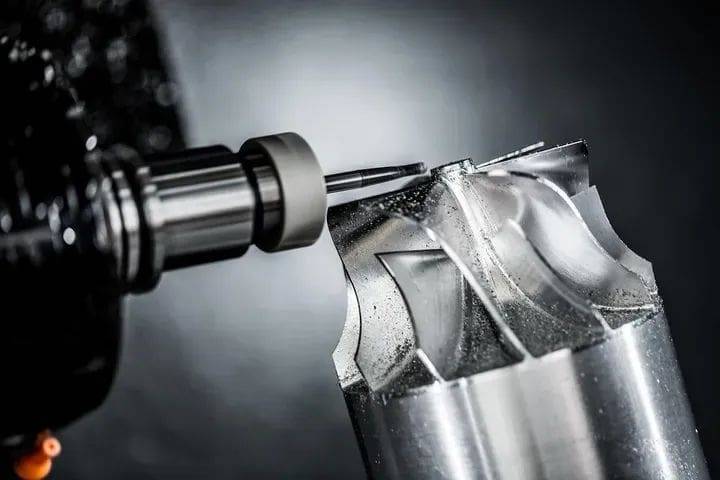
3. When it comes to work orders with multiple types of chores that change styles very quickly, the two types of equipment can be staggered and matched for production scheduling, which can control costs while ensuring the delivery cycle.
The core logic that needs to be repeatedly strengthened has always been very clear. It is not two sets of processing equipment to distinguish between high and low. There is no mutual exclusion or substitution between the two sets of equipment. When implemented, the production target is used as the criterion and products are selected according to needs, and there is no wrong plan.
The post-2000 apprentice I took under my wing last month has been in the industry for three months. After following this set of practical operation guidelines, the monthly work order yield rate is far higher than that of colleagues who have been in the job for nearly a year. They follow the original process and rely on their own random attempts to run orders. Not only does the yield rate increase by more than 10%, but the working hours are also shortened by nearly half. Now, when he meets new classmates, he always likes to share practical conclusions. How dare he easily believe the contradictory rhetoric fabricated on the Internet. After all, when something goes wrong at work, it is his own people in the workshop who bear the losses. It is really a big loss.
Frequently asked questions Q/A
Q: What is the quickest way for a newbie to figure out the difference between the two types of machines if they have just started in the industry?
First, go directly to the computer, and then practice it one after another. In this way, it will be comprehended several times faster than reading ten dry textbooks.
Q: A small workshop with more than a dozen people has a small budget and wants to add machines first. How should I choose?
Lock the priority of purchasing according to the order type that has the largest number of orders you currently receive, and do not blindly follow the trend of new products.
Q: Is the cost-effectiveness of adding CNC modification to old machines really as cost-effective as rumored?
Modifications are only useful if the basic machine bed is rigid enough. If modifications are made forcibly, the adaptation will be unstable and more money will be wasted.
Q: When students are short of funds for course experiments, which set of equipment is safer to buy second-hand?
A: Find a reliable experienced technician to accompany you to test the accuracy of the machine. Don’t just look at the nameplate numbers to fool you.
Q. When running CNC for an ultra-small single-piece test workpiece, why does it sometimes take longer to calculate:
A: Writing and debugging G code in advance takes more time than when the entire piece is produced, and the cost is much lower when switching to manual milling.
Dear fellow workers who are squatting on the production line in the dry workshop, you must not cling to the concept and fall into internal friction, let alone get entangled in the truth. Instead, you should adhere to the core idea of selecting models according to actual needs to promote the development of things and improve the yield rate of products. Try our best to reduce the working hours we can, and firmly control the delivery cycle in our own hands, so as to obtain realistic and reasonable output benefits. This is the most practical and reliable logical support point for us in the process of engaging in technical work and striving for life security.