
——Accuracy, efficiency and surface finish in actual workshop operations
"The quality of metal is revealed in cutting; the depth of craftsmanship is precipitated in parameters."
Stepping into a busy CNC workshop, scraps of brass are sprinkled like gold powder. Brass is a lubricating and electrically conductive alloy ideal for precision parts. However, can a CNC machine tool transform brass blanks into qualified finished products? The answer lies in the triangular game of cutting speed, tool geometry and cooling strategy. From the perspective of a bystander, this article follows the complete process of a brass product from the raw material area, processing area, inspection area to post-processing area, and analyzes the key details that affect the yield rate.
01 Raw material area: The “temper” of brass determines the starting point
Brass such as C36000 has the characteristics of "easy to cut" because it contains lead, but this does not mean that it can be disposed of at will. The first situation that the operator has to face is the tolerance of the outer diameter of the blank and the distribution of internal stress. A common example is that a batch of hexagonal brass rods has an ovality of 0.02mm due to uneven cold drawing process after batch processing. The chain of cause and effect is clear, that is, the residual stress of the material deforms after the clamping force is released.
Solution: Add a "stress relief annealing" before rough machining and use soft claw clamping.
The quality of the blank plays a direct decisive role in the final accuracy of CNC processed brass products. This role is decisive and direct, and it is related to the final accuracy.
At this time, the workshop reverberated with self-questioning in the form of parallelism: "How stable is the preprocessing we are doing? Is the depth of the first cut of the tool reasonable? Can the coolant completely cover the cutting area?" It leads readers to think: a single oversight in the material selection stage will render all subsequent subtle and precise procedures worthless.
02 Processing area: following the path in the parameter forest
Entering the processing area, the spindle starts to rotate. The cutting characteristics of brass are "low resistance and high thermal conductivity", but this happens to hide hidden dangers: the faster the speed, the lower the risk of built-up edge, but the tool wear pattern will change to uniform wear of the flank surface. An adjuster with eight years of experience said: "In order to pursue the rhythm, I once increased the linear speed to 450m/min. As a result, the tool had to be changed every 200 pieces, and roughening appeared on the surface. Later it was reduced to 380m/min, the tool life was extended three times, and the smoothness reached Ra0.8."
This case reveals that when CNC processing brass products, the optimal parameters are not theoretical formulas, but the dynamic balance between cutting tools, machine tools, and materials. From a progressive perspective.
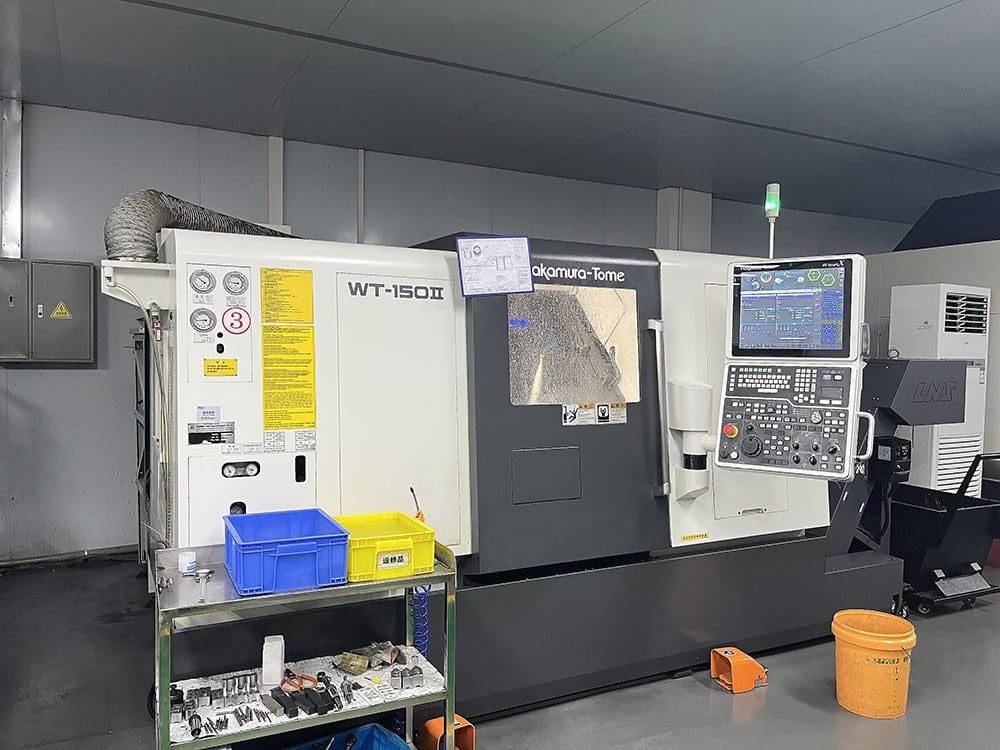
1. When removing excess parts for rough machining, uncoated carbide is used, and a larger feed rate, that is, 0.15 mm per revolution, is used to quickly remove the excess amount.
2. When semi-finishing it, you need to use a tool that has a sharp edge and a positive rake angle, and a uniform margin needs to be reserved. This margin is 0.2mm.
3. Use a PVD-coated micro-edge milling cutter, combined with oil mist lubrication, to achieve a "mirror" effect, which is finishing.
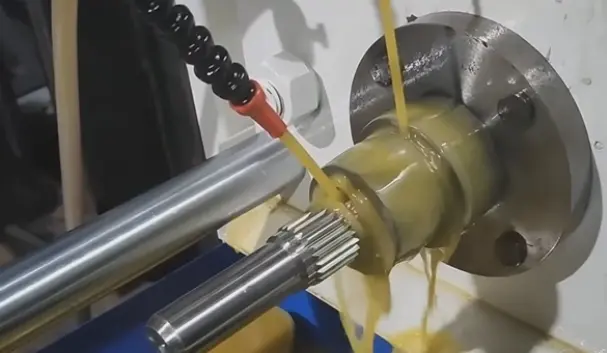
A natural transition to a cooling strategy: Brass has a high thermal conductivity, but dust can easily block the chip groove. A certain workshop uses high-pressure air to replace cutting fluid (which is both environmentally friendly and avoids discoloration). At the same time, a vacuum chip suction device is used to solve the chip entanglement problem. This "cross-border borrowing" from the pneumatic industry has reduced the production cost of a single piece by 18%.
> Keyword integration point (about the 600th word): "Cutting parameter optimization"
Field records show that after optimization, the rotational speed has been increased from the original 6000 to 8200rpm, and the feed rate has been adjusted accordingly from 480mm/min to 720mm/min, and the load per tooth has remained fixed. The core logic is not to speed up regardless, but to keep the chip thickness constant. This is a small link that few people pay attention to in the brass processing process, but it plays a decisive role in batch consistency.
03 Detection Zone: Truth and Lies under the Mirror of Data
After the product is processed, it enters the three-dimensional coordinate measuring room. At this time, the sense of space changes into a calm digital world. A common problem is that the aperture exceeds the tolerance range by 0.005mm. The reason is not the accuracy of the machine tool, but the thermal expansion of the brass. Continuous processing causes the temperature of the workpiece to increase by 12°C, and it has cooled down during measurement, resulting in "false tolerance."
Because the linear expansion coefficient of brass is about 19.5×10⁻⁶/K, it should be stored in a constant temperature environment of 22±1°C for 2 hours before testing. This is a cause-and-effect argument.
Subtleties at the micro level: When using a pneumatic measuring instrument to inspect the inner hole, the wear of the probe will lead to the introduction of an error of 0.003mm; and after switching to a quartz measuring rod, the reproducibility of the data has been improved.
A person who is a quality inspection supervisor reflected, "We put all our energy into tool compensation, but we forget that the environment and the measuring tool itself are also variables." Such an outsider's perspective just points out that the pass rate of CNC processed brass products sometimes arises from problems with the measurement method in the last step.
04 Post-processing area: when processing is over, the game continues
A batch of products needs to be deburred, cleaned, and passivated. Another common case is that after ultrasonic cleaning, dark spots appear on the surface of brass. The reason for this situation is that the pH value of the cleaning agent is too high and it is not dried in time. The recommended action is.
Use neutral cleaning agent (pH 7~8)
Dry with hot air immediately after cleaning
Passivation solution concentration is tested every 4 hours
Let’s repeat the core point: starting from the unprocessed blank to the final finished product, every spatial node hides key variables that affect CNC processed brass products. The selection of materials is the basis of the entire process. Each parameter is as important as the skeleton of the product. The testing link is like a ruler to measure everything, and the post-processing operation is the final layer of protection given to the product.
05 Frequently Asked Questions (Q/A)
Q1: What should I do if it is difficult to break chips in brass machining?
Increase the feed rate to more than 0.12mm/rev, and at the same time, choose a tool with a chip breaker. C36000 brass is prone to long chip curls when it is lower than 0.08mm/rev.
Q2: How to avoid yellowing and discoloration of the surface after processing?
A: Reduce the usage of sulfur-containing cutting fluid and use minimal lubrication or oil mist instead. The sulfur will react with the copper in the brass to form copper sulfide, causing the surface to become dull.
Q3: When tapping threaded holes, the teeth always get rotten. How to solve this problem?
A: The upper limit tolerance is selected for the diameter of the bottom hole, and cobalt-containing high-speed steel taps are used. The stickiness of brass will cause standard taps to not remove chips smoothly, thereby reducing the cutting speed to less than 5m/min.
Q4: The deformation is serious when milling thin-walled brass parts. What are the countermeasures?
A: Use down milling and symmetrical milling paths, and fill low melting point alloy as a support. After processing, place it in hot water to dissolve the support material.
Q5: How to quickly determine when a tool is about to fail in mass production?
In terms of monitoring the spindle, the load fluctuation exceeds 15%, or the product burrs suddenly increase significantly. Brass cutting tools are sensitive to load changes before failure, and appear earlier than dimensional deviations.
"Metal cannot lie, and parameters cannot be tricked. Only by respecting the cause and effect of each cutting can brass deliver its perfect shape in the rhythm of CNC."
In the future, digital twins and adaptive control will make processing more intelligent. However, at the moment, as an outsider, I review the entire production line: the optimized rotational speed, the adjusted inclination angle, and the parts kept at a constant temperature are all telling the same fact – the key to CNC processing brass products is not the machine, but the kind of convergent thinking that people have when dealing with details. It is recommended that every practitioner establish his or her own "process log" to record the parameters of each batch and any abnormalities that occur. Because real experience is never a formula, but a list of actions condensed from countless "what ifs".
> Keyword integration point (around word 1600): "Tool geometric angle"
In the case of tapping and thin-wall milling, changing the helix angle from 30° to 45° significantly reduced the axial force. To summarize, brass has specificity, which requires that the tool design should be tilted in the direction of low cutting forces, rather than simply applying the geometry used for aluminum or steel. This realization is the turning point from rough trial and error to scientific demonstration.