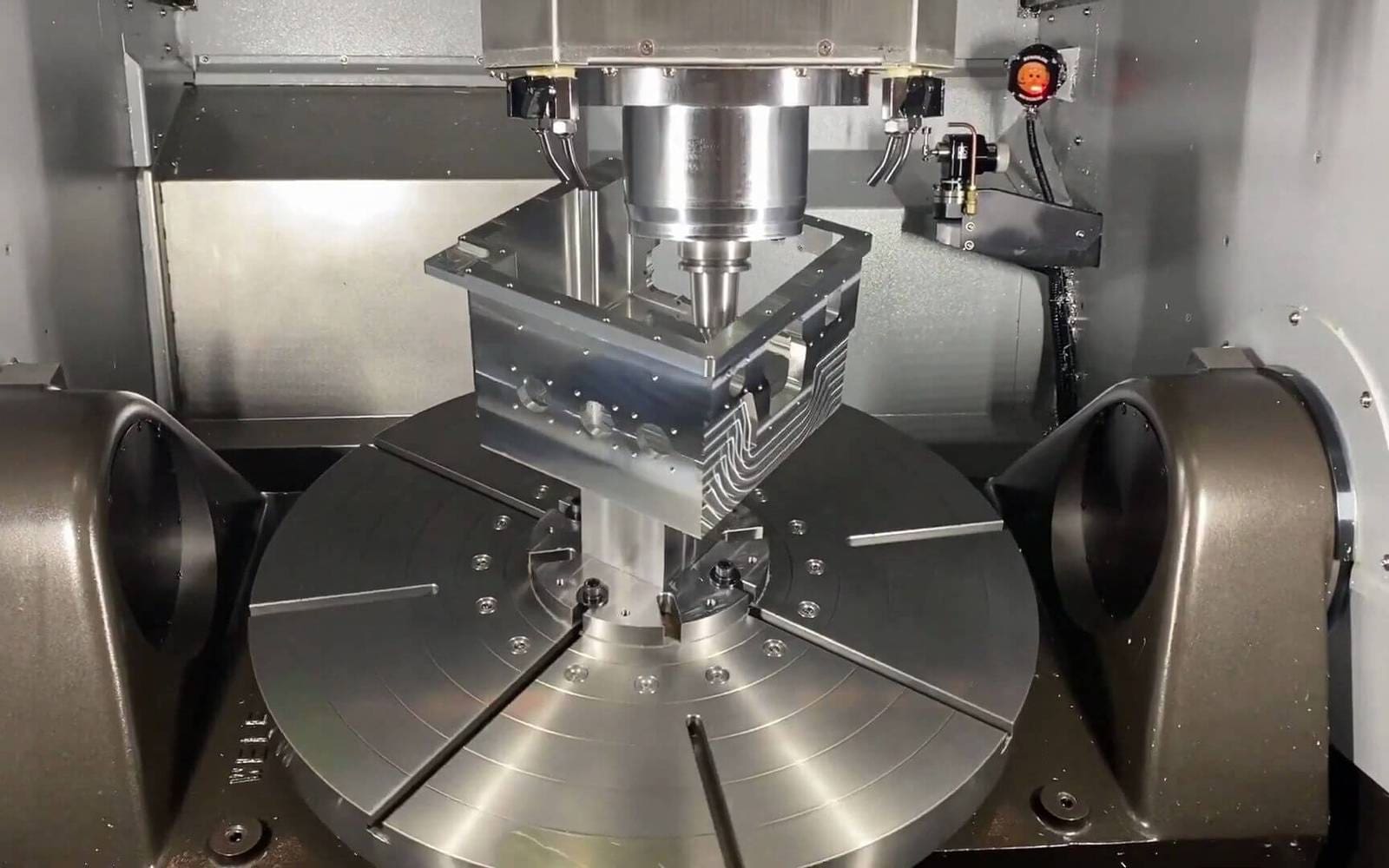
The automobile manufacturing industry is one of the key pillars of modern industry. With the rapid development of the global automotive sector and intensifying market competition, the requirements for precision, performance, and consistency in automotive parts have become increasingly stringent. Traditional machining methods can no longer meet the demands of modern automotive manufacturing in terms of efficiency, accuracy, and the ability to produce complex components.
The emergence and advancement of CNC (Computer Numerical Control) machining technology have provided a revolutionary solution for the production of automotive components. Through automation, high precision, and high efficiency, CNC machine tools have become the core equipment enabling intelligent and high-end production in automotive manufacturing enterprises.
Table of Contents
Ⅰ. Overview of CNC Machining Technology
CNC machining is an advanced manufacturing technology in which machine tool movements are controlled by computer programs. By inputting programmed instructions, the machine can automatically perform complex processes such as cutting, milling, drilling, and grinding, greatly improving machining precision and stability.
Compared with traditional machining, CNC technology offers the following advantages:
- High precision and repeatability: Micro-level precision control is achieved through servo systems and encoder feedback.
- Automation of the machining process: Reduces manual intervention, improving consistency and safety in production.
- Multi-axis linkage for complex structures: Suitable for curved and asymmetrical parts.
With the widespread application of CAD/CAM (Computer-Aided Design and Manufacturing) technologies, CNC machining enables a fully digital workflow from design to production, making automotive parts manufacturing more flexible and efficient.
In recent years, the widespread adoption of multi-axis CNC technology has further enhanced machining capabilities. 5-axis and even 9-axis machines can complete multi-surface and multi-angle operations in a single setup, significantly improving productivity and part quality, particularly vital for high-precision manufacturing of complex automotive components.

Ⅱ. Application Fields of CNC Machining in Automotive Components
1. Engine Component Machining
As the power core of a vehicle, the engine requires extremely high precision in part dimensions, fit tolerances, and surface finish. CNC machines play a critical role in manufacturing complex engine components such as crankshafts, connecting rods, cylinder blocks, cylinder heads, and camshafts.
High-Precision Crankshaft Machining
Crankshafts involve multiple eccentric structures and complex fillet transitions. Traditional machining struggles to ensure the coaxiality and balance between main and rod journals. Using five-axis machining technology, multi-surface milling and drilling can be completed in one setup, achieving precise geometric control that ensures smooth engine operation and minimal vibration.
Cylinder Block and Combustion Chamber Machining
Cylinder blocks feature holes, threads, and cooling passages that require strict geometric precision and surface smoothness. CNC drilling and boring can achieve positional accuracy within ±0.01 mm.
For combustion chambers and intake/exhaust ports, optimized CNC toolpaths ensure smooth surface consistency, improving combustion efficiency and sealing performance.
Aluminum Alloy Engine Structure Machining
For lightweight engine structures, CNC high-speed cutting efficiently machines aluminum alloys, reducing deformation and enhancing heat dissipation critical in new energy power systems.
2. Transmission System and Gearbox Machining
The transmission system connects the engine to the wheels and includes essential components such as gearboxes, clutches, and drive shafts. These parts bear high torque and alternating loads, demanding exceptional strength, rigidity, and gear accuracy.
High-Precision Gear Machining
CNC hobbing, shaping, and grinding achieve gear accuracy up to DIN grade 6 or higher. Numerical programming allows for profile modification and error compensation, significantly reducing noise and improving transmission efficiency.
Gearbox Housing and Clutch Cover Machining
Multi-axis CNC milling completes multi-hole and cavity machining in a single setup, ensuring hole-spacing consistency and positional accuracy, preventing oil leakage or noise caused by assembly misalignment.
Drive Shaft and Spline Shaft Machining
CNC turning-milling compound machines handle outer diameters, keyways, and threads simultaneously, minimizing multi-setup errors and increasing productivity. This type of machining greatly influences dynamic balance and fatigue life, making it one of the most mature CNC applications.


3. Chassis and Suspension Component Machining
The chassis system determines a vehicle’s handling and safety. Components such as suspension arms, steering knuckles, shock mounts, and control arms have complex geometries and must withstand high-impact and fatigue loads.
High-Strength Steel and Aluminum Alloy Machining
Five-axis CNC milling efficiently processes high-strength steels and 6061/7075 aluminum alloys, ensuring structural symmetry and stress balance to improve overall dynamic stability.
Hole Position and Fit Precision Control
CNC drilling and boring precisely maintain the coaxiality and perpendicularity of suspension brackets and bearing seats, ensuring accurate assembly and improving ride comfort and safety.
Automated Inspection and Error Compensation
Advanced production lines integrate in-process measurement systems that detect dimensional deviations in real time and automatically adjust tool compensation, ensuring consistent quality across all chassis components.
4. Body and Interior Component Machining
Car body and interior parts affect not only appearance but also safety and comfort. CNC machining enables complex shapes and high-quality surface finishes for these components.
Body Structure Machining
Roof frames, door frames, and dashboard skeletons are often made of aluminum or polymer composites. CNC high-speed milling and precision engraving enable lightweight design while ensuring assembly accuracy.
Interior Mold and Trim Part Machining
Interior molds—such as those for dashboards, air vents, and control panels require smooth, mark-free surfaces. CNC high-speed engraving can directly machine materials like PMMA, ABS, and PC, achieving a mirror-like finish.
Lighting and Reflector Machining
CNC machining is crucial for lighting molds. Using high-precision three-axis or five-axis milling ensures uniform reflector curvature, enhancing optical performance, illumination, and safety.


5. Other Typical Component Machining
Beyond the major systems above, CNC machining is widely applied in various other automotive parts:
- Starter motor housings and turbocharger casings:
Using high-temperature alloys and stainless steel, CNC machining enables precise forming of complex internal cavities and cooling structures. - Wheel hubs and brake components:
Turning-milling compound machining ensures high concentricity and balance, improving safety and comfort at high speeds. - Exhaust system components:
CNC laser cutting and numerical bending guarantee airtightness and vibration resistance of exhaust pipes.
Ⅲ. Technical Advantages of Multi-Axis CNC Machining
As automotive components become increasingly complex and precise, traditional three-axis machines are showing limitations in machining spatial curved surfaces and multi-angle holes. Multi-axis CNC machining technology, particularly five-axis simultaneous machining has become a mainstream direction in the automotive manufacturing industry due to its high precision, efficiency, and flexibility.
1. High-Precision Machining of Complex Surfaces
In structures such as engine combustion chambers, turbine blades, intake and exhaust passages, and suspension brackets, there are numerous complex 3D curved surfaces and inclined holes. Multi-axis machining centers can simultaneously control movements along the X, Y, and Z axes as well as two rotary axes, enabling the tool and workpiece to move relative to each other at any angle.
Reducing Setup Errors:
Traditional three-axis machining requires multiple setups, whereas five-axis machines can complete multi-face machining in a single clamping, effectively minimizing positioning errors and ensuring overall part accuracy.
Improving Machining Quality and Consistency:
Through simultaneous motion compensation and intelligent path control, the tool can maintain the optimal angle with the surface normal throughout the cutting path, achieving a surface roughness of Ra ≤ 0.8 μm.
Handling Complex Geometries:
For challenging structures such as turbocharger housings and engine intake manifolds, multi-axis machining can perform precise internal and external cutting within confined spaces, meeting stringent assembly requirements.
2. Significant Improvement in Efficiency and Automation
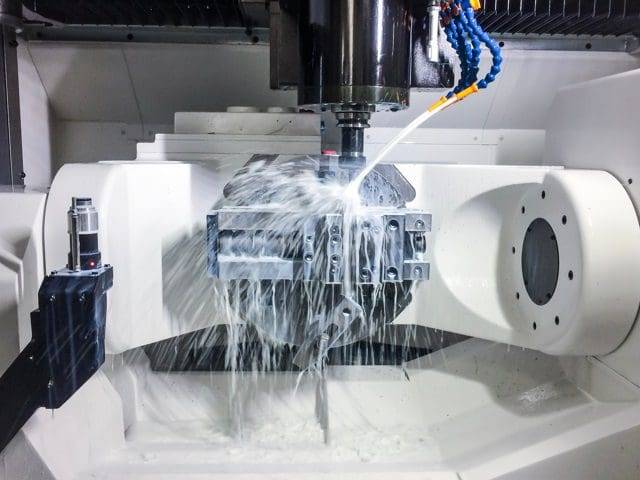
Multi-axis CNC machines are equipped with Automatic Tool Changers (ATC) and tool magazine management systems, enabling continuous operation and drastically reducing tool-change and setup times.
Integrated Multi-Process Machining:
A single multi-axis machine can perform turning, milling, drilling, and tapping simultaneously, realizing turn-mill compound machining and reducing time lost to process transitions.
Optimized Toolpath Planning:
By integrating CAD/CAM automatic programming and simulation, tool trajectories, feed rates, and cutting depths can be optimized before machining, improving overall production rhythm.
Unmanned Production Trend:
With the addition of robotic loading/unloading and automatic inspection systems, multi-axis machining units can operate 24 hours continuously, significantly enhancing production-line automation.
3. Strong Stability and Precision Control
High-precision CNC machines are equipped with temperature compensation and in-process measurement systems, maintaining machining accuracy even during prolonged operation.
Automatic Error Compensation:
By monitoring spindle thermal drift, tool wear, and vibration data in real time, the system automatically corrects deviations, keeping tolerances within the micron-level range.
High-Rigidity Structural Design:
Machine frames are built from high-strength cast iron or mineral composites, providing excellent vibration damping and minimizing resonance and deformation during high-speed cutting.
Intelligent Monitoring and Data Traceability:
CNC machines integrated with IoT technology can perform real-time monitoring of machining conditions, energy consumption statistics, and quality tracking, supporting lean production and full traceability.
4. Optimized Material Utilization and Green Manufacturing
With the trend toward vehicle lightweighting, materials such as aluminum, magnesium, and titanium alloys are increasingly used. Multi-axis machining enables precise control of tool entry and exit paths, reducing idle cutting and improving material utilization.
Reducing Cutting Waste:
High-speed milling combined with optimized toolpath strategies can reduce material waste by 20%–30%.
Improving Surface Finish and Reducing Post-Processing:
The excellent surface finish achieved eliminates or minimizes polishing and fine-grinding operations, reducing energy consumption and labor costs.
Energy Saving and Environmental Protection:
Modern CNC machines use servo energy-saving systems and coolant recycling and filtration, ensuring low-power operation that complies with green manufacturing standards.
5. Flexible Manufacturing and Rapid Response Capability
Modern automotive manufacturing emphasizes multi-variety, small-batch, and rapid-iteration production, especially in new energy vehicles and customized models. Multi-axis CNC machining offers outstanding flexibility and responsiveness.
Quick Changeover Production:
By simply modifying the machining program, operators can switch between part types quickly without cumbersome fixture changes.
Adaptability to Customized and Complex Designs:
Supports rapid prototyping and validation of diverse structural components, particularly valuable during new model development stages.
Shortened Delivery Cycles:
With single programming and multi-axis machining, production time is significantly reduced, enabling automotive manufacturers to accelerate market responsiveness.
Ⅳ. Multi-Axis CNC Machining Applications in Automotive Parts Manufacturing
(1) Five-Axis Simultaneous Machining Technology
In automotive component manufacturing, five-axis simultaneous machining technology has been widely adopted. This is an advanced CNC machining method that enables the tool to move along five axes simultaneously, achieving high-precision and complex part machining.
Specifically, the five axes refer to three linear translation axes (X, Y, and Z) and two rotational axes (A and B). Under program control, the movement trajectory of the tool is precisely managed, allowing for intricate geometrical machining. The core advantage of this technology lies in its ability to process parts with extremely complex shapes.
A summary of five-axis machining applications in engine cylinders, crankshafts, and turbochargers is shown in Table.
| Component | Characteristics | Processing Parameters | Processing Challenges |
|---|---|---|---|
| Engine Cylinder | High-precision internal cavity shape, precise fuel injector holes and spark plug holes, high surface quality requirements | Internal cavity diameter, shape, and positional accuracy, hole diameter, position, and orientation, surface roughness | Complexity of internal cavity shape, accuracy and consistency of hole machining, surface quality control |
| Crankshaft | Complex rotational surfaces, high balance and lightweight requirements, precision of journal and connecting rod necks | Journal diameter, shape, and position accuracy, weight reduction hole location and shape, surface roughness | Difficulty in machining rotational surfaces, complexity of lightweight hole machining, precision of journal and connecting rod necks |
| Turbocharger | Complex blade shapes, high-precision bearing housings, high aerodynamic performance requirements | Blade shape, size, and position accuracy, bearing housing shape and position accuracy, surface roughness | Difficulty in machining blade shapes, precision of bearing housing shapes, optimization of aerodynamic performance |
Engine Cylinder Machining:
Five-axis machining centers allow precise control over the internal geometry of engine cylinders. In machining the combustion chamber, intake, and exhaust ports, program accuracy is critical to ensure proper shape control and improved combustion efficiency.
Cylinder walls also feature injection and spark plug holes, which have complex spatial orientations. Their machining accuracy relies heavily on five-axis technology to ensure correct position and direction.
Crankshaft Machining:
In crankshaft production, five-axis machining enables complex surface processing and the drilling of lightweighting holes.
- For complex surface machining, five-axis technology allows machining of main and rod journals in a single setup, improving both efficiency and precision.
- For lightweighting holes, the shape and position can be precisely controlled, reducing the crankshaft’s weight while maintaining balance and structural integrity.
Turbocharger Machining:
Turbocharger blades often feature intricate 3D curved surfaces. To ensure boosting efficiency and noise reduction, five-axis machining ensures the blades are precisely shaped. Additionally, the bearing housing—a complex structural component—requires high-precision machining using five-axis technology to guarantee smooth and stable bearing operation.
(2) CNC Programming and Simulation Technology
Advanced CNC programming software can generate complex machining programs, which are then validated and optimized through simulation to improve machining efficiency and safety. In automotive part manufacturing, CNC programming and simulation are mainly applied in the following ways:
(1) CNC Programming:
Multi-axis CNC machines rely on CAD/CAM software for automated precision machining.
- Engineers use CAD software to design 3D models of parts.
- CAM software then generates machining programs, which are imported into CNC machines for automated processing.
- In CAM systems, operators can also directly write or optimize G-code and M-code to fine-tune machine operations.
- Many CAM platforms include automatic programming functions, which generate optimized toolpaths based on part geometry and machining requirements.
(2) Simulation and Collision Detection:
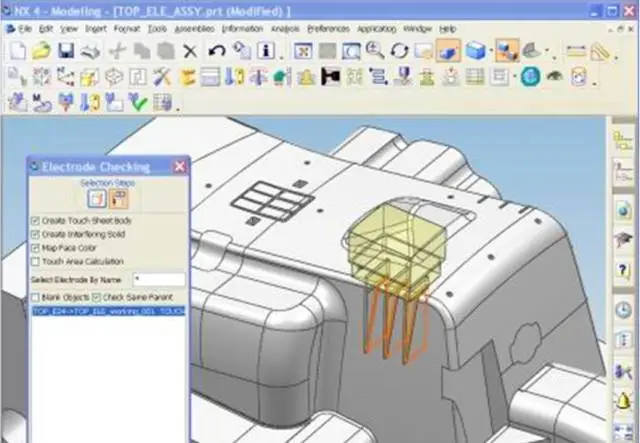
Simulation allows engineers to visualize and verify machining operations before execution.
- Collision detection ensures that tools and fixtures do not interfere during cutting, improving process safety.
- Simulations help optimize toolpaths, minimizing idle movements and enhancing overall efficiency.
- Engineers can also fine-tune cutting parameters such as cutting speed, feed rate, and depth of cut—to determine the best combination for precision machining.
Example – Gearbox Machining:
During gearbox housing production:
- In the design stage, CAD software is used to model internal layouts, holes, and threads with high precision.
- In the programming stage, the CAD model is imported into CAM software to optimize cutting parameters.
- During simulation, collision detection ensures safe tool movements, optimizing toolpaths for better surface finish and efficiency.
- Finally, in the machining stage, the generated program is uploaded to the CNC machine, which executes the operations automatically.
(3) Error Compensation Technology
In multi-axis CNC machining of automotive components, systematic and cutting-force-induced errors may occur. Error compensation technology minimizes these errors, thereby enhancing machining precision and product quality.
This technology uses software algorithms to automatically correct deviations caused during machining. Common sources of error include machine structural imperfections, thermal deformation, tool wear, and workpiece clamping inaccuracies. By continuously monitoring machine motion and process data, the system dynamically adjusts toolpaths to achieve real-time compensation.
Applications of error compensation technology in automotive machining include:
(1) Machine Error Compensation:
Using built-in compensation software provided by manufacturers, linear, rotational, and thermal errors can be corrected—crucial for achieving high precision in automotive parts requiring tight tolerances.
(2) Tool Wear Compensation:
As cutting tools gradually wear during machining, dimensional accuracy declines. With wear monitoring, compensation software can automatically adjust machining parameters to maintain part precision.
(3) Workpiece Clamping Error Compensation:
Misalignment or deformation during clamping can cause errors. Error compensation adjusts the toolpath in real time to auto-correct positional deviations, maintaining high accuracy.
(4) Dynamic Error Compensation:
Machine vibration and friction during cutting can lead to dynamic errors. Continuous monitoring and adaptive adjustment of machining parameters mitigate these effects, ensuring consistent dimensional accuracy.
(5) Thermal Deformation Compensation:
Temperature variations can cause thermal distortion of machine tools and workpieces, affecting accuracy. Real-time temperature monitoring combined with compensation algorithms minimizes these effects, maintaining machining stability and quality.
Ⅴ. Advantages and Development Prospects of CNC Machining in the Automotive Industry
In the automotive manufacturing sector, CNC (Computer Numerical Control) machining with its high precision, efficiency, and flexible production capabilities has become a key driver of industrial upgrading. It not only greatly improves the machining quality and consistency of components but also provides solid technical support for intelligent manufacturing and green production.
1. Technical Advantages
(1) Higher Machining Precision
CNC machine tools, through precise numerical control systems, can achieve micron-level dimensional tolerance control, meeting the stringent accuracy requirements of critical components such as engines and transmissions.
(2) Remarkably Improved Production Efficiency
The use of automatic tool changers (ATC), five-axis simultaneous machining, and multi-station fixtures allows CNC machines to complete multiple processes in a single setup, greatly reducing labor time and assembly errors.
(3) Strong Machining Flexibility
CNC machining programs can be rapidly adjusted according to design changes, perfectly fitting the needs of multi-variety, small-batch, or customized production, which aligns with the current automotive industry trend toward diverse models and short production runs.
(4) Excellent Surface Quality and Consistency
High-speed spindles and stable toolpath planning ensure exceptional surface smoothness. Different production batches maintain high uniformity, ensuring reliable performance during subsequent assembly.

2. Future Development Trends
(1) Development Toward High Precision and High Speed
With improvements in CNC control systems and advances in cutting tool materials, CNC machining will continue evolving toward higher spindle speeds and finer precision, shortening machining cycles and enhancing productivity.
(2) Integration of Intelligence and Data Analytics
By combining AI algorithms and big data analytics, CNC machines will achieve adaptive machining, predictive maintenance, and automated quality inspection, effectively reducing scrap rates and maintenance costs.
(3) Green Manufacturing and Energy-Saving Processes
Future CNC machining will increasingly adopt eco-friendly lubricants, dry cutting, and material recycling technologies, supporting the automotive industry’s transition toward low-carbon production.
(4) Flexible Manufacturing Integrated with Collaborative Robotics
Through integration with collaborative robots (cobots), AGV material handling systems, and MES (Manufacturing Execution Systems), CNC machining will enable automated loading/unloading, real-time scheduling, and unmanned operation, creating highly efficient intelligent workshops.
3. Expanded Applications in New Energy and Smart Vehicles
With the rapid advancement of electrification and intelligent vehicle technologies, CNC machining is being widely applied in the production of:
- Electric drive system components (e.g., motor housings, rotor shafts, reduction gears)
- Battery system structures (e.g., battery enclosures, cooling plates, mounting brackets)
- Onboard sensor housings and smart control module supports
These components demand higher dimensional precision, thermal stability, and structural strength, making CNC machining an indispensable technology to ensure performance reliability.
Ⅵ. Conclusion
As a foundational technology in modern automotive manufacturing, CNC machining has become deeply integrated into every stage of the automotive supply chain. From engines and transmissions to chassis, body, and electronic systems, it ensures high-precision component production while propelling the industry toward intelligent, automated, and eco-friendly transformation.
In the future, with the fusion of artificial intelligence, cloud manufacturing, and robotics, CNC machining will continue to evolve into an advanced intelligent manufacturing system, injecting new vitality and competitiveness into the global automotive industry. The continuous innovation of CNC technology not only represents an upgrade in manufacturing capability but also marks the beginning of a new era of high-end intelligent automotive production. Contact Us Today!