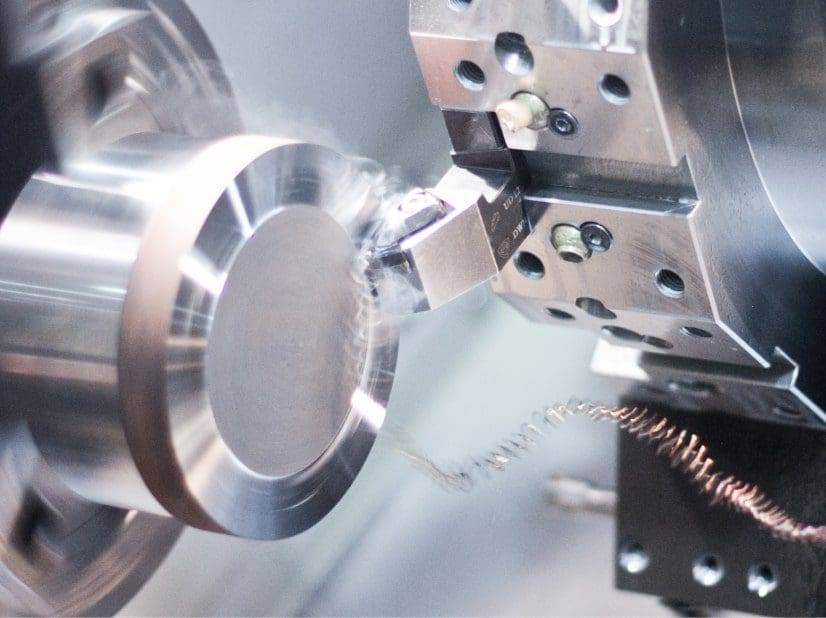
Sheet metal bending and cutting are fundamental processes in modern manufacturing, used daily to create brackets, enclosures, panels, and countless other parts. Whether you work in a small workshop or a large fabrication facility, understanding the correct methods, common pitfalls, and best practices is essential to achieve accurate, repeatable results and avoid material waste or part failure.
This guide provides a complete, step-by-step overview of sheet metal bending and cutting. You will learn the core techniques, key parameters (like bend allowance and kerf width), typical problems and their solutions, and a clear action plan to apply immediately.
01Core Cutting Methods for Sheet Metal
Before any bending can happen, you need precise cut blanks. The three most widely used cutting processes are:
1.1 Shearing
How it works: A straight-line cut using an upper and lower blade. One blade moves down to shear the metal.
Best for: Cutting large sheets into smaller rectangles or squares. Typical material thickness: 0.5mm–6mm for mild steel.
Key parameters: Blade gap (typically 5–10% of material thickness), rake angle, and hold-down pressure.
Common issue: Burr formation on the cut edge. Solution: adjust blade clearance to 5–8% of thickness for steel.
1.2 Laser Cutting
How it works: A focused high-power laser beam melts or vaporizes the metal, assisted by a gas jet (oxygen, nitrogen, or compressed air).
Best for: Complex shapes, small holes, tight tolerances (±0.1mm), and thin to medium gauges (0.5mm–20mm depending on laser power).
Key parameters: Cutting speed, focal point position, assist gas pressure, and power output.
Common issue: Dross (re-solidified metal) on the bottom edge. Solution: use nitrogen for clean cuts on stainless steel or aluminum; adjust focus slightly upward for thicker plates.
1.3 Plasma Cutting
How it works: An ionized gas jet conducts an electric arc to cut conductive metals.
Best for: Thick plates (6mm–50mm+),rough cutting, and materials like mild steel, stainless, and aluminum where laser is too slow or expensive.
Key parameters: Amperage, torch height, cut speed, and gas flow.
Common issue: Bevel angle (tapered edge). Solution: reduce cut speed and ensure torch is perpendicular to the plate.
Real-world example: A workshop cutting 100 pieces of 2mm stainless steel brackets. Using laser cutting with nitrogen assist gas produces clean, burr-free edges ready for bending. Using shearing would be faster for straight cuts but cannot handle the internal cutouts.
02Sheet Metal Bending Basics
Bending reshapes a flat sheet by applying force along a straight axis. The most common method is air bending on a press brake.
2.1 Critical Bending Parameters

To get a correct bend every time, you must know these four values:
Why bend allowance matters: If you cut a blank to the exact sum of flat leg lengths, the finished part will be too short. You must add bend allowance (for bends less than 90°) or subtract bend deduction. Without correct BA, your final part dimensions can be off by 1–2mm per bend – unacceptable for precision assemblies.
2.2 Common Bending Defects and Fixes
Defect 1: Cracking on the outside radius
Cause: Bend radius too tight for the material (e.g., trying R=1mm on 3mm 6061 aluminum).
Fix: Increase bend radius to at least 2×T for aluminum, 1×T for mild steel, or anneal the material.
Defect 2: Springback – the angle opens after bending
Cause: Elastic recovery of the metal. Typical springback: 1–3° for mild steel, 5–10° for high-strength steel or stainless.
Fix: Overbend by the springback amount. For a 90° target, bend to 88° (steel) or 85° (stainless). Use a bend allowance chart specific to your material.
Defect 3: Warping or twisting along the bend line
Cause: Uneven bending force, or bending a narrow flange next to a large cutout.
Fix: Ensure the punch contacts the full bend length simultaneously. Add stiffening ribs or bend in a sequence from the center outward.
Real-world example: A fabricator bends a 2mm aluminum sheet (5052) to 90° using a V-die opening of 16mm (8×T). The inside radius naturally forms about 2mm (equal to T). No cracking occurs. However, springback is 4°, so they overbend to 86° – after release, the part measures 90° exactly.
03Sequence of Operations: Cut First, Then Bend
Always complete all cutting (including holes, notches, and slots) before bending. Exceptions exist (e.g., bending then laser cutting to avoid distortion), but for 95% of parts, this rule holds.
Why cut-first-bend-later?
Accuracy: Bend allowance calculations rely on a flat blank. Bending a cut blank gives predictable results; cutting a bent part is difficult to fixture.
Tooling interference: A pre-bent part may not lie flat on the laser or punch table.
Distortion: Bending can stretch cutouts slightly, but that is acceptable. Cutting after bending may cause heat distortion on an already-formed part.
Step-by-step workflow for a typical bracket (example: L-bracket, 100×50mm, 2mm steel, 90° bend at 50mm mark):
1. Calculate flat blank length: Leg A (100mm) + Leg B (50mm) – Bend deduction (for 2mm steel, R=2mm, V=16mm, BD ≈ 3.3mm) = 146.7mm.
2. Cut blank: Laser cut a rectangle 146.7mm × (width) with any holes.
3. Mark bend line: Measure 50mm from one edge (the inside of the bend). For air bending, the bend line is the edge of the punch.
4. Set up press brake: Choose V-die = 16mm, punch radius = 2mm. Adjust back gauge to position the sheet.
5. Bend: Apply force until the angle reaches 86° (to compensate for 4° springback). Release.
6. Inspect: Check angle with a protractor; measure leg lengths (should be 100mm and 50mm ±0.3mm).
04Material Selection Impact on Bending and Cutting
Different metals behave very differently. Use this quick reference:
Critical note: For 6061-T6 aluminum, always cut and then bend across the grain direction if possible, and use a generous inside radius (at least 3×T). Better yet, use 5052-H32 for bending applications.
05Quality Control Checklist Before and After Bending & Cutting
Use this checklist to avoid rework:
Before cutting:
[ ] Material grade and thickness confirmed with supplier certificate.
[ ] Flat pattern includes bend allowance (not just sum of external dimensions).
[ ] Holes placed at least 2×T away from bend line (otherwise they deform into ovals). Minimum distance = bend radius + T.
[ ] Part orientation respects grain direction (bending across grain reduces cracking risk).
After cutting (before bending):
[ ] No excessive burr (max 10% of T). Deburr if needed.
[ ] No dross on laser-cut edges (for stainless and aluminum, should be absent with N₂).
[ ] Flatness within 0.5mm per 300mm.
After bending:
[ ] Bend angle tolerance: ±1° for general fabrication, ±0.5° for precision.
[ ] No cracks visible under 5× magnification.
[ ] No galling or scratches on the outside surface (check die clearance).
[ ] Leg length dimensions within ±0.3mm.
06Common Mistakes and How to Avoid Them
Based on real shop floor experience, these are the top five errors:
Mistake #1: Ignoring grain direction – Cutting a blank so that the bend line is parallel to the rolling direction on aluminum or high-strength steel causes cracking. Solution: Rotate the flat pattern 90° so the bend line is perpendicular to the grain.
Mistake #2: Using the wrong V-die opening – Too narrow (e.g., 6×T on thick steel) requires excessive tonnage and can crack the material; too wide (e.g., 12×T on thin sheet) produces a large radius and inaccurate bend angles. Solution: Stick to 8×T for mild steel and stainless, 10×T for aluminum.
Mistake #3: Forgetting springback – Many beginners bend exactly to 90°, then find the part at 93°. Solution: Make a test bend on a scrap piece of the same material, measure the actual springback, and adjust your target angle.
Mistake #4: Placing holes too close to the bend line – A hole within the deformation zone (about 1.5×T from the bend line) will stretch into an oval or tear. Solution: Move holes at least bend radius + T away from the bend line. If that’s impossible, cut the holes after bending.
Mistake #5: Cutting internal corners with a sharp radius – Laser cutting a 0mm radius (sharp inside corner) creates a stress concentration that cracks during bending. Solution: Always add a corner radius of at least half the material thickness (0.5×T) on all internal cutouts.
07Action Plan to Get Perfect Bends and Cuts Every Time
Follow these seven steps for your next sheet metal project:
1. Select the right material – Match grade to bend requirements (e.g., 5052 aluminum not 6061-T6 for tight bends).
2. Calculate the flat blank – Use bend allowance or bend deduction formulas. Verify with a simple test piece.
3. Cut with the appropriate method – Laser for complex precision parts; shearing for simple rectangles; plasma for thick plates.
4. Deburr and inspect the blank – Remove sharp edges and burrs that could crack the bend.
5. Set up the press brake correctly – Choose V-die = 8×T, punch radius = target inside radius. Test on scrap.
6. Measure springback – Bend a 90° test piece, measure actual angle, then set the machine to overbend by the difference.
7. Bend in the correct sequence – Start from the center of the part and move outward; avoid bending flanges that will later block access.
Final core reminder: The two most critical numbers in sheet metal bending and cutting are bend allowance (or deduction) and springback compensation. Without accurate allowance, your flat blank will produce wrong-sized parts. Without springback compensation, your bend angles will be off. Master these two, and 90% of your problems disappear.
08Recommended Immediate Next Steps
For beginners: Practice on 1.5mm mild steel – cut three 200×50mm blanks, mark bend lines at 50mm and 100mm, then bend to 90°. Measure the results. Repeat until you achieve ±0.5mm leg length accuracy.
For experienced fabricators: Document your actual bend deduction values for each material thickness and V-die combination in a shop chart. This eliminates guesswork and saves hours of rework.
Always keep a sample log: Record material grade, thickness, V-die, punch radius, target angle, overbend angle, and final measured angle. After 10–20 entries, you will have a personalized reference table.
By applying the principles and checklists above, you will reduce scrap rates, improve dimensional accuracy, and produce professional-grade bent and cut sheet metal parts consistently. No matter your shop’s equipment – from a manual press brake to a CNC laser – these fundamentals remain the same. Start with a test piece, measure twice, and bend with confidence.