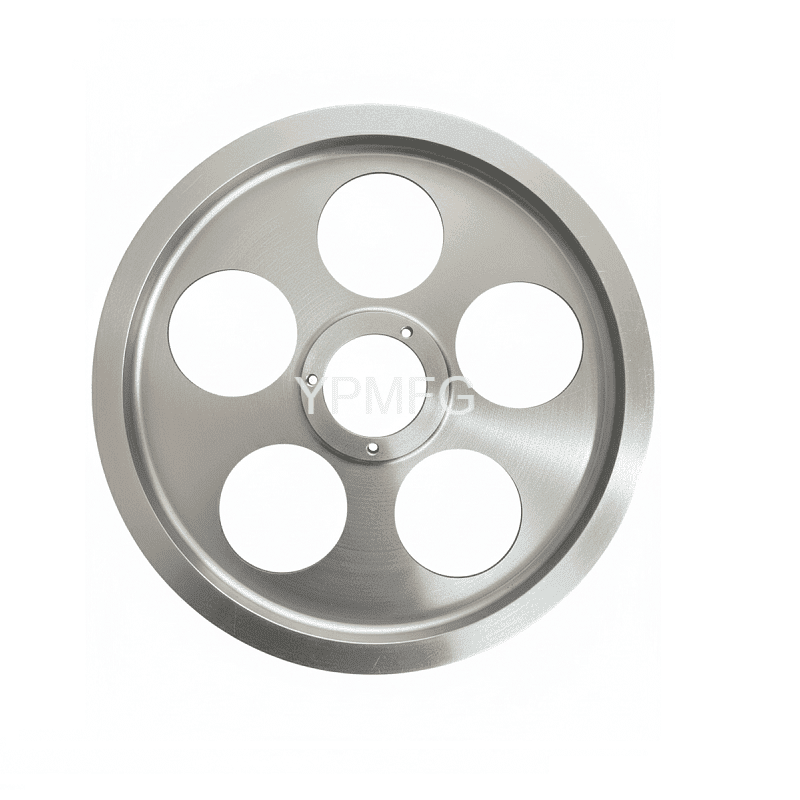
Aluminum sheet metal fabrication is the process of cutting, bending, welding, stamping, and assembling aluminum sheets into custom parts or structural components. Whether you need a prototype enclosure for electronics, an industrial equipment panel, automotive brackets, or low-volume custom aluminum parts, following proven aluminum sheet metal fabrication practices can improve dimensional accuracy, structural strength, surface quality, and cost efficiency. Compared with steel, aluminum is lightweight, corrosion-resistant, easy to machine, and visually appealing, making it widely used in electronics, automotive, aerospace, medical devices, and industrial manufacturing. As a brand focused on high-precision custom manufacturing services, YPMFG can support customers with aluminum sheet fabrication, material selection guidance, design optimization, surface finishing, and quality inspection to help businesses move efficiently from prototype validation to batch production. This guide explains the essential steps in an aluminum sheet metal fabrication project, including material selection, design requirements, cutting methods, bending processes, welding techniques, surface finishing, quality control, and the key cost factors that affect your final project outcome.
01Why Aluminum? Core Advantages for Fabrication
Aluminum is widely chosen for sheet metal work because of three key properties:
Light weight (about one-third the density of steel)
Natural corrosion resistance (forms a protective oxide layer)
High formability (can be bent, stamped, and deep-drawn without cracking)
Common alloys used in fabrication:
> Source: ASM Handbook, Volume 14B – Sheet Metal Forming
02The Fabrication Process: Step-by-Step
Step 1: Design for Manufacturability (DFM)
Before cutting any metal, ensure your CAD model follows these rules:
Minimum bend radius = 1× material thickness (for 5052) or 1.5× (for 6061-T6)
Hole diameter ≥ material thickness (to avoid punch breakage)
Slot width ≥ 1.5× material thickness
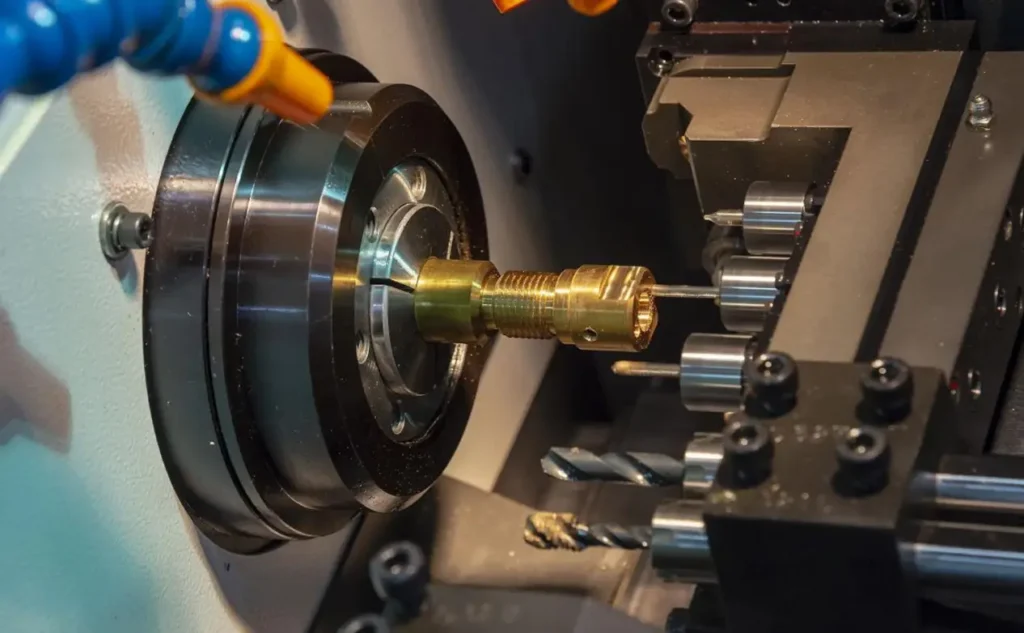
Common mistake: A small workshop once designed a 2mm hole in 3mm thick 6061 sheet – the punch broke on the 10th part. After increasing the hole to 3.2mm, production ran smoothly.
Step 2: Cutting – Laser, Waterjet, or Shearing
Laser cutting – Best for complex shapes, tight tolerances (±0.1mm). Suitable for thickness up to 8mm.
Waterjet cutting – No heat-affected zone, ideal for thick plates (up to 25mm) or heat-sensitive parts.
Shearing – Low-cost for straight cuts on thin sheets (≤3mm), but leaves burrs.
Recommendation: For most prototyping and low-to-mid volume production (1–1000 pieces), fiber laser cutting offers the best balance of speed, accuracy, and cost.
Step 3: Bending – Press Brake Operations
Aluminum requires careful bending to avoid cracking:
Use larger bend radii than steel (see DFM table above)
Bend across the grain direction whenever possible (bending parallel to grain causes cracks)
Typical springback for 6061-T6: 2–3 degrees – overbend to compensate
Real-world example: A manufacturer making aluminum brackets for solar panels used a 1mm inner radius on 2mm thick 5052 sheet. After 500 parts, no cracking was observed. When they switched to 6061-T6 with the same tooling, 15% of parts cracked. Increasing the radius to 2mm solved the problem.
Step 4: Welding – TIG and MIG Methods
Critical rule: Always remove the aluminum oxide layer (using a stainless steel brush dedicated to aluminum only) before welding. Oxide melts at 2050°C while base aluminum melts at 660°C – trapped oxide causes contamination.
Step 5: Surface Finishing – Anodizing, Powder Coating, or Mill Finish
Anodizing (Type II or III) – Increases surface hardness, allows dye coloring. Standard thickness: 5–25 microns.
Powder coating – Provides thick protection (60–120 microns) but hides small details.
Mill finish – Lowest cost, but oxidation may cause uneven appearance.
Action tip: If your part will be anodized,specify alloy 6061 or 5052. Avoid 5000 series with high magnesium (e.g., 5086) – they produce smut during anodizing.
03Quality Control: How to Verify Your Fabricated Parts
Perform these three checks before accepting any batch:
1. Dimensional inspection – Use calipers or CMM to check critical holes and bend angles. Tolerance standard: ISO 2768-m (medium) is typical for general fabrication.
2. Surface condition – Look for scratches, dents, or burn marks. Laser-cut edges should be dross-free.
3. Bend test – For structural parts, bend a sample coupon 180° over a radius equal to material thickness. No visible cracks = acceptable.
> Authority reference: These criteria align with ASTM B209 (standard specification for aluminum sheet) and AWS D1.2 (structural welding code – aluminum).
04Common Problems and Solutions (Based on Real Shop Floor Experience)
05How to Choose a Fabrication Partner (Actionable Advice)
If you are outsourcing your aluminum sheet metal parts, follow this checklist:
Ask for material certifications – Reputable shops provide mill test reports (MTRs) for each alloy batch.
Check their bending capabilities – Maximum tonnage and bed length. For example, a 100-ton press brake can bend 3mm thick 6061 up to 2.5m length.
Request a sample – Even a small coupon shows their edge quality, bend consistency, and surface care.
Verify lead time – Standard fabrication takes 5–10 business days for 50–200 parts, plus 3–5 days for finishing.
Red flags to avoid: Shops that cannot tell you the exact alloy temper (e.g., 6061-T6 vs -O), or those that claim “no springback” on aluminum – springback is inevitable and must be compensated.
06Action Plan: Your Next Steps for a Successful Project
1. Finalize your design – Apply the DFM rules from Section 2. Use CAD software with sheet metal modules (e.g., SolidWorks, Fusion 360) to automatically calculate flat patterns.
2. Select the right alloy – Match alloy to application: 5052 for formed enclosures, 6061 for load-bearing parts, 3003 for deep-drawn housings.
3. Get three quotes – Provide a 2D drawing with tolerances and a 3D STEP file. Compare not just price but also lead time and finishing options.
4. Inspect the first article – Before full production, request a single finished part. Measure all critical dimensions and test fit assembly.
5. Document everything – Keep your design files, material certs, and inspection reports. This traceability is essential for ISO or AS9100 compliance.
07Conclusion: Master the Basics, Avoid Costly Rework
Aluminum sheet metal fabrication becomes highly predictable, stable, and cost-effective when you respect the material’s properties. In any aluminum sheet metal fabrication project, the key is to choose the right alloy, use an appropriate bend radius based on sheet thickness, and remove the oxide layer before welding to reduce cracking, distortion, weld defects, and rework risks. For example, a small electronics company once saved about $4,000 in rework on a 1.2mm thick 5052 aluminum chassis simply by changing the bend radius from 0.8mm to 1.5mm. This shows that many fabrication problems are not caused by complex manufacturing challenges, but by overlooking material behavior and DFM rules during the early design stage. By following the step-by-step process above, including material selection, structural design, cutting, bending, welding, surface finishing, and quality control, you can significantly improve first-pass success rates for your aluminum fabrication project.
Your immediate action is to review your current part design against the DFM table in Section 2, with special attention to every bend radius. If any bend radius is below the recommended value, revise it now. This five-minute check can help prevent days of scrap, rework, and production delays later. For new aluminum sheet metal fabrication projects, always order a material sample and a first-article part before committing to full production. This allows you to verify material performance, dimensional accuracy, bend quality, surface condition, and assembly fit before scaling up. As a brand focused on high-precision custom manufacturing services, YPMFG can support customers with aluminum sheet fabrication DFM analysis, material guidance, first-article validation, and batch production, helping businesses reduce manufacturing risks and consistently receive high-quality aluminum parts that meet design requirements.