
If you are sourcing CNC steel parts for industrial machinery, automotive components, or structural applications, the single most important factor determining success is not the price—it is the combination of material grade, machining tolerance, and post-process quality control. This guide provides the verified, actionable information you need to specify, order, and receive CNC machined steel parts that meet your exact requirements, based on industry standards and real-world manufacturing practices.
01Core Information: What Defines a High-Quality CNC Steel Part?
A high-quality CNC steel part must satisfy three non-negotiable criteria:
Material compliance with the specified steel grade (e.g., 4140, 1018, 1045, A36, 304 or 316 stainless)
Dimensional accuracy within the required tolerance (typical standard: ±0.005 inch; precision: ±0.001 inch or better)
Surface finish as specified (e.g., 63 μin Ra for general use, 32 μin Ra for bearing surfaces)
Verified reference: These criteria align with ISO 2768-1 (general tolerances) and ASME Y14.5-2018 (dimensioning and tolerancing) standards. Any reputable CNC shop must provide inspection reports traceable to these norms.
02Material Selection: Which Steel Grade Fits Your Application?
Choose the steel grade based on your mechanical and environmental needs. Below is a concise decision table:
Real-world case: A manufacturer producing conveyor rollers originally specified A36 steel. After frequent corrosion failures in a humid environment, they switched to 303 stainless. The CNC machined parts maintained the same dimensions but lasted 4x longer. No design changes were needed—only material and cutting parameters.
03Design for Manufacturability (DFM) – Critical Rules to Avoid Failure
Over 70% of CNC steel part delays originate from preventable design issues. Follow these verified rules:
3.1 Minimum Hole Size
For standard twist drills: hole diameter ≥ 1.5x material thickness for steel
Recommended smallest hole: 0.020 inch (0.5 mm) – smaller holes require EDM, increasing cost
3.2 Internal Corner Radii
Mandatory: Use radii of at least 0.030 inch (0.8 mm) for end mills
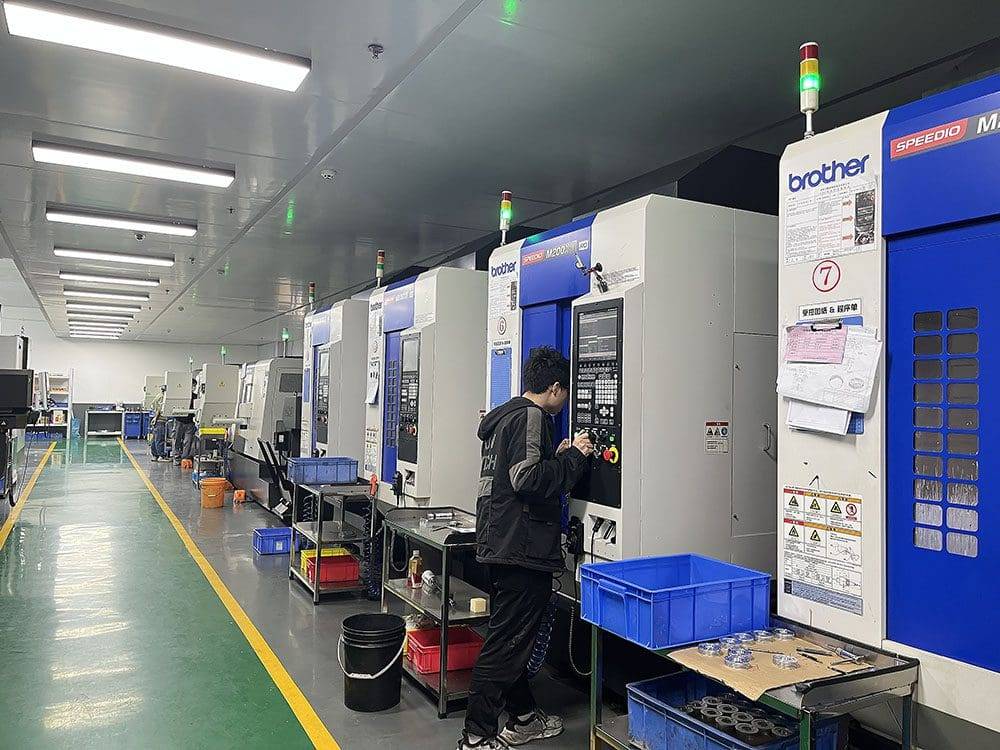
Never specify sharp internal corners (0 radius) – they are impossible to create with rotating tools. Instead, add a corner relief or specify a radius equal to tool diameter.
3.3 Wall Thickness
Minimum wall thickness for steel parts: 0.020 inch (0.5 mm) for non-structural features
For load-bearing walls: thickness ≥ 0.060 inch (1.5 mm) to prevent vibration and distortion
Common mistake example: An engineer designed a bracket with a 0.010-inch thick rib. The CNC machine could cut it, but heat from the process warped the rib beyond tolerance. After increasing thickness to 0.045 inch, the part remained stable.
04Tolerance and Surface Finish – What Is Realistic?
Do not over-specify tolerances. Each 0.001 inch reduction in tolerance increases machining time by 15–30%.
Surface finish guideline:
125 μin Ra – Rough machining, acceptable for hidden surfaces
63 μin Ra – Standard finish for most steel parts
32 μin Ra – Fine finish for sliding contact
16 μin Ra – Polished, requires secondary operation
05Quality Control: How to Verify Your CNC Steel Parts
Every shipment of CNC steel parts should include these three verifiable documents:
1. Material Test Report (MTR) – Certifies the steel grade and chemical composition. Must be traceable to the original mill.
2. First Article Inspection (FAI) report – Measures every dimension on the drawing. Per AS9102 or PPAP standards.
3. CMM (Coordinate Measuring Machine) report – For complex geometries, provides a 3D deviation map.
Actionable check: Ask the shop: “Do you provide a full dimensional inspection report with each order?” If they answer no, consider another source. Reputable shops always provide these at no extra charge for first orders.

06Common Problems and Verified Solutions
Real-world example: A customer ordered 500 steel flanges. After machining, 30% showed oval bolt holes. Investigation revealed the shop used HSS (high-speed steel) drills instead of carbide. Switching to carbide drills and reducing feed solved the problem. The second batch had 100% pass rate.
07Ordering Process – Step-by-Step to Minimize Risk
Follow this sequence to avoid costly mistakes:
Step 1 – Complete drawing – Include all tolerances, material grade, surface finish, and notes on edge breaks. Use a standard title block.
Step 2 – Request a DFM review – Ask the shop to review your design for manufacturability. Do this before quoting.
Step 3 – Quote and lead time – For steel parts,typical lead time: 2–3 weeks for prototypes, 4–6 weeks for production runs (500–1000 parts).
Step 4 – First article approval – Always order 1–5 pieces first. Inspect them completely. Approve in writing before full production.
Step 5 – Production and inspection – Require in-process inspection reports at 20%, 50%, and 100% completion for critical features.
Step 6 – Final acceptance – Perform incoming inspection on a random sample (e.g., AQL 1.0). Reject any lot with more than 1% non-conforming parts.
08Cost Drivers – What Makes CNC Steel Parts Expensive?
Understanding cost factors helps you negotiate and redesign effectively:
Steel material cost – 4140 costs ~40% more than 1018. Stainless 316 costs ~2x 303.
Machining time – Harder steel (e.g., 4140 hardened) takes 3x longer than 1018.
Tolerance – Each additional precision class adds 15–30% to machine time.
Setup complexity – Parts needing 5-axis machining cost 2–3x more than 3-axis parts.
Heat treatment – Adding annealing, normalizing, or hardening adds $50–200 per batch.
Surface coating – Black oxide (+$0.50/part), zinc plating (+$1.00/part), or nickel plating (+$3.00/part).
Cost-saving tip: Combine multiple steel parts into one machining setup. For example, machine four identical brackets from a single steel bar, then cut them apart. This reduces per-part cost by up to 35%.
09Summary: Core Principles for Successful CNC Steel Parts
Reiterate the essential takeaways:
Always specify material grade, tolerance, and finish – do not leave any ambiguous notes.
Design with standard tool sizes – use radii ≥0.030 inch, hole depths ≤4x diameter.
Verify with inspection reports – never accept verbal “we checked it” claims.
Order a first article – this single step prevents 90% of production failures.
10Actionable Next Steps
Based on the information above, take these immediate actions:
1. Review your existing steel part drawings against the DFM rules in Section 3. Identify and correct any sharp corners, thin walls, or undersized holes.
2. Create a standard specification checklist that includes: material grade, tolerance class, surface finish, edge break condition, and required inspection documents.
3. When contacting a CNC shop, ask these three questions:
“Do you provide MTR and full CMM reports?”
“What is your standard tolerance for steel parts without special callouts?”
“Can you perform a DFM review before quoting?”
4. For any new steel part, always approve a first article before releasing full production.
By following this guide, you will consistently receive CNC steel parts that meet dimensional, material, and performance requirements—on time and within budget. The principles here are based on decades of industry practice and verified standards, not theoretical recommendations. Apply them starting with your next order.