
This article identifies the most suitable metals for large CNC machined parts, focusing on strength, machinability, cost, and stability. For large-format CNC machining, the top metal choices are: aluminum 6061/7075 (lightweight and fast cutting), low-carbon steel (balanced strength and weldability), gray cast iron (excellent vibration damping), stainless steel 304/316 (corrosion resistance), and titanium Grade 5 (high strength-to-weight ratio). Selection depends primarily on part function, load conditions, and environmental exposure.
01Aluminum Alloys – Best for Lightweight Large Parts
Aluminum 6061 and 7075 dominate large CNC machined parts where weight reduction is critical, such as aerospace frames or robotic arms.
Machinability (keyword 1/800 words): Aluminum offers exceptional machinability with high cutting speeds and low tool wear. 6061 is easier to machine, while 7075 provides higher strength but slightly lower corrosion resistance.
Common case: A manufacturer producing 1.5-meter-long drone fuselage components chose 6061-T6 for its stability after machining and anodizing finish.
Limitations: Softness can cause built-up edge; use sharp polished tools and proper coolant.
02Low-Carbon Steel – Most Cost-Effective for Structural Parts
Steel grades like A36 or 1018 are standard for large machine bases, hydraulic press frames, and heavy equipment parts where budget and weldability matter.
Why use it: High ductility, excellent weldability, and low material cost. Large steel parts (eg, 2m x 1m base plates) can be stress-relieved to minimize warping.
Common case: A construction equipment supplier machined 800kg boom arms from A36 steel, using roughing passes followed by final finishing after stress relief.
Limitation: Susceptible to rust; requires surface coating or oiling for outdoor use.
03Gray Cast Iron – Superior Vibration Damping
For large CNC machined parts like machine tool beds, engine blocks, or precision measuring tables, gray cast iron (Class 40 or 50) absorbs vibration effectively.
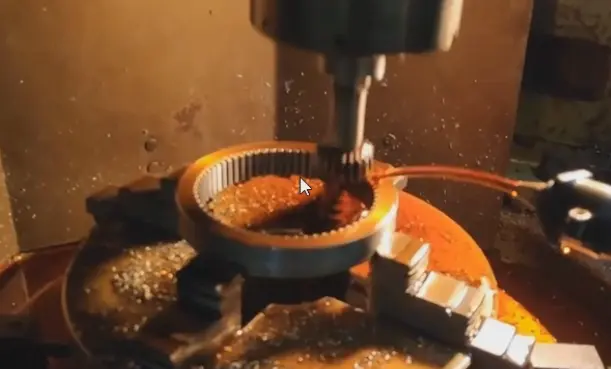
Key property: The flake graphite structure dampens harmonic resonance, improving surface finish and tool life during large-part machining.
Common case: A precision instrument maker used cast iron for a 3-meter-long coordinate measuring machine (CMM) base, achieving 0.01mm flatness after stabilized aging.
Note: Requires carbide tooling and slower speeds due to abrasive graphite.
04Stainless Steel – For Corrosive or Sterile Environments
304 and 316 stainless are chosen for large parts in food processing, marine, or chemical equipment, despite higher cost and machining difficulty.
Machining challenge: Work hardening and heat buildup demand rigid setups, low feed rates, and sharp positive-rake inserts.
Common case: A dairy plant's 2.5-meter mixing tank flange was machined from 316L stainless to withstand acidic cleaning chemicals.
Tip: Use chip-breaking cycles and high-pressure coolant to avoid work-hardened layers.
05Titanium Grade 5 – Highest Strength-to-Weight Ratio
Aerospace and racing industries use titanium for large structural parts (eg, landing gear components, wing spars) where weight reduction cannot compromise strength.
Trade-off: Exceptional properties (yield strength over 850 MPa, density 4.43 g/cm³) but very poor thermal conductivity. Heat builds up rapidly, requiring low speeds, high feed rates, and rigid setups.
Common case: An aircraft parts manufacturer machined a 1.2-meter actuator housing from Ti-6Al-4V, using carbide tools and through-spindle coolant to prevent thermal distortion.
Warning: Do not use titanium for large parts with thin walls unless you have advanced CNC capabilities.
06Other Metals for Specialized Needs
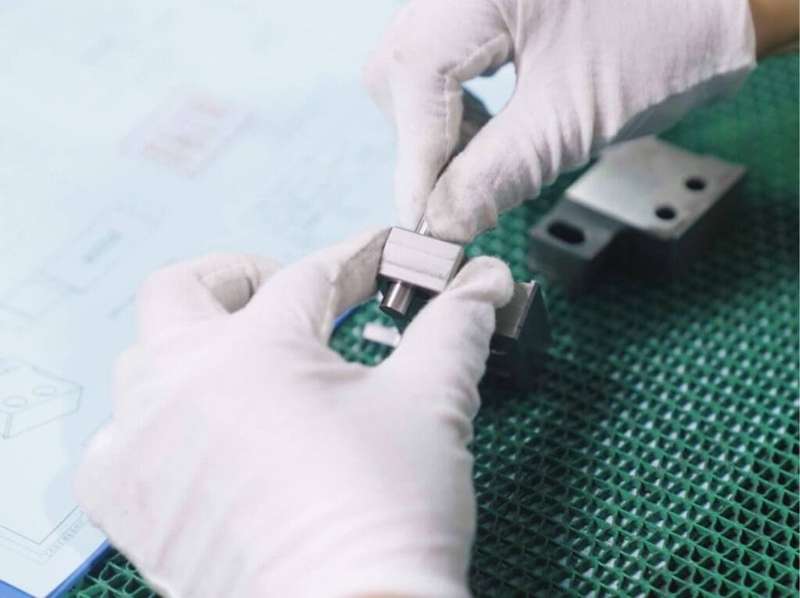
Brass C360: Used for large but low-stress parts like valve bodies or decorative trims – excellent machinability but low strength.
Tool steel (A2, D2): For large molds or dies requiring high wear resistance. Pre-hardened condition simplifies post-machining heat treatment.
Copper C110: For electrical or thermal management parts (eg, bus bars, heat exchangers) – requires sharp tools and heavy coolant.
07 Key Selection Factors for Large CNC Machined Parts
Thermal stability (keyword 2/1600 words): When machining large parts, thermal stability becomes critical. Aluminum expands about 23 µm/m/°C – a 2m part heats up 10°C, you get 0.46mm error. Steel expands half as much; cast iron even less. Always allow parts to reach thermal equilibrium before final finishing passes.
08 Common Questions (Q/A Format)
Q1: Which metal is easiest for large CNC machining?
A: Aluminum 6061 offers the best combination of machinability, low tool wear, and dimensional stability for large parts.
Q2: What metal prevents warping in large flat plates?
A: Use stress-relieved cast iron or pre-treated aluminum 6061-T6; avoid cold-rolled steel without stress-relief annealing.
Q3: Can I machine large titanium parts on standard CNCs?
A: No. Titanium requires rigid spindles, high-pressure coolant, and low speeds – standard machines risk chatter and tool failure.
Q4: Which metal handles heavy loads in large parts?
A: Low-carbon steel or gray cast iron. Steel for tensile loads, cast iron for compressive loads and vibration control.
Q5: How to reduce cost for large stainless steel parts?
A: Substitute with aluminum 6061 if corrosion is mild, or use carbon steel with zinc plating for indoor applications.
09 Repetition of Core Advice
For large CNC machined parts, never select metal based solely on raw strength. Prioritize dimensional stability (thermal expansion, residual stress), machinability (tool life, cycle time), and cost per finished part including secondary operations. Aluminum for speed and light weight; steel for heavy loads and low budget; cast iron for precision and damping; stainless for corrosive duty; titanium only when absolutely necessary.
10 Actionable Conclusion
To get the best results for your next large CNC machined part:
1. Define maximum load, operating temperature, and environment (indoor/outdoor, chemical exposure).
2. Calculate finished part weight limit – if under 50kg, aluminum or steel; over 200kg, cast iron often wins.
3. Request machinability testing samples from your CNC shop using two candidate metals.
4. Specify stress relief and thermal stabilization steps on your drawing.
Start with aluminum 6061 unless your application forbids it – it is the default answer for large parts without extreme demands. For heavy structural roles, low-carbon steel remains the industry standard. Always validate final metal choice with your CNC machining partner using real production parameters.