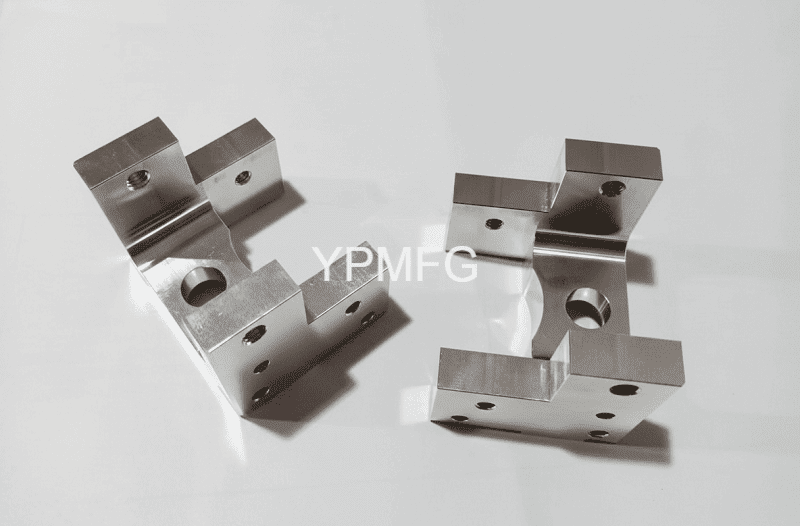
Dear readers, please take a look at this set of data. A certain factory has 30 machine tools and consumes 50,000 silver taels in tool costs every month. However, 30% of the products are scrapped because the tools are not sharp. This is not a natural disaster, but a man-made disaster. Today we will talk about the tips for selecting CNC cutting tools. I guarantee that you will slap your thighs and shout loudly after reading this. If you had known this, why bother with punctuation marks in the first place!
Speaking of Master Wang in the workshop, he held a sharp steel knife and gnawed at the stainless steel. He only heard a click sound and the knife shattered like slag. Someone next to him said with a smile: "Do you think this is cutting tofu?" Master Wang's face suddenly turned red, and then he realized how important the material of the knife is. If we talk about these CNC cutting tools, they are like Guan Gong’s Green Dragon Sword. It’s okay to use a bamboo pole to cut down soldiers. But if you want to kill Hua Xiong, it has to be a magic weapon. Regarding the optimization of cutting parameters, from a mysterious aspect it is an art, but from a practical perspective it means matching three elements, namely speed, feed and depth of cut. In order to be fast, some people increase the rotation speed to an extremely high level, causing the tool to burn red in an instant and then become soft, just like noodles. Some people are afraid that the cutting edge will break. The feed speed is as slow as a snail. It takes three days to operate a knife. The boss is almost crying because of the loss.
Q: What should you check first if the knife breaks?
First check whether the cutting parameters are overloaded. There is about 80% chance that the feed is advanced too fast or the depth of cut is too deep. You will see obvious effects immediately after downgrading by one gear.
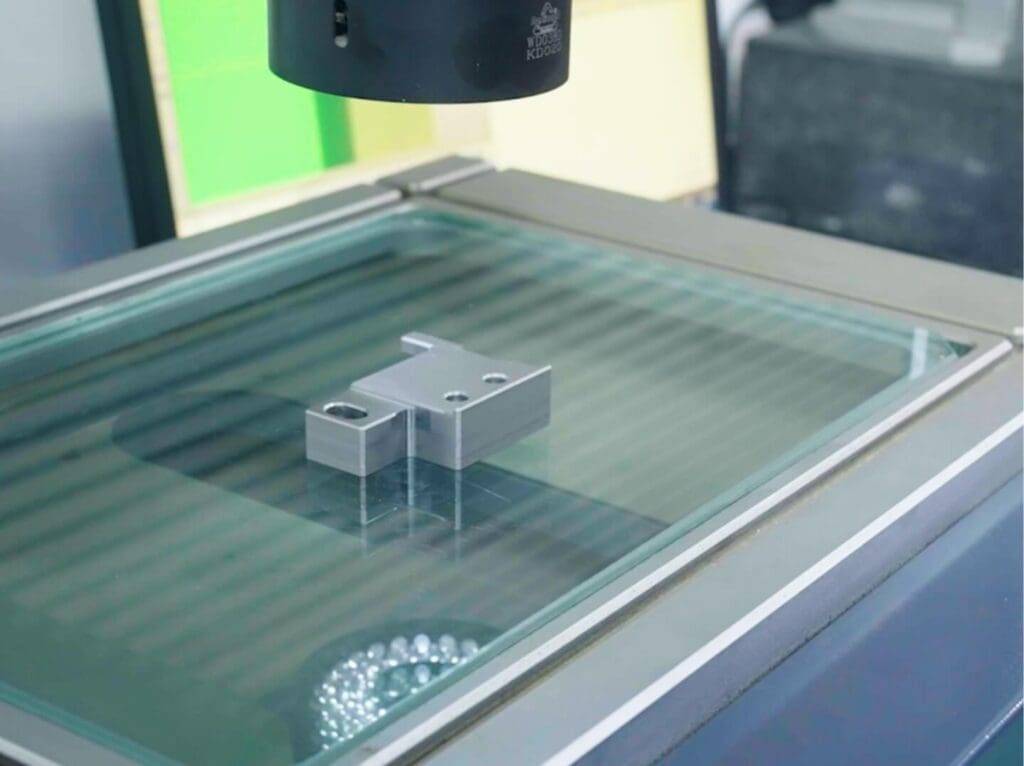
Let’s talk about the cooperation between the handle and the blade. There was a factory that, in pursuit of bargain hunting, bought back a batch of off-brand blades. After installing them, they swung around like a drunken man boxing. Processing ten parts, their sizes are erratic like walking in the clouds. The quality inspector took a caliper to measure and exclaimed loudly: "The roundness of this hole is even more ridiculous than a duck egg!" Later, he switched to YPMFG's standard tool handle and matched it with a precision blade, which immediately reduced the shaking by 90%. This is the so-called "if the foundation is not firm, the ground will move and the mountains will shake." Technicians need to know that if the tool handle jumps more than 0.01mm, the life of the tool will be greatly shortened, and the shortening will be half and then half. Using the wrong diamond coating to cut aluminum alloy is like killing a chicken with a cow-killing knife. It is cumbersome and expensive. Matching tool materials is not a lie. Carbide, cermet, and CBN all have their own applicable situations.
Q: What should I do if the blade wears out as fast as lightning?
If you choose the wrong coating, you should use TiAlN when turning steel parts, and use uncoated or DLC when turning aluminum parts. If you change the coating to the right one, the service life can be doubled or tripled.
Having said that, the comparison method is the clearest. Among the same batch of parts, Plan A uses domestic high-quality blades, each blade can process 200 parts; Plan B uses some imported high-end products, each blade can process 220 parts, but its price is more than twice as expensive. A little calculation shows that the cost of each part of plan A is three cents, and the cost of each part of plan B is five cents. The boss slammed the table and said: "What we are pursuing is profit, not a competition to see who is richer!" However, we cannot go to extremes. In order to save costs, one factory used the blades until they chipped and then replaced them. Eventually, the workpiece was scrapped and the machine tool was damaged. The loss was enough to buy a box of new tools. The ancients once said: It is difficult to achieve your goals if you are reluctant to invest a certain amount of money, but you must not step on charcoal fire with bare feet just because you want to save the cost of buying shoes.
When it comes to tool life management, there is a lot to pay attention to. The diary method is currently popular in the workshop. Technician Zhang records it every day. He remembers: "In the morning, I replaced the roughing tool and let it cut 500 pieces. Later I found that the flank surface was worn by 0.15mm. It seemed that it could be used for another 200 pieces." At noon, the finishing tool chipped. After inspection, it was found that it was because of hard spots on the workpiece, so a new tool was replaced. "This method seems a bit clumsy, but in fact, the tool life can be predicted and analyzed by accumulating data. Looking back at Gong Li, he was very superstitious about his own feelings. He would sharpen the tool when it was no longer sharp, and continue to use it after grinding. As a result, the processed size was sometimes larger and sometimes smaller, and customer return receipts were plastered all over the wall.
Q: Should I buy the highest-end knives?
A: No, just choose one that just meets the accuracy and life requirements. Excessive investment is equivalent to throwing money into the water.
There are three common misunderstandings. One is called "one gun to conquer the world", that is, the same tool is used for roughing and finishing. The result is that the cutting edge of the tool breaks during roughing, or the surface after finishing is as rough as sandpaper. The second is called "coolant universal". Under high-speed cutting conditions, the coolant cannot rush to the cutting edge position, and the tool will still be burned. In this case, minimum quantity lubrication or air cooling should be used. The third is "the higher the speed, the better". Once the linear speed allowed by the tool is exceeded, the heat generated by friction will exceed a hundred times, and the tool tip will melt in an instant. A master once cried sadly: "I turned the speed to 8,000 rpm to cut 45 steel, and the tool was as red as a soldering iron. At that time, I thought there was something wrong with the material!" A young man next to him said softly: "Master, the manual says that the linear speed should not exceed 200 meters…".
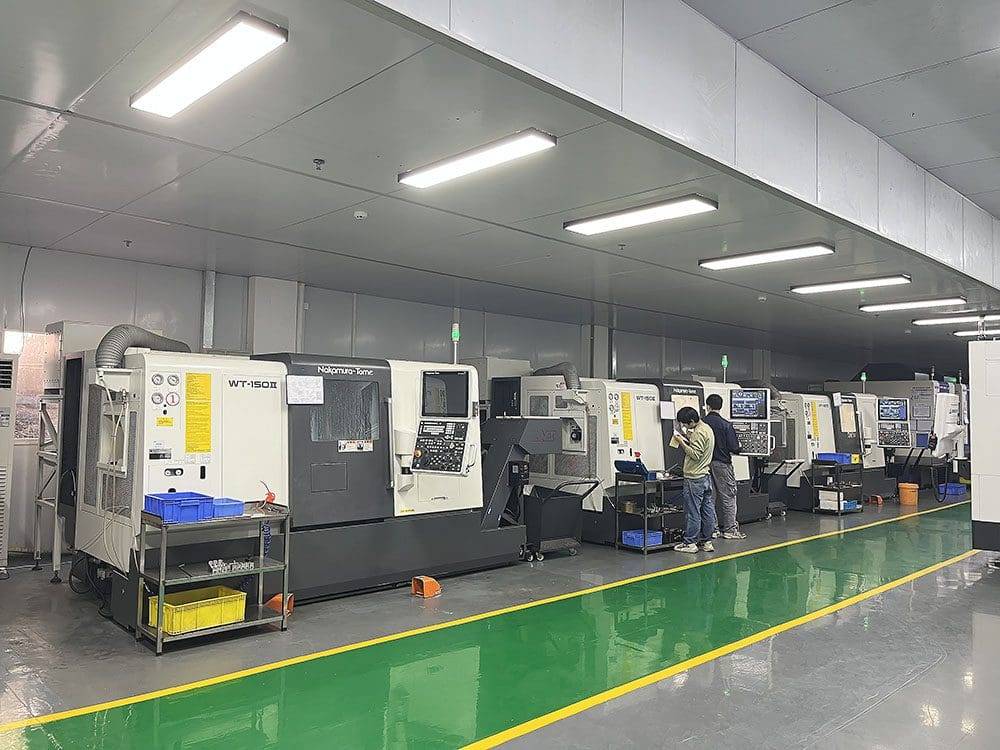
In today's fast-paced production and global competition environment, tool selection has become a course that engineers must take. A German-owned factory came to China for inspection. When I saw that every machine in the Chinese company had a tool card posted on it, and the tool card clearly stated "YPMFG APMT1135 must be used in this process, the rotation speed S is equal to 4500, the feed F is equal to 12, and the life of each blade is 90 minutes," I couldn't help but give a thumbs up. Looking back at the factory next door, the tool change behavior is very random. Today, tool A is used, and tool B is used tomorrow. The operators have to adjust the tool compensation every day. They are extremely busy, and the efficiency has dropped by 30%.
Q: How to quickly judge whether a tool is good or bad?
A: Listen to the sound. If there is a sharp whistling sound, it means that the parameters are excessive. If there is a dull thumping sound, it means the cutting depth is too large. Only smooth rustling sounds are in a healthy state.
As I write this, everyone must understand that the selection of CNC cutting tools is not based on random guessing based on feeling, but must rely on data first, conduct comparison and demonstration, and continue to improve. After one factory implemented tool standardization, the cost per piece was reduced by 40% and the tool inventory was reduced by half. The method is very simple: hold a monthly tool review meeting, put broken knives on the table, put worn knives on the table, put abnormally broken knives on the table, and analyze the cause of damage like a forensic autopsy. Three months have passed, and even the aunt who sweeps the floor knows that "you need a three-edged knife for aluminum, a four-edged knife for steel, and a sharp knife for stainless steel."
There are three suggestions for action. First, even if you use Excel, you must immediately establish a tool life ledger and record it. Secondly, a tool comparison test must be carried out every quarter to compete under the same conditions and show the situation through data. Third, it is strictly prohibited to substitute the brands and models of tools that need to be fixed in important processes. What needs to be kept in mind is that the optimization of cutting parameters is the way to success, the matching of tool materials is the foundation, and the management of tool life is the key to profitability. You can't reach thousands of miles without accumulating every small step, and you can't make high profits without changing your tools.
Let me emphasize it again: After deep reflection, Master Wang kept a diary on cutting tools and learned the calculation formula of linear speed. Now he has become a powerful person in the workshop regarding cutting tools, and he wins the first place in bonus every month. One day, a new and reckless young man asked him what his tips were. Master Wang, holding a cigarette in his mouth, said slowly: "Young man, remember, the more expensive the CNC machine tool cutting tool is, the better, nor the harder, the better, but the more 'matching' it is, the better." Parameters It has to match the material, the material has to match the workpiece, and the workpiece has to match the machine tool. If these three are in harmony with each other, then the tool will be sharp and get twice the result with half the effort. "If you don't believe it, go to the workshop and try it tomorrow. It's guaranteed to have a unique effect.