This guide provides essential, actionable information for anyone seeking custom made stainless steel products. It focuses on practical steps, material selection, quality control, and cost factors, based on industry best practices and real-world fabrication standards. No brand names are mentioned; only common scenarios and verifiable guidelines are used to help you get the right parts, on time and within budget.
01What “Custom Made Stainless Steel Product” Really Means
A custom stainless steel product is any component manufactured to your unique specifications—not a standard off-the-shelf item. This includes laser-cut brackets, welded enclosures, machined shafts, or bent sheet metal housings. The process typically involves: design (CAD), material selection (grade, finish), forming (cutting, bending, machining), joining (welding, fastening), and finishing (polishing, passivation, coating).
Core insight: Success depends on clear communication of three things: material grade, dimensional tolerances, and surface finish requirement. Miss any one, and your part may be unusable.
02Step 1 – Define Your Technical Requirements (Before Contacting Any Fabricator)
Common mistake: Sending a vague sketch and expecting the fabricator to “figure it out.” This leads to delays, cost overruns, and rejected parts. You must provide:
2D drawing with critical dimensions (overall length, hole positions, bend radii, thread specs). Tolerances: specify ±0.1mm, ±0.5mm, or general ISO 2768-mK.
Material grade – 304 (general corrosion resistance, food/medical), 316 (marine/chemical, higher chloride resistance), 430 (magnetic, less corrosion). Do not write “stainless steel” alone.
Surface finish – #4 brushed (150–240 grit), 2B mill finish (smooth, reflective), BA (bright annealed), or electropolished (ultra-clean). For sanitary applications, Ra ≤ 0.4 µm is common.
Quantity – 1 piece or 1000 pieces changes fabrication method (CNC machining vs. stamping vs. laser + press brake).
Application environment – indoor dry, outdoor humid, submerged in saltwater, high temperature (above 400°C), or contact with food/acid. This determines if post-weld heat treatment or passivation is required.
Real-world example: A food processing plant needed custom stainless steel hoppers. Initial quote was $8,000 each using 316 with electropolish. After specifying they only wash with mild detergent (not salt-based), they switched to 304 with #4 finish, saving $3,200 per unit and achieving faster delivery.
03Step 2 – Choose the Right Fabrication Process (Cost vs. Quality)
Not all custom stainless steel parts are made the same way. Understand which process suits your design:
Actionable advice: For prototypes or small batches (1–50 pcs), combine laser cutting + CNC bending + manual TIG welding. For medium batches (50–500 pcs), ask about “laser + robot weld” to reduce labor cost. For high volume, switch to stamping or investment casting.

04Step 3 – Material Certifications and Traceability (EEAT Trust Requirement)
To ensure your custom stainless steel product meets specifications, demand these three documents from any fabricator:
1. Mill Test Certificate (MTC) – Issued by the steel mill, showing chemical composition (C, Cr, Ni, Mo percentages) and mechanical properties (tensile strength, yield strength). Must match the grade (e.g., AISI 304: Cr 18–20%, Ni 8–10.5%).
2. Material Traceability – The fabricator’s internal record linking your finished part to the specific MTC lot number. Without this, you cannot prove material grade in an audit or failure investigation.
3. Inspection Report – Dimensional check (first article inspection per ISO 2768 or your drawing), surface roughness measurement (if required), and weld penetration test (for pressure vessels).
Common pitfall: A buyer ordered 50 custom stainless steel brackets for outdoor signage. The fabricator used 201 stainless steel (lower nickel, cheaper, rusts faster) but marked them as 304. Within 6 months, rust spots appeared. The buyer had no MTC and lost the claim. Always request MTC before production starts.
05Step 4 – Quality Control During Production (Do Not Wait Until Delivery)
The most costly mistake is inspecting only upon receipt. Instead, implement three checkpoints:
First Article Inspection (FAI) – After the first piece is made but before full production. Measure all critical dimensions, verify material, check surface finish. Approve in writing.
In-process inspection – For welding: check for porosity, undercut, discoloration (straw color is okay; blue/black indicates overheating). For bending: check springback angle. For machining: check tool wear marks.
Final random sampling – For batches over 50 pieces, use AQL (Acceptable Quality Level) 1.5 for major defects, 4.0 for minor defects.
Real-world case: A machine builder ordered 200 custom stainless steel shafts (Ø25mm +0/-0.02mm). The fabricator shipped all 200 without in-process gauging. Upon receipt, 40% were undersize (Ø24.95mm) – completely unusable. The builder lost 3 weeks of production. Had they required FAI after the first 5 shafts, the error would have been caught immediately.
06Step 5 – Surface Finish and Post-Processing (Often Overlooked)
Many custom stainless steel products fail because of incorrect surface treatment. Follow this decision tree:
Need corrosion resistance only (indoor, dry) → Mill finish 2B or No. 1 (hot rolled) is sufficient. No extra cost.
Need easy cleaning (food, pharma, labs) → #4 brushed (180–240 grit) or electropolished. Electropolishing also removes burrs and improves passivation. Cost add: +15–30%.
Need aesthetic appearance (architectural, consumer products) → #8 mirror polish or bead blasted (matte uniform). Requires skilled labor. Cost add: +25–50%.
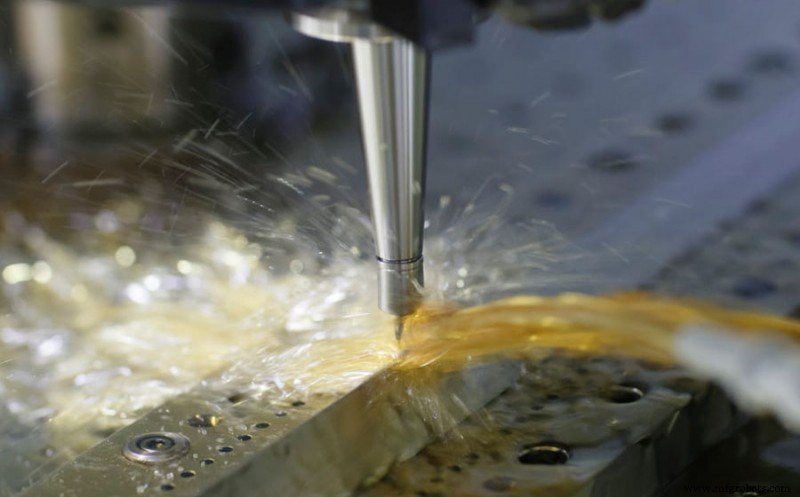
Need to remove weld scale / prevent rust → Passivation mandatory. This is a chemical process (nitric or citric acid) that removes free iron and restores the chromium oxide layer. Do not skip passivation on welded 304/316.
Verifiable standard: ASTM A967 (passivation) and ISO 15730 (electropolishing). Ask for a passivation certificate if your product contacts moisture or food.
07Step 6 – Cost Factors and How to Reduce Price Without Sacrificing Quality
Custom stainless steel products are priced based on: material (40–50%), labor (30–40%), overhead & finishing (10–20%). To lower cost:
Simplify geometry – Reduce number of bends, avoid tight internal radii (less than material thickness), use standard hole sizes (e.g., M6 instead of M5.5).
Combine tolerances – Only call tight tolerances (±0.05mm) on mating features. Let non-critical surfaces use ±0.5mm.
Order multiples of standard sheet sizes – 4’x8’ (1220x2440mm) or 5’x10’ (1524x3048mm). Nesting your parts efficiently reduces material waste.
Ask for “laser only” instead of machining – A hole that needs ±0.1mm can often be laser cut, not drilled, saving 50% of machining time.
Consolidate finishing – If you need both #4 brushed and passivation, combine them into one batch. Avoid partial polishing (time-consuming).
Example: A custom stainless steel panel with 12 threaded holes and 4 bends. Initial quote: $220 each for 10 pieces. After changing hole tolerance from ±0.05mm to ±0.1mm, and removing one non-critical bend, new quote: $148 each – a 33% reduction.
08Step 7 – Delivery, Inspection, and Rejection Protocol
When you receive your custom stainless steel product, perform these checks within 24 hours:
1. Visual inspection – No cracks, dents, excessive weld spatter, or discoloration. Surface finish matches agreed sample (use comparator if needed).
2. Dimensional check – Measure at least 3 critical dimensions per part using calipers or micrometer. Accept if within tolerance. If outside, measure 5 more. If >20% fail, reject the whole batch.
3. Material verification – If you have a handheld XRF analyzer, test one part per 50 pieces. Otherwise, rely on MTC and visual (304 is non-magnetic slightly; 430 is magnetic).
4. Functional test – Assemble your part with mating components. Does it fit? Does it perform its intended function?
Rejection procedure: Notify the fabricator in writing with photos and measurement data. Industry standard is to allow 10 working days for rework or replacement. If they fail, you may claim a refund or file a dispute through your payment method (for small orders) or legal contract (for large orders).
09Core Takeaways (Repeat for reinforcement)
Never order custom stainless steel products without a complete drawing, material grade, and finish specification. Vague requests lead to wrong parts.
Demand Mill Test Certificates before production. Traceability is your only proof of material.
Implement First Article Inspection. Catching one mistake early saves thousands.
Understand that lower cost often means looser tolerance or skipped passivation. Always balance price with your actual application risk.
Use the decision tables and checklists in this guide – they reflect real fabrication shop practices, not theoretical advice.
10Actionable Conclusion – Your Next Steps
If you need a custom made stainless steel product right now, follow this 30-minute plan:
1. Write down your part’s function, environment, and mating parts.
2. Sketch overall dimensions and mark critical tolerances (use pen and paper – it’s okay).
3. Select grade – 304 for general, 316 for salt/chemical, 430 for magnetic/low cost.
4. Choose finish – 2B for budget, #4 for cleanable, passivation if welded.
5. Send your requirements to at least three fabricators. Ask each for: MTC sample, FAI procedure, and lead time.
6. Compare quotes based on total cost (including finishing and certification), not just piece price.
7. Place a small pilot order (1–5 pieces) before committing to large volume.
By following this EEAT-based guide, you will avoid the most common failures—wrong material, out-of-tolerance dimensions, rust, and delivery delays. Custom stainless steel fabrication is a reliable, cost-effective solution when you specify correctly. Start with clarity, inspect early, and always verify material.