
With the rapid advancement of artificial intelligence and robotics technology, the humanoid robot industry chain is rising swiftly and becoming a new focal point in global manufacturing. The rapid growth of this emerging industry not only drives the improvement of intelligent manufacturing systems but also brings unprecedented development opportunities for the CNC machining sector.
As one of the core technologies in precision manufacturing, CNC machining, with its high precision, efficiency, and flexible customization, is becoming an indispensable part of the production of humanoid robot components.
Table of Contents
1. Overview of the Humanoid Robot Industry Chain
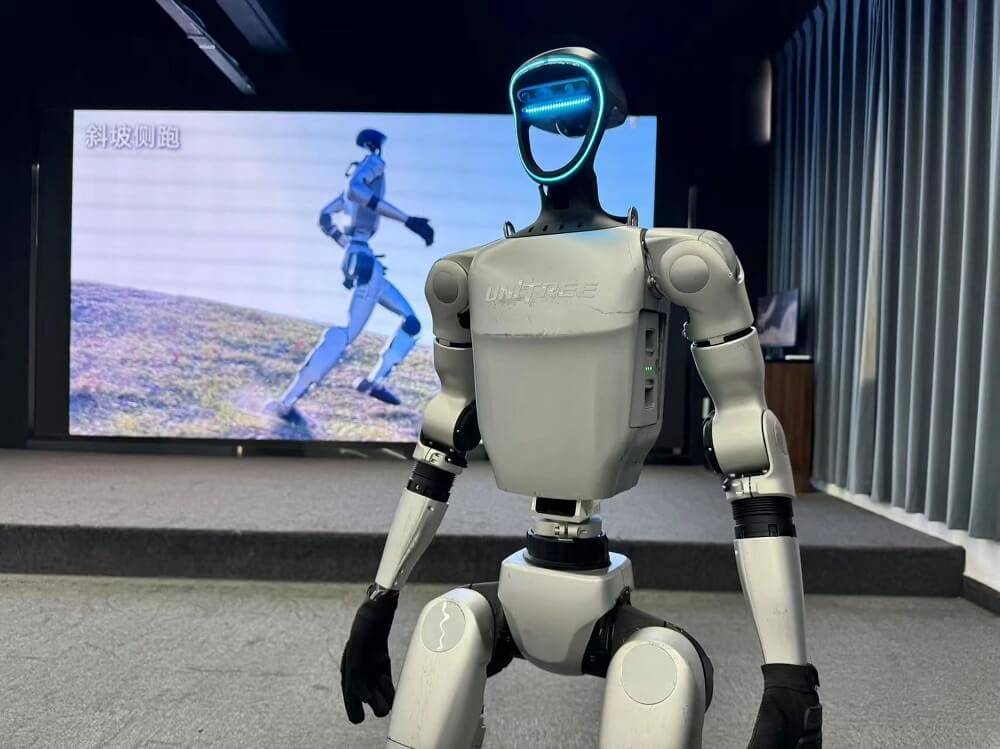
Humanoid robots are intelligent mechanical systems that mimic human appearance and movements, with wide applications in medical care, education, industrial collaboration, entertainment, and service industries.
With continuous advancements in artificial intelligence, sensors, and control systems, humanoid robots are not only becoming more human-like in form but also achieving significant improvements in motion flexibility and intelligence.
Driven by technology, the humanoid robot industry chain has gradually formed and matured, covering a complete system from core components to full machine manufacturing and application deployment. The main segments include:
• Upstream:
This segment primarily provides essential foundational components such as motors (especially servo motors and reducers), sensors (including torque sensors, visual and depth sensors), high-performance chips, lightweight materials (such as carbon fiber, aluminum alloy, and titanium alloy), and precision mechanical parts. This stage forms the technical foundation for the overall performance of the robot, with extremely high requirements for precision, reliability, and consistency.
• Midstream:
This stage includes robot body manufacturing, system integration, motion control, and algorithm optimization, representing the core phase of realizing the robot’s intelligence and functionality. Manufacturers systematically integrate upstream components and achieve structural and functional unity through processes such as CNC machining, assembly, and testing.
At this stage, CNC machining technology is particularly critical. Core components such as robot joints, linkages, housings, and frames generally require high-precision machining to ensure smooth motion and repeatable positioning accuracy. High-performance five-axis CNC machining centers can efficiently produce complex geometries while maintaining part tolerances at the micron level, enhancing overall machine stability and response speed.
• Downstream:
This segment focuses on real-world applications of humanoid robots, including intelligent manufacturing (collaborative robotic arms, automated material handling robots), medical rehabilitation (gait-assist robots, rehabilitation training platforms), education and research (teaching and experimental platforms), and home services (companionship, cleaning, and entertainment robots). As applications expand, the demand for lightweight, energy-efficient, and long-life components continues to grow, which in turn drives innovation in upstream manufacturing and machining technologies.
Throughout the entire manufacturing process, the machining of precision mechanical components forms the foundation for achieving high-performance robot motion control. CNC machining technology is the key to realizing high-precision manufacturing in this critical stage.
2. CNC Machining Requirements for Humanoid Robot Components
Humanoid robots consist of numerous complex components with extremely high precision requirements. The quality of these parts directly determines the robot’s stability and service life. The following outlines typical applications and technical considerations of CNC machining for key components:
1. Joint Assemblies
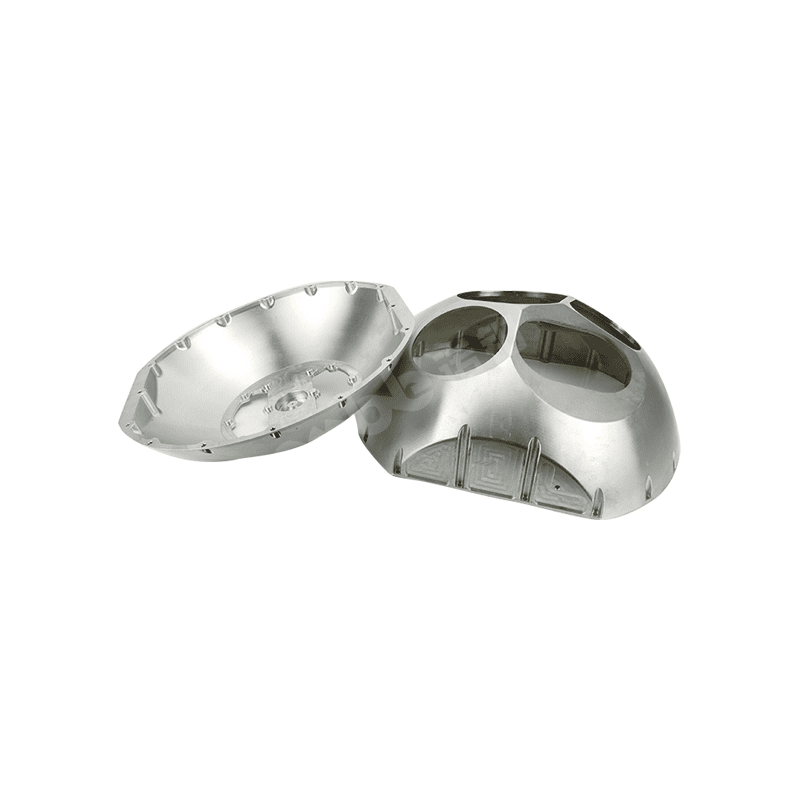
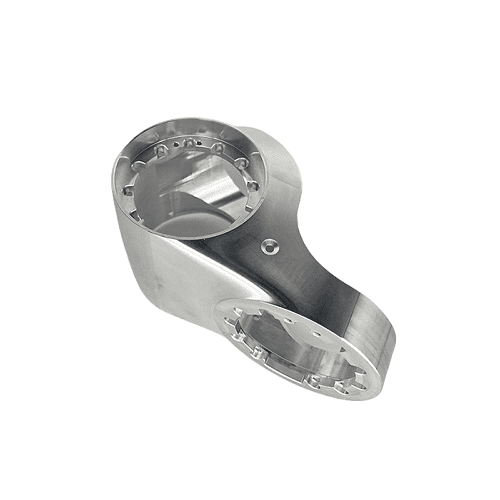
Joints are among the most complex and heavily loaded components in humanoid robots, responsible for posture control and coordinated motion.CNC machining is used to manufacture critical structural parts such as joint housings, servo motor shafts, precision gears, linkages, and bearing seats.
These components require extremely high coaxiality and roundness precision, typically within ±0.005 mm, to ensure low friction and high responsiveness during high-speed motion.
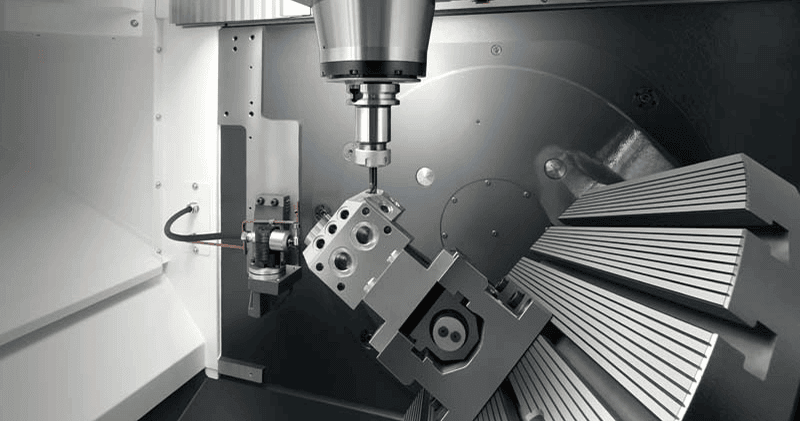
Five-axis CNC machining centers can perform multi-angle cutting on complex surfaces in a single setup, reducing clamping errors and ensuring smooth and reliable transmission.
2. Exoskeleton and Frame Structures
The exoskeleton serves as the main support and protective structure of the robot, requiring both lightweight design and high strength.
Common materials include 6061-T6 aluminum alloy, 7075 aerospace aluminum, titanium alloy, and carbon fiber composite bases.
CNC machining achieves high-precision shaping of complex frames through high-speed milling and thin-wall cutting techniques while minimizing material deformation and stress concentration.
Post-processing such as anodizing, sandblasting, or hard coating enhances wear resistance and aesthetic quality, making the structural parts both industrially robust and visually high-tech.

3. Transmission Systems
Humanoid robots rely on high-precision gears, sprockets, reducer components, and couplings for power transmission.
CNC machining ensures gear profile errors and pitch deviations are controlled at the micron level, improving transmission efficiency while reducing noise and energy loss.
For high-end robots, precision grinding combined with CNC gear milling further enhances gear surface finish and meshing accuracy.
4. Hand and Fingertip Components
The robot’s hand structure is critical for dexterous operation. These parts are small, finely structured, and require extremely high machining accuracy and surface quality.
CNC micro-machining can produce millimeter-scale or even sub-millimeter components, such as miniature linkages, joint sleeves, and flexible connectors.
Nano-level tool path compensation and high-gloss surface finishing (Ra < 0.2 μm) ensure the robot can perform delicate actions like grasping, pinching, and touch-based operations.
5. Sensor and Electronics Housings
Humanoid robots integrate numerous sensing and control modules, including cameras, IMUs, torque sensors, controllers, and heat dissipation systems.
CNC machining is essential for manufacturing camera brackets, sensor bases, controller housings, and heat sinks.
High-precision machining guarantees dimensional stability and sealing of assembly interfaces, preventing signal errors or assembly interference caused by minor deviations—especially critical for vision modules and force-control systems.
These parts often include multiple surfaces, fine holes, and complex geometries, which are difficult to achieve with traditional machining methods. CNC machining, with multi-axis precision cutting on a single machine, significantly improves production consistency and reliability.
3. Core Advantages of CNC Machining in Robot Manufacturing
Compared with traditional machining methods, CNC machining demonstrates significant advantages in precision control, flexible manufacturing, material compatibility, and automated production.
1. High Precision and Repeatability
CNC machines control tool paths through computer programs, achieving micron-level precision and high repeatability.
In robot manufacturing, such accuracy is critical for key structures including joint assemblies, reducer housings, bearing seats, linkages, and mounting holes. For example, in humanoid robots, the clearance in each joint is often maintained within ±0.01 mm. Even minor deviations can result in uncoordinated motion or energy loss.
2. Support for Customization and Small-Batch Flexible Production
The humanoid robot industry is still in a stage of rapid technological evolution. Different companies and application scenarios—such as medical, educational, and industrial collaboration—have unique requirements for structural design, load capacity, and dimensions.
CNC machining offers high flexibility and programmability, enabling quick switching between different product models without changing molds, supporting small-batch and multi-variety production. With CAD/CAM integration, design schemes can be directly translated into machining paths, significantly shortening product development cycles and supporting rapid prototyping and product validation.
3. Compatibility with Multiple High-Performance Materials
Key components of humanoid robots have strict requirements for weight, strength, wear resistance, and heat dissipation.
CNC machining can handle a wide range of materials, including:
- Metal materials: Aluminum alloys (6061, 7075), stainless steel (304, 316), titanium alloys (Ti-6Al-4V) for joint housings, frames, and fastening structures.
- Engineering plastics: PEEK, POM, Nylon, ABS for insulating components or light-duty transmission parts.
- Composite bases: CNC cutting achieves high-precision mounting interfaces and lightweight structures.
This cross-material machining capability not only increases design freedom but also provides greater opportunities for structural optimization and performance enhancement.
4. Improved Production Efficiency and Automation
Modern CNC machining centers integrate automatic tool changers (ATC), tool compensation, online monitoring, and intelligent diagnostics, enabling unmanned continuous operation.
When connected with smart manufacturing systems such as MES and ERP, CNC equipment can achieve process data traceability, machining status monitoring, and automated scheduling, reducing manual intervention and errors.
For robot component manufacturing, five-axis CNC machining can perform multi-surface operations in a single setup, significantly shortening process time and improving overall efficiency and stability. This high level of automation and digitalization provides a solid foundation for scalable, standardized, and traceable robot production.
4. Deep Integration of Smart Manufacturing and CNC Technology
Under the wave of Industry 4.0, smart manufacturing has become the core direction for upgrading the manufacturing industry. CNC machining is achieving equipment intelligence and production automation through integration with artificial intelligence (AI), the Internet of Things (IoT), and big data analytics:
- Intelligent CNC systems can perform self-monitoring and parameter optimization, automatically adjusting tool paths to reduce errors.
- IoT technology enables networked monitoring and remote maintenance of machining equipment, improving utilization rates.
- Big data analytics helps companies optimize process flows, reducing energy consumption and material waste.
- Digital factory systems allow full-process information management from design and programming to machining and inspection.
This integration not only improves production efficiency and yield but also accelerates the intelligent transformation of robot component manufacturing.
5. Global Opportunities
The humanoid robot industry chain is expanding globally, with increased investments in Europe, the U.S., Japan, and China. As robots find more applications in manufacturing, healthcare, education, and other fields, the demand for high-precision components will continue to grow.
Strategic Advantages of Chinese CNC Companies
Chinese CNC machining companies occupy a key position in the global robot industry chain due to their mature manufacturing experience, well-established supply chain, and cost advantages:
- Technical Capability: Advanced five-axis CNC machining centers, precision grinding, micro-machining, and composite material processing capabilities continue to improve, meeting the international standards for component precision and surface quality in advanced robots.
- Industry Support: A complete supply system for raw materials, tooling, and auxiliary components enables efficient production coordination.
- Cost Advantage: High-efficiency production and large-scale operations provide competitive pricing while ensuring quality and delivery schedules.
Globalization brings both technological and market opportunities to the humanoid robot industry. For Chinese CNC companies, it provides a platform to enter international supply chains, enhance technical capabilities, and expand business scale. In the future, seizing opportunities in global market expansion and smart manufacturing upgrades will be a key path for CNC companies to achieve leapfrog development.

6. Strategic Directions for CNC Machining Companies
With the rapid development of the humanoid robot industry and increasing global competition, CNC machining companies are at a critical stage of transitioning from traditional manufacturing to advanced intelligent manufacturing. To remain competitive and seize growth opportunities, companies should focus on the following four strategic directions:
1. Technological Innovation and Equipment Upgrades
Advanced CNC machining capabilities form the core of a company’s competitiveness in high-precision component manufacturing. Companies should:
- Introduce five-axis and multi-axis composite machines to meet the complex geometric machining requirements of robot joints, exoskeleton structures, and miniature hand components.
- Deploy automated inspection and online measurement systems to ensure machining precision and surface quality meet micron-level standards.
- Develop specialized tooling and optimized processes to improve machining efficiency for titanium alloys, composites, and high-hardness steels.
Through continuous technological innovation and equipment upgrades, companies can significantly enhance machining capability and product added value, providing reliable support for high-end robot manufacturing.
2. Industry Collaboration and Joint Development
CNC machining companies should establish deep partnerships with robot integrators, design firms, and material suppliers:
- Collaborate on the R&D of key components such as high-precision gears, servo motor shafts, flexible joints, and sensor interface modules.
- Participate early in product design to provide feasible machining solutions for structural optimization, weight control, and assembly precision.
- Build industry alliances or joint laboratories to promote standardization and accelerate the implementation of innovative results.
Through industry collaboration, companies can not only expand their business scope but also strengthen their strategic position within the supply chain.
3. Intelligent and Digital Transformation
Digitalization and intelligent manufacturing are key drivers for the future development of CNC companies. Companies should:
- Use AI and data analytics to optimize tool paths and parameters, enabling dynamic compensation and adaptive machining.
- Establish unmanned workshops and smart factory management systems to enable automated loading/unloading, process monitoring, quality tracking, and energy management.
- Integrate CNC data with digital twins, MES, and ERP systems to create a closed-loop management system from design to machining and inspection.
Intelligent transformation not only improves production efficiency and yield but also supports small-batch, multi-variety, and customized manufacturing demands.
4. Global Market Expansion
Within the global robot industry chain, CNC machining companies should proactively expand internationally:
- Participate in international exhibitions and technical exchanges to enhance brand recognition and technological influence.
- Establish long-term partnerships and contract manufacturing arrangements with overseas robot companies, providing high-precision components and solutions.
- Promote export standardization and certification systems to enhance competitiveness and recognition in international markets.
Global expansion helps companies diversify market risks while gaining technology and management experience, forming a sustainable growth momentum.
7. Conclusion
The rapid rise of the humanoid robot industry presents unprecedented opportunities for the CNC machining sector. High-precision manufacturing of critical components has become the core support for improving robot performance and advancing the industry.
YPMFG Precision Manufacturing has long been dedicated to CNC machining, focusing on high-precision production of key components such as robot joints, exoskeleton structures, transmission systems, and electronic modules. With advanced five-axis machines, intelligent production systems, and strict quality management, YPMFG is committed to providing global customers with efficient, reliable, and customizable manufacturing solutions that meet the demands of diverse applications.