
Quick answer:
CNC milling and turning are the two most common precision machining processes, but they serve different purposes. Milling removes material from a rotating workpiece using a moving cutting tool, making it ideal for complex geometries like slots, holes, and 3D contours. Turning involves rotating the workpiece against a stationary tool, which is better suited for cylindrical or轴对称 parts like shafts and bushings. For most projects, a combination of both processes delivers the best results.
When sourcing CNC machined parts, buyers often face confusion about which process to specify. The wrong choice can lead to unnecessary costs, longer lead times, or parts that fail to meet dimensional requirements. Understanding the fundamental differences between CNC milling and turning helps you make smarter procurement decisions.
At YPMFG, we work with engineers and procurement teams daily to determine the most efficient machining strategy for their components. This guide breaks down what you need to know before placing your next order.
What Are CNC Milling and Turning?
CNC milling uses a multi-point cutting tool that rotates while moving across a stationary or indexed workpiece. The machine removes material layer by layer to create features such as pockets, slots, threads, and complex surfaces. It is the go-to process for parts with irregular shapes or multiple machining faces.
CNC turning, also called lathe machining, spins the workpiece while a single-point cutting tool moves along its surface. This process excels at producing rotational symmetry parts, including rods, sleeves, pins, and housings with concentric features.
Both processes deliver high accuracy and repeatability, but their strengths differ significantly.
Key Differences Between CNC Milling and Turning
The core distinction lies in how material is removed and what part geometry each process handles best.
Choosing between them depends on part geometry first, then production volume and material considerations.
How to Choose Between Milling and Turning
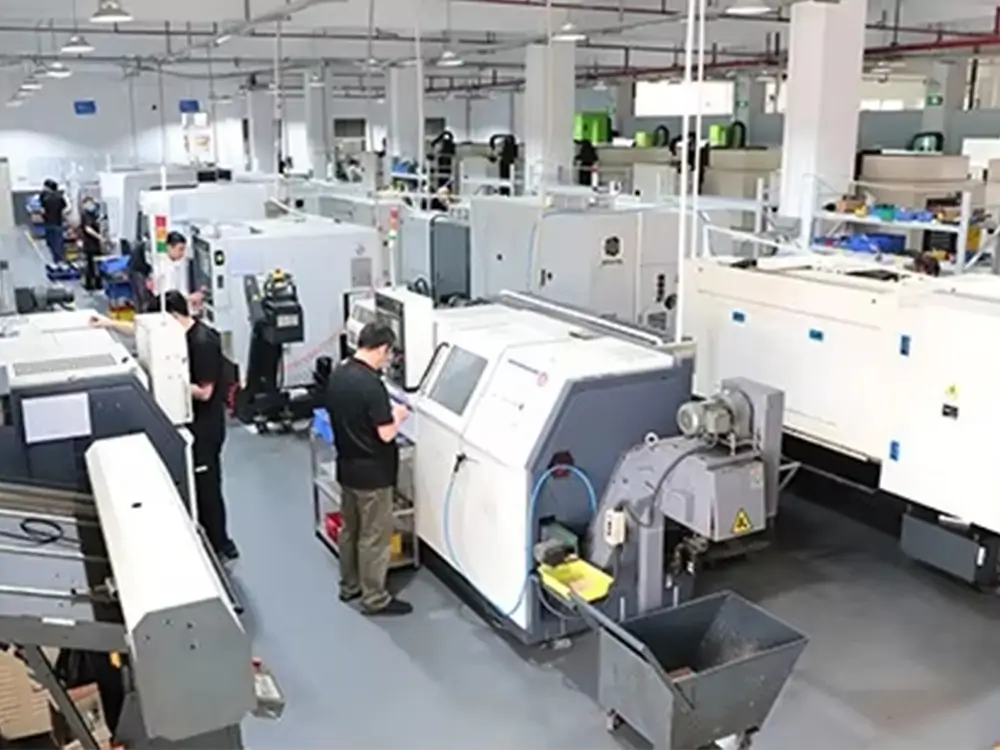
Part design should drive your process selection. If your component has flat faces, irregular contours, or multiple features on different planes, CNC milling services are likely the right fit. If your part is primarily cylindrical or requires consistent diameters along its length, CNC turning will be more efficient.
Many components actually require both processes. A typical mechanical assembly might include a turned shaft with milled keyways, or a milled bracket with turned inserts. In these cases, a manufacturer capable of handling both operations can reduce handling steps and improve overall consistency.
Material also plays a role. Hard alloys and stainless steels often respond better to turning due to continuous chip formation. Soft materials like aluminum and plastics can be machined efficiently on both mill and lathe setups.
Cost Factors for CNC Machined Parts
Understanding what drives pricing helps you evaluate quotes more effectively.
The unit cost of CNC precision machining depends on several variables that extend beyond simple hourly rates.
Part geometry complexity directly affects machining time and tool paths
Material selection influences cutting speed, tool wear, and chip management
Tolerance requirements determine whether standard or tight-tolerance processes apply
Surface finish specifications may require additional operations like polishing or anodizing
Order quantity impacts setup cost distribution and economies of scale
A low quote may reflect minimal setup time, but insufficient engineering review. Always request a detailed breakdown that includes machining hours per operation, setup charges, and any secondary processes.
At YPMFG, we provide transparent quotations after reviewing your drawings and specifications. Our engineers evaluate the most efficient process sequence before generating pricing, which helps avoid hidden costs downstream.
Common Quality and Compliance Considerations
Quality expectations vary by industry, and certain sectors require documented traceability.
Medical and aerospace components often demand CNC machining quality control protocols that include first-article inspection reports, material certificates, and dimensional verification against GD&T callouts. Automotive applications typically follow IATF 16949 standards, while general industrial parts may only require basic inspection records.
Surface treatment and post-processing also affect final part performance. Coatings, heat treatments, and finishing operations should be specified clearly in your procurement documents to avoid ambiguity during production.
Practical Questions Before Choosing a CNC Machining Partner
Before committing to a supplier, consider these factors that directly impact your project outcome.
Ask whether the manufacturer can handle both milling and turning in-house. External subcontracting adds lead time and reduces quality control visibility. Verify their equipment range, particularly whether they operate multi-axis mills and Swiss-style lathes for complex geometries.
Request documentation of their quality management system and inspection capabilities. Manufacturers that invest in CMM measurement and proper calibration demonstrate commitment to repeatable results.
Finally, clarify communication channels and revision policies. Clear engineering feedback loops prevent costly misunderstandings between design intent and manufactured output.
Common Questions Buyers Ask About CNC Milling and Turning
What is the main difference between CNC milling and turning?
Milling moves the cutting tool against a stationary workpiece, while turning rotates the workpiece against a stationary tool. Milling suits complex shapes; turning excels at cylindrical parts.
Can a single part use both milling and turning?
Yes. Many components combine turned features with milled pockets, slots, or holes. Hybrid machining reduces handling and improves alignment accuracy.
Which process offers tighter tolerances?
CNC turning typically achieves tighter tolerances on rotational features, often within ±0.005 mm. Milling tolerances depend on machine rigidity and part geometry but generally reach ±0.01 mm or better.
How does part complexity affect pricing?
Complex geometries require more tool paths, longer cycle times, and sometimes special fixturing. Simple turned blanks cost significantly less than multi-face milled assemblies.
What materials work best for each process?
Aluminum, steel, and titanium are commonly machined with both processes. Stainless steel responds well to turning due to predictable chip formation. Aluminum mills efficiently with minimal tool wear.
How do I verify supplier quality before ordering?
Request documentation of their QC process, inspection equipment, and relevant certifications. Ask for sample parts or reference projects in your industry.
Should I choose a mill-only or turn-only shop?
A facility offering both milling and turning reduces supply chain fragmentation. Combined capabilities improve coordination and shorten production cycles for complex parts.
Making a Better Long-Term Decision
Selecting the right machining process and partner matters more than unit price alone. The right combination of CNC milling and turning capabilities ensures your parts meet functional requirements while maintaining cost efficiency across production volumes.
If you are evaluating options for your next component, consider sending your specifications to YPMFG. Our team provides free engineering assessments and compares process approaches before quoting, helping you avoid over-engineering or under-specifying your orders.