
Quick answer:
Hardware supplies parts in CNC machining refer to the standard and custom mechanical components—fasteners, brackets, bushings, shafts, and precision-machined inserts—that hold assemblies together and enable functional movement. For B2B buyers, the critical question is not just finding a supplier, but selecting parts that meet material, tolerance, and surface-finish requirements for your specific application. Getting this wrong leads to premature failure, assembly delays, and higher total cost of ownership.
Every CNC machining project relies on a range of hardware supplies parts, from standard off-the-shelf items to fully custom-machined components. Buyers often struggle to distinguish between catalog hardware and precision-machined parts, which creates confusion during sourcing and increases the risk of selecting the wrong supplier. Understanding the difference is the first step toward making a reliable procurement decision.
YPMFG supports engineers and procurement teams by providing engineering evaluation, material selection guidance, and custom machining capabilities for projects that demand tight tolerances and verified performance.
What Are Hardware Supplies Parts in CNC Machining?
Hardware supplies parts encompass both standard catalog items and custom-manufactured components used in mechanical assemblies. This category includes threaded fasteners, nuts, washers, pins, bushings, bearings, shafts, brackets,and machined inserts. In a CNC context, many of these parts are produced from raw bar stock, plate, or billet using subtractive manufacturing processes.
The term is sometimes used loosely in procurement. Some buyers treat “hardware” as only standard off-the-shelf items, while others include custom-machined brackets and structural components. Clarifying this distinction early prevents miscommunication with suppliers and ensures you receive parts that match your engineering intent.
Types of CNC Hardware Parts and Their Applications
Different hardware parts serve distinct functional roles within an assembly. Selecting the right type for your application affects performance, maintainability, and long-term cost.
Each category has specific selection criteria. A fastener used in a high-vibration environment requires different material and torque specifications than one used in a static structural joint.
Material Selection for Hardware Parts
Material choice is one of the most impactful decisions in hardware part procurement. The wrong material can lead to corrosion, fatigue failure, or dimensional instability under load.
Stainless steel is commonly selected for corrosion resistance and moderate strength. Grades such as 303, 304, 316, and 416 are widely available in bar and wire forms. 303 offers better machinability, while 316 provides superior corrosion resistance in aggressive environments.
Aluminum is preferred when weight reduction is a priority. Alloys like 6061 and 7075 are standard choices. 6061 offers good machinability and weldability, while 7075 provides higher strength for structural applications. Surface anodizing is often applied for added corrosion protection.
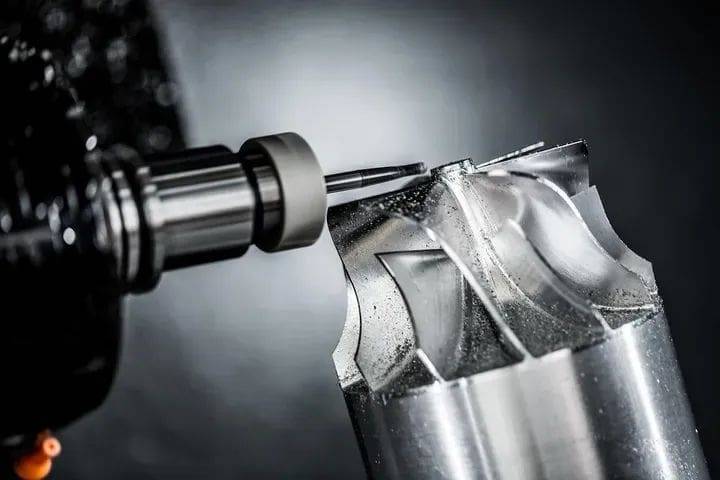
Tool steel and alloy steel are used when hardness and wear resistance are critical. These materials typically require heat treatment after machining and are common in high-load fasteners, shafts, and bushings.
Titanium is selected for aerospace and medical applications where strength-to-weight ratio and biocompatibility are required. It is more expensive and presents machining challenges that not all suppliers can handle consistently.
Tolerance and Surface Finish Requirements
Hardware parts must meet specific geometric and surface-quality standards to function correctly within an assembly. Tolerance levels vary significantly depending on the part’s role.
Standard threaded fasteners typically follow ISO or ASME B1.1 class tolerances. Precision shafts and bearing seats may require tolerances in the range of ±0.0005 to ±0.001 inches. Surface finish specifications are equally important. A bearing seat may require a Ra of 16 µin or better, while a structural bracket may only need a mill finish or light bead blast.
When specifying hardware parts, always define both dimensional tolerances and surface finish requirements in your documentation. Vague specifications lead to inconsistent results and increase the likelihood of receiving parts that do not fit your assembly.
Cost Factors in Hardware Parts Procurement
The unit price of hardware parts is only one component of total procurement cost. Several factors influence the true cost of ownership.
Budget-focused buyers sometimes select the lowest unit price without considering these factors. This approach can result in parts that require rework, fail during testing, or need replacement sooner than expected.
YPMFG works with buyers to evaluate total cost implications during the engineering review phase, helping teams avoid costly selection mistakes before production begins.
Quality Standards and Verification
Hardware parts used in industrial and mechanical applications should meet recognized quality standards. Verification procedures provide confidence that parts will perform as specified.
Common standards include ISO 9001 for quality management systems, AS9100 for aerospace applications, and IATF 16949 for automotive contexts. Material certifications such as Mill Test Reports (MTR) should be requested for critical applications. Dimensional inspection reports, including CMM data, provide traceability and verification for tight-tolerance parts.
When evaluating a supplier, ask about their inspection processes, certification capabilities, and documentation standards. A supplier that provides comprehensive quality documentation demonstrates a commitment to consistency and traceability.
How to Choose the Right Hardware Parts Supplier
Selecting a supplier for hardware supplies parts requires evaluating multiple factors beyond price. The right supplier reduces risk, improves communication, and delivers consistent quality.
Consider the following criteria when making your selection:
Engineering support: Does the supplier offer design review and material selection guidance?
Capability range: Can the supplier handle your required materials, tolerances, and surface finishes?
Quality documentation: Does the supplier provide material certs, inspection reports, and traceability?
Lead time consistency: Can the supplier meet your delivery timelines reliably?
Sample and testing support: Does the supplier offer sample parts or prototype runs before full production?
Communication responsiveness: Is the supplier accessible for technical questions and project updates?
A supplier that checks these boxes reduces procurement risk and provides a smoother purchasing experience from quote to delivery.
Common Mistakes When Sourcing Hardware Parts
Buyers frequently make avoidable errors during the hardware parts sourcing process. Recognizing these mistakes helps you avoid them.
One common mistake is specifying only diameter and length for fasteners without defining thread pitch, grade, and coating. Another is assuming that standard catalog parts will meet custom application requirements without verifying fit and function. Some buyers also overlook surface finish specifications, which can cause assembly issues or premature wear.
Another mistake is selecting a supplier based solely on unit price without evaluating their quality processes, communication standards, and technical support capabilities. The cheapest quote often carries hidden costs in rework, delays, and quality disputes.
Questions Buyers Often Ask About Hardware Supplies Parts
What is the difference between standard hardware and custom-machined hardware parts?
Standard hardware is produced in large volumes to catalog specifications and is available for immediate shipment. Custom-machined hardware parts are manufactured to specific drawings and tolerances for particular applications. Custom parts offer greater design flexibility but require longer lead times and minimum order quantities.
How do I specify hardware parts for a CNC machining project?
Provide complete engineering drawings with dimensional tolerances, material specifications, surface finish requirements, and any applicable standards. Include a bill of materials with part numbers, quantities, and delivery requirements. Clear documentation reduces back-and-forth and ensures accurate quotes.
What certifications should I request from a hardware parts supplier?
Request material test reports, dimensional inspection reports, and quality management system certifications relevant to your industry. For aerospace, ask for AS9100 compliance. For automotive, ask for IATF 16949. These documents verify that the supplier meets recognized quality standards.
Can I order sample parts before committing to full production?
Yes. Most precision machining suppliers offer sample or prototype runs. Sample orders allow you to verify fit, function, and quality before placing a larger production order. This is a recommended step for custom hardware parts.
How long does production typically take for hardware parts?
Lead times depend on part complexity, material availability, order volume, and any required surface treatments or heat treatment. Standard catalog hardware may ship within days. Custom-machined parts typically require one to three weeks depending on specifications.
What should I do if received hardware parts do not meet specifications?
Document the non-conformance with measurements and photos. Contact your supplier with the findings and request a resolution, which may include replacement, rework, or credit. A reliable supplier will have a clear process for handling quality issues.
Need Help Selecting the Right Hardware Parts for Your Project?
Choosing the correct hardware supplies parts requires balancing material performance, dimensional accuracy, surface finish, and total cost. The right supplier provides more than just competitive pricing—they offer engineering insight, quality documentation, and reliable delivery.
If you are sourcing CNC machined parts or need guidance on material and specification selection, you can send your engineering drawings and requirements to YPMFG for a professional review. Their team can provide an engineering evaluation, material recommendations, and a detailed quote tailored to your project needs.