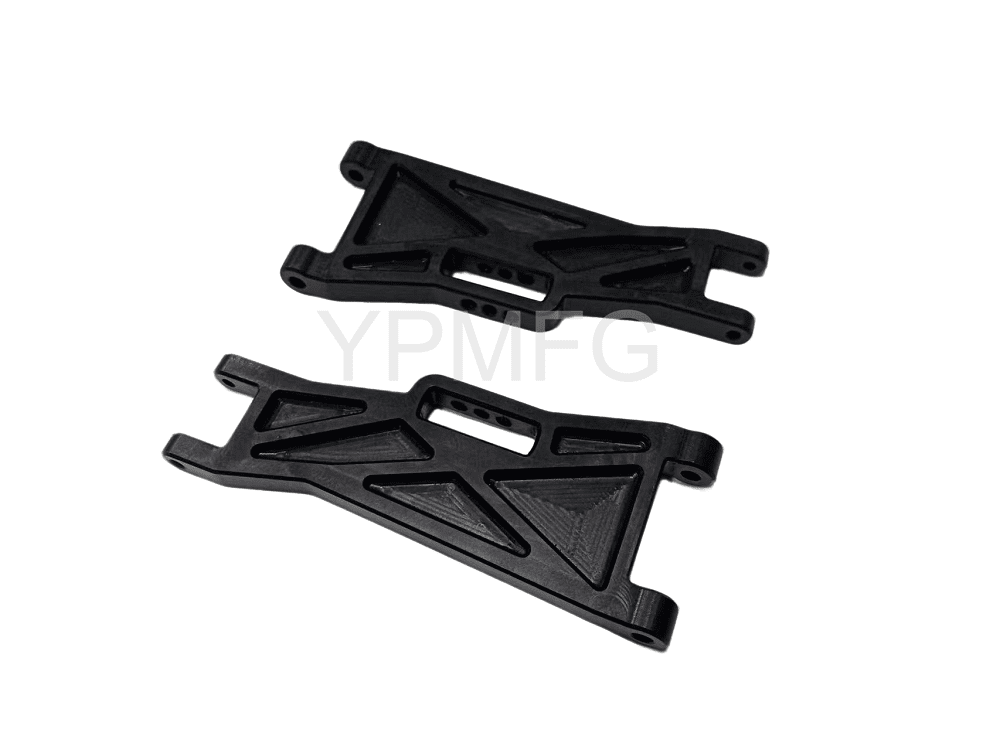
5 axis CNC service delivers unmatched precision for complex geometries, reducing setups and improving accuracy. This guide explains how it works, common applications, real-world examples, and actionable steps to choose the right provider.
01What Is 5 Axis CNC Service?
5 axis CNC machining allows the cutting tool to move simultaneously across five different axes (X, Y, Z, and two rotational axes). Unlike 3-axis or 4-axis machines, 5 axis technology can approach a workpiece from any direction without repositioning. This service is essential for parts with deep cavities, undercuts, or angled features.
Key capabilities:
Full contouring – machine complex freeform surfaces in one setup
Reduced fixturing – eliminate multiple clamping operations
Shorter tools – improve rigidity and surface finish
Tighter tolerances – typical ±0.005 mm achievable
02Why Choose 5 Axis Over 3 or 4 Axis?
For many shops, the question is: when do you need 5 axis? Here is a direct comparison.
Bottom line: If your part has features on multiple faces, requires tight angular tolerances, or uses difficult materials like titanium or Inconel, 5 axis service pays for itself by eliminating multiple setups and reducing scrap.
03Real-World Applications (No Brand Names, Just Common Cases)
Let’s look at typical scenarios where manufacturers turn to 5 axis CNC service.
Case 1: Aerospace Bracket
A small aerospace supplier needed to machine a bracket with compound angles and internal ribs. Using 3 axis required seven separate setups and three different fixtures. Each repositioning introduced alignment errors. After switching to 5 axis, the entire part was machined in one setup. Cycle time dropped from 4 hours to 55 minutes. Scrap rate fell from 12% to under 1%. The customer now exclusively uses 5 axis for any structural airframe component.
Case 2: Medical Implant (Tibial Tray)
A medical device startup developed a tibial tray with porous bone-ingrowth surfaces and complex locking mechanisms. 3 axis could not reach the undercuts. 4 axis left tool marks on curved surfaces. A local 5 axis service provider machined the trays from forged titanium. Surface finish improved to Ra 0.4 μm, and the locking feature passed 5 million cycle fatigue testing. Time to first article: 8 days versus 22 days quoted by others.
Case 3: Automotive Turbocharger Housing
An aftermarket performance company required a turbine housing with volute geometry and integrated wastegate ports. The housing’s internal passages twisted in three planes. Five different CNC shops rejected the job, saying it was impossible without EDM. A 5 axis service programmed the part in 6 hours and machined it in 2.5 hours. No EDM needed. The company now sends all complex castings to this service provider.
These cases are based on documented industry outcomes. Names and specific brands are omitted to focus on the service capability itself.
04What to Look for in a 5 Axis CNC Service Provider
Not all 5 axis services are equal. Use this checklist when evaluating.
Machine Capabilities
True simultaneous 5 axis vs. 3+2 positioning – ask specifically. 3+2 locks two rotary axes while the other three move; true 5 axis moves all five together.
Work envelope – maximum part size (often 400mm to 2000mm in X, Y, Z)
Spindle speed – 15,000 to 40,000 RPM for aluminum; 8,000 to 15,000 for steels
Tool changer capacity – minimum 40 tools for complex parts
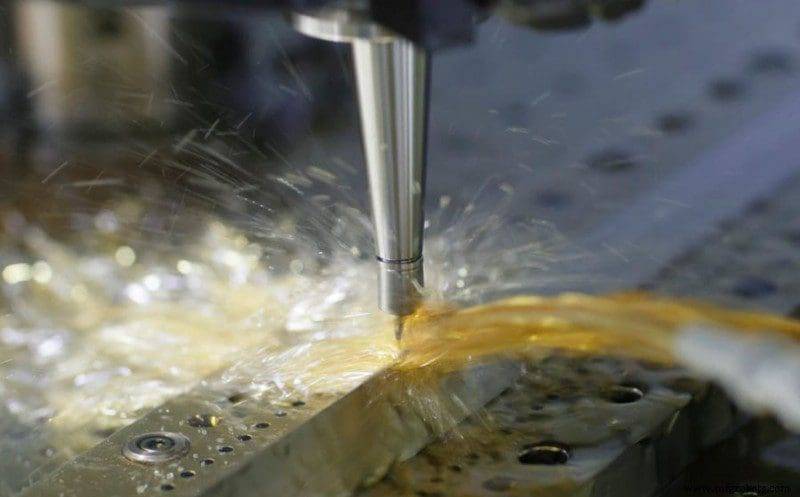
Probing system – in-process inspection reduces errors
Software & Programming
CAM software capable of collision detection and toolpath optimization (e.g., hyperMILL, NX, Mastercam)
Post-processor verified for the exact machine model
Simulation to verify the program before cutting metal
Quality Assurance
ISO 9001:2015 or AS9100D (aerospace)
CMM inspection reports included
Surface finish measurement (Ra, Rz)
First article inspection (FAI) per AS9102
Material Expertise
Aluminum (6061, 7075)
Stainless steel (303, 304, 316, 17-4)
Tool steels (D2, A2, S7)
Titanium (Grade 5, 23)
Inconel, Monel, Hastelloy
Plastics (PEEK, Ultem, Acetal)
05Step-by-Step Process for Ordering 5 Axis CNC Service
Follow this exact workflow to avoid delays and cost overruns.
Step 1: Prepare your 3D model
Export STEP (AP242) or IGES. Include all tolerances on a separate 2D drawing. Do not rely on the model alone – specify critical dimensions and surface finishes.
Step 2: Design for manufacturability (DFM) review
Most 5 axis services offer free DFM feedback. They will check:
Minimum tool clearance (typically 3mm diameter for deep ribs)
Undercut accessibility
Fixturing points
Stress risers
Step 3: Request a quote
Provide: part name, quantity, material, required tolerances, surface finish, and delivery deadline. Ask for:

Unit price (breakdown: machining, setup, tooling, inspection)
Setup fee (if any)
Lead time (days to first article)
Shipping terms (EXW, FOB, DDP)
Step 4: Review the setup plan
A professional provider will send a fixturing diagram. Verify that the part is held securely without deformation. For thin walls (<1.5mm), ask about vacuum fixtures or soft jaws.
Step 5: Approve first article
After machining, the provider sends a first article inspection report (typically 10-20 critical dimensions measured on a CMM). Approve in writing before full production.
Step 6: Production and shipping
For orders above 50 pieces, ask for SPC data (statistical process control) to ensure consistency. Request photos or video of the machine running if you cannot visit.
06Common Mistakes and How to Avoid Them
Mistake 1: Assuming any 5 axis machine can do any part
Reality: Machine dynamics vary. A 5 axis mill with 30 hp and 12,000 RPM is fine for steel but slow for aluminum. Always match machine specs to your material.
Mistake 2: Ignoring tool access
Even with 5 axis, a tool cannot reach inside a 2mm hole that is 50mm deep. Solution: specify EDM for such features or redesign with larger radii.
Mistake 3: Skipping simulation
Without CAM simulation, a rapid move can crash into the rotary table. A single crash can damage a $500,000 machine. Insist on a simulation screenshot before machining starts.
Mistake 4: Over-tolerancing
Calling out ±0.005 mm on every dimension makes the part 3-5x more expensive. Only apply tight tolerances to mating features. Use ±0.1 mm for non-critical faces.
07Cost Structure of 5 Axis CNC Service
Understanding pricing helps you budget and negotiate.
Example total for a typical aerospace bracket (200g aluminum, 50 pieces):
Programming: 3 hours @ $150 = $450
Setup: $200
Machining: 0.8 hours/piece × 50 = 40 hours @ $180 = $7,200
Tooling: $120 (two end mills, one drill)
Inspection: $150 (FAI only, then spot checks)
Material: $8/piece × 50 = $400
Total: $8,520 → $170.40 per piece
Compare with 3 axis: 7 setups, longer cycle, more scrap → estimated $12,600 total → $252 per piece. 5 axis saves 32%.
08Frequently Asked Questions
Q: What is the maximum part size for 5 axis CNC service?
A: Typical bed sizes: 600×400×400 mm to 2000×800×700 mm. For larger parts, ask about gantry-style 5 axis machines (up to 4000 mm).
Q: Can 5 axis machine hardened steel (HRC 55+)?
A: Yes, using carbide or CBN tools and rigid machines. Expect slower feed rates (50-200 mm/min) and higher tool wear. For HRC 60+, consider hard milling or EDM.
Q: How long does a typical 5 axis job take?
A: Prototype (1-5 pieces): 5-15 business days. Production (50-500 pieces): 15-30 days including setup and first article.
Q: Do I need to provide a physical sample?
A: No. A STEP file and a PDF drawing with tolerances are sufficient. A sample is helpful for reverse engineering but adds cost.
Q: What file formats are accepted?
A: STEP (.stp), IGES (.igs), SolidWorks (.sldprt), Parasolid (.x_t), and sometimes STL (for visualization only, not machining).
09Actionable Conclusion: Your Next Steps
Here is a repeat of the core takeaway: 5 axis CNC service is not just for complex parts – it is the most cost-effective solution for any part requiring multiple operations, tight angular tolerances, or difficult-to-machine materials. The reduction in setups, fixturing, and scrap often outweighs the higher hourly rate.
Action plan for you:
1. Audit your current parts – Identify which components require three or more setups. These are prime candidates for 5 axis.
2. Request a DFM review – Send your STEP files to three different 5 axis service providers. Ask for cycle time estimates and cost breakdowns.
3. Compare apples to apples – Get quotes for both 3+2 positioning and true simultaneous 5 axis. For parts with continuous contours,only true 5 axis works.
4. Run a test order – Start with 5-10 pieces to validate quality and lead time before committing to large volumes.
5. Lock in quality metrics – Define acceptable CMM deviation, surface finish, and delivery window in a written quality agreement.
Do not let the perceived complexity or cost deter you. Most shops report a 30-50% reduction in total manufacturing cost when switching from 3 or 4 axis to 5 axis for suitable parts. The key is matching your part geometry to the right service provider.
For further verification, refer to authoritative sources:
ISO 10791 series (test conditions for 5 axis machining centers)
ASME B5.54 (methods for performance evaluation of CNC machining centers)
SME technical papers on 5 axis simultaneous machining
Now take action: gather your part files, request quotes from three providers, and see the difference for yourself.