
Quick answer: The unit purchase price is often only one part of the total ownership cost for stainless steel machining. The real expense is shaped by material selection, machining complexity, and long-term part performance. Choosing a supplier based solely on a low quote can lead to higher costs from rework, premature failure, or production delays. A detailed engineering review upfront is crucial for accurate cost and performance prediction.
Selecting a partner for precision CNC machining of stainless steel components involves more than comparing quotes. The challenge lies in balancing initial cost with long-term reliability, especially when tight tolerances and complex geometries are required. The wrong choice can silently erode project budgets through unexpected tool wear, surface finish issues, or dimensional inaccuracy.
Table of Contents
1. Why Stainless Steel Presents Unique Machining Challenges
2. Key Cost Drivers Beyond the Raw Material
3. The Critical Role of Tooling and Process Strategy
4. How to Evaluate a Machining Partner’s Capability
5. Common Questions About Stainless Steel Machining
Why Stainless Steel Presents Unique Machining Challenges
Stainless steel is not a single material but a family of alloys. Each grade, from common 304 to harder 316 or precipitation-hardening types like 17-4 PH, behaves differently under a cutting tool. Their work-hardening tendency and low thermal conductivity create a perfect storm for machining difficulty.
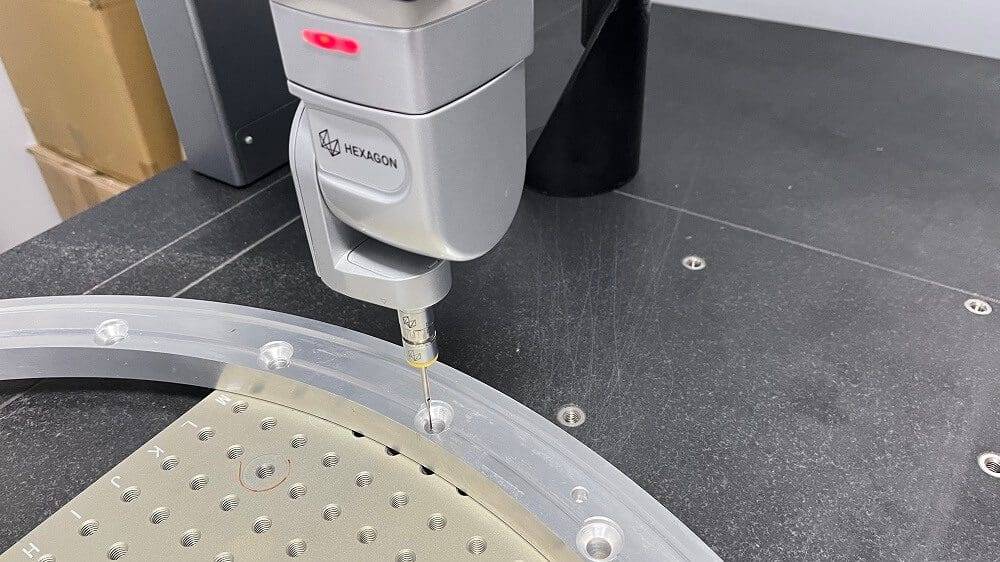
Heat builds up rapidly at the cutting edge instead of being carried away by the chips. This heat softens the tool, accelerating wear and potentially altering the metallurgical properties of the part surface. Furthermore, the material’s toughness leads to built-up edge on tools, which degrades surface finish and dimensional accuracy. Understanding these inherent properties is the first step toward effective machining process design.
The consequence of ignoring these challenges is direct and costly. Premature tool failure increases consumable costs and machine downtime. Poor surface finishes may not meet corrosion resistance or hygiene standards, requiring secondary operations. In severe cases, subsurface damage from improper machining can become a site for stress corrosion cracking, leading to catastrophic part failure long after installation.
Key Cost Drivers Beyond the Raw Material
While alloy grade significantly influences material cost, it is often secondary to machining time and tooling expense. A part with intricate internal features or thin walls will require more sophisticated, slower machining strategies than a simple bracket. Every additional setup, tool change, and non-cutting movement adds to the cycle time.
Secondary operations frequently become the hidden cost multiplier. Achieving a specific surface finish for sealing or cleanliness might demand hand polishing or specialized abrasive processes. Deburring complex internal passages adds labor. Heat treatment for stress relief or hardening introduces another processing step and potential for distortion requiring correction.
The table illustrates how application requirements dictate cost. A supplier like YPMFG can help buyers analyze their drawings to identify which factors dominate the quote, often suggesting design for manufacturability tweaks that simplify production without compromising function.
The Critical Role of Tooling and Process Strategy
Successful stainless steel machining relies on a deliberate strategy, not default parameters. Tool selection is paramount. Carbide grades with specialized coatings to withstand heat and abrasion are standard. Tool geometry is equally critical; a positive rake angle and sharp edge help shear the material cleanly, reducing cutting forces and heat generation.
The machining process itself must be aggressive yet controlled. Light, finishing-style cuts can actually worsen work-hardening. Using appropriate feed rates and depths of cut to get under the work-hardened layer is essential. Effective coolant application is non-negotiable; it must reach the cutting interface to control temperature and evacuate chips, preventing re-cutting and tool damage.

Neglecting process strategy leads directly to quality issues. Chatter marks from unstable cuts, poor hole finish from worn drills, and inconsistent dimensions from thermal growth are all symptoms of a suboptimal process. These defects are often only found during inspection or assembly, representing a total loss of the machining time and material invested.
How to Evaluate a Machining Partner’s Capability
The first indicator is their willingness to engage in a technical discussion before quoting. Do they ask about the part’s function, load conditions, and corrosion environment? A capable partner understands that the right stainless steel grade selection is foundational to part success, not just a line item on a purchase order.
Request evidence of similar work. While proprietary designs are protected, a supplier should be able to describe past projects involving comparable materials, tolerances, and finishes. Inquire about their quality control process for stainless steel. Do they use post-process gauging, CMM inspection, or surface profilometers? How do they document and manage material traceability from mill certificate to finished part?
Finally, assess their communication and project management approach. CNC machining services for critical components require clarity. A structured process for design review, prototype approval, and production release minimizes misunderstandings. YPMFG supports projects by providing detailed feedback on submitted specifications, highlighting potential manufacturability concerns early in the design phase.
Common Questions About Stainless Steel Machining
What is the most machinable stainless steel grade?
Grade 303 is formulated with added sulfur for improved chip breaking and reduced cutting force, making it the easiest to machine. However, its corrosion resistance is slightly lower than 304, and it is not recommended for welding or very high corrosion environments.
Why does my stainless steel part have burrs or a rough finish?
This often results from dull tools or incorrect speeds and feeds. As tools wear, they plow through material rather than cutting it cleanly, leaving deformation and burrs. A review of tool life management and cutting parameters usually resolves this.
Can you machine hardened stainless steels like 17-4 PH?
Yes, but strategy depends on the condition. It can be machined in the annealed “A” condition and then age-hardened, or machined in the hardened “H” condition using appropriate tooling and very rigid setups. The latter is more challenging and costly.
How important is coolant for stainless steel machining?
Extremely important. A high-quality, correctly applied coolant reduces heat,improves chip evacuation, and extends tool life. For some operations like deep-hole drilling, it is critical. However, for certain medical or food-grade parts, coolant selection must meet specific biocompatibility or cleanliness standards.
What file format is best for sending a part for quotation?
A 3D solid model (e.g., STEP, SLDPRT) with a fully dimensioned 2D drawing (PDF or DWG) is ideal. The model defines geometry, while the drawing specifies critical tolerances, finishes, material callouts, and any special notes that cannot be conveyed in the 3D file.
Need Help With Your Stainless Steel Component?
The long-term performance of a machined stainless steel part is determined in the planning stages. A comprehensive engineering evaluation that considers material behavior, manufacturability, and application demands prevents costly surprises. Rather than focusing solely on price per piece, consider the total cost of ownership, which includes reliability, maintenance intervals, and system performance.
You can send your specifications and CAD files to YPMFG for a detailed review. Their team can provide insights on design optimization, recommend the most suitable stainless steel alloy for your environment, and outline a manufacturing process designed for quality and efficiency. This collaborative approach helps transform a complex procurement into a strategic, value-driven decision.