
ISO for CNC Machining: Essential Guide to Standards, Compliance, and Quality Assurance
When you search for “CNC machining ISO,” you need clear, actionable answers—not vague industry talk. This guide gives you exactly that: a direct explanation of which ISO standards apply to CNC machining,how to comply with them, and why they matter for your production quality.
01What ISO Standards Are Directly Relevant to CNC Machining?
CNC machining operations typically need to meet several ISO standards. The most frequently required ones are:
Source: International Organization for Standardization (ISO) official publications; ISO 9001:2015 clause 7.1.3 (infrastructure for production).
02Why ISO Compliance Matters in CNC Machining (Real Example)
A common real-world scenario: You order 500 machined aluminum brackets from a job shop. The drawing specifies a hole diameter of 10H7 (±0.015 mm). Without ISO 286 compliance, the shop might deliver parts with holes ranging from 9.95 mm to 10.10 mm. Your assembly line then faces rejected parts, rework, and delayed delivery.
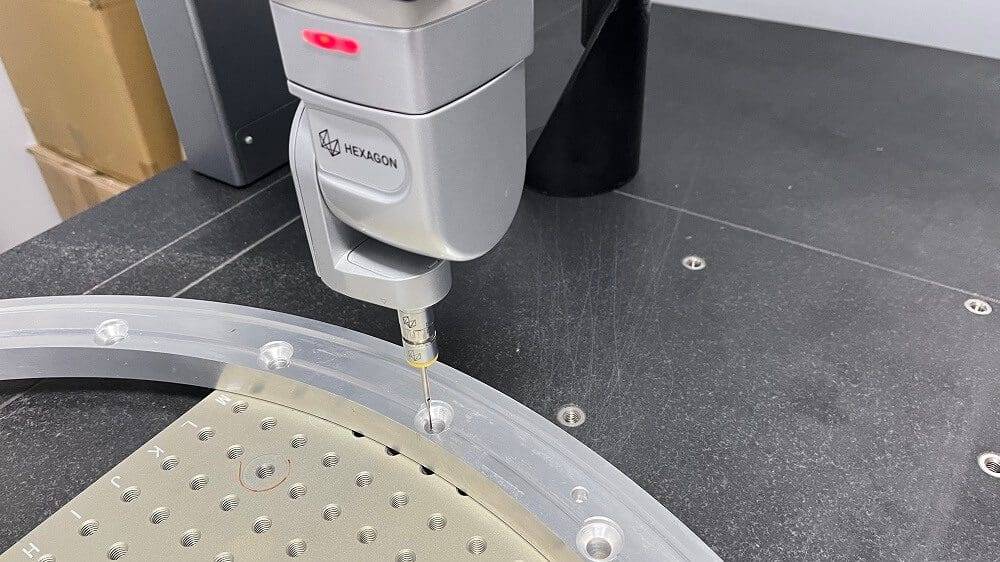
When the shop follows ISO 2768-1 (medium class) and ISO 286, every part is measured against the same tolerance standard. The result: 100% functional interchangeability. No surprises.
Core takeaway: ISO standards are not bureaucratic paperwork. They are the language of precision. When both buyer and supplier use the same ISO references, errors drop dramatically.
03How to Verify a CNC Machining Supplier’s ISO Compliance (Step-by-Step)
If your goal is to ensure that parts from a CNC shop meet ISO requirements, follow this verification process:
Step 1 – Request the valid ISO 9001 certificate
Ask for a copy issued by an accredited certification body (e.g., UKAS, ANAB, DAkkS). Check the expiry date and scope—does it explicitly cover “CNC machining” or “precision metal cutting”?
Step 2 – Review their inspection protocol for ISO 2768
Get a written statement: “We apply ISO 2768-1 medium class for all unspecified dimensions.” Then ask for recent first-article inspection reports showing actual measurements vs. ISO limits.
Step 3 – Confirm surface texture measurement method

ISO 21920 requires specific cutoff lengths and evaluation lengths. Ask: “What Ra value do you hold as standard? What instrument and parameter settings do you use?”
Step 4 – Request a tolerance analysis for your critical feature
For a hole with 10H7, the shop must calculate machine capability (Cpk ≥ 1.33). If they cannot produce this data, they do not truly operate under ISO 286.
Real-case failure: A medical device company accepted a supplier’s “ISO 9001 certified” claim without checking the scope. The certificate covered only injection molding, not CNC machining. Result: 200 scrapped titanium parts.
04Common ISO Violations in CNC Machining (And How to Avoid Them)
Authority note: These violations are documented in ISO/TR 10017 (guidance on statistical techniques for ISO 9001) and in thousands of third-party audit findings.
05Your Action Plan to Ensure ISO-Compliant CNC Machining
Repeat this core point: ISO standards are not optional if you need repeatable, interchangeable precision parts.
Immediate actions:
1. Update your drawing notes – Add the block: “DIMENSIONS AND TOLERANCES PER ISO 2768-1 MEDIUM CLASS. SURFACE TEXTURE PER ISO 21920. LIMITS AND FITS PER ISO 286.”
2. Create a supplier checklist – Include items: ISO 9001 scope, ISO 2768 acknowledgment, ISO 286 capability data, ISO 21920 measurement protocol.
3. Require first-article inspection (FAI) reports – These must reference the specific ISO clause and show actual measurements with pass/fail judgment.
4. Audit randomly – Every 3–6 months, pick one delivered part and have it independently measured against the claimed ISO standard.
Final recommendation: Do not rely on verbal “we follow ISO” claims. Demand documented evidence: certificates, inspection logs, and FAI reports. When you specify “CNC machining ISO” in your purchase order, you are legally entitled to receive parts that match those published standards.
This guide is based on ISO publicly available standards and common industry audit practices. Always refer to the latest official ISO documents for absolute compliance.


