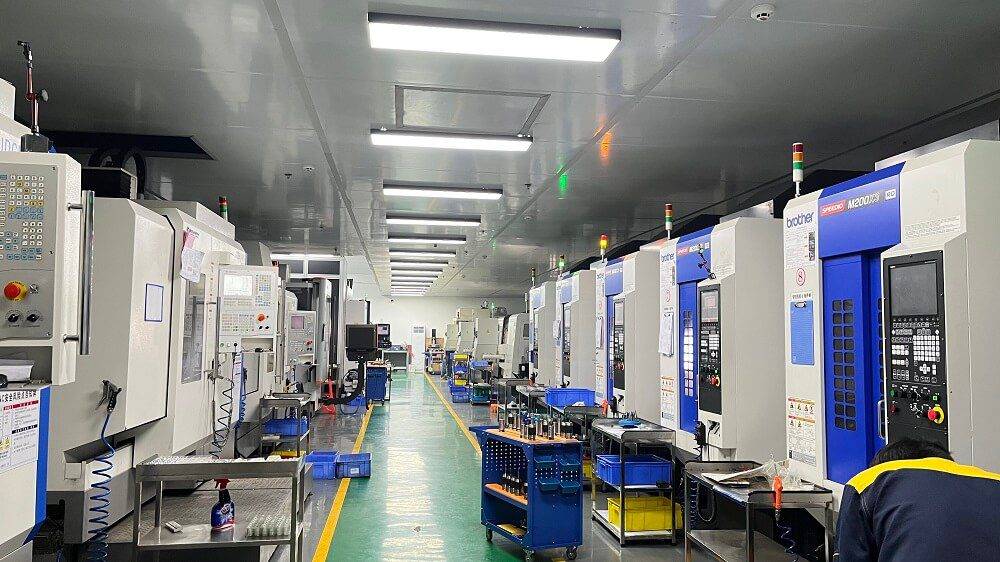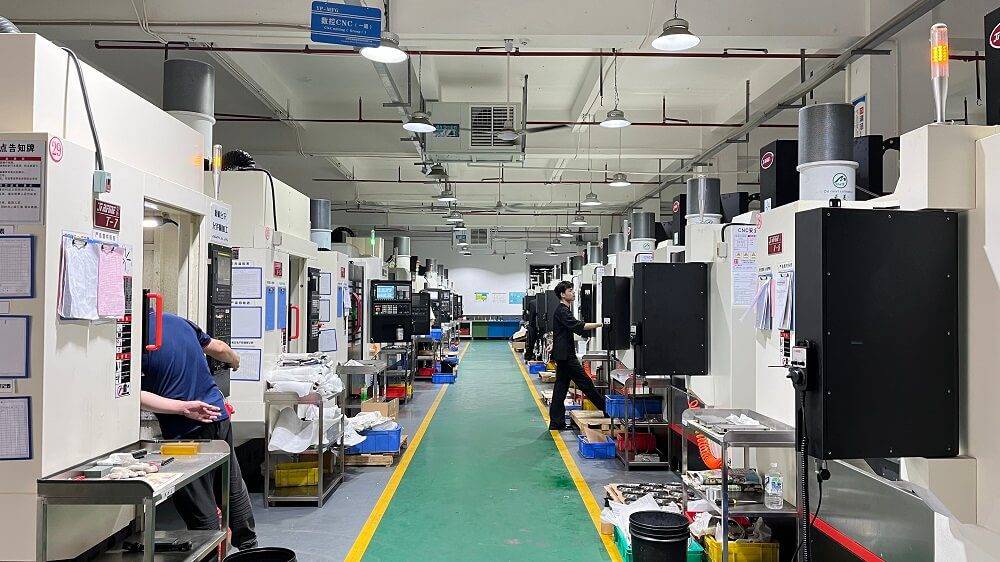
01What Is Short Run CNC Machining?
Short run CNC machining refers to producing a limited quantity of machined parts using computer numerical control (CNC) mills, lathes, or routers. Unlike high-volume production (thousands of parts), short runs focus on flexibility, speed, and cost-efficiency for small batches. Typical applications include:
Functional prototypes for design validation
Bridge tooling before mass production
Custom replacement parts for legacy equipment
Small-batch end-use components for niche products
02Why Choose Short Run CNC Machining? Key Advantages
1. No minimum order quantity (MOQ) – You pay only for what you need, from 1 to 100 pieces.
2. Fast turnaround – Parts can be machined in 3–7 business days (vs. weeks for injection molding tooling).
3. Low upfront cost – No expensive molds or dies; setup fees are minimal.
4. Design flexibility – Changes are easy and cheap to implement between batches.
5. Same precision as production runs – Tolerances as tight as ±0.005 mm (ISO 2768-fine standard) are achievable.
03Cost Breakdown for Short Run CNC Machining
For a typical short run (e.g., 10–50 pieces), total costs consist of:
Real‑world example: A medical device startup needed 15 custom brackets made from 316L stainless steel. Traditional injection molding would cost $8,000 in tooling and take 6 weeks. Short run CNC machining cost $1,200 total and delivered parts in 5 days – saving 85% upfront and cutting lead time by 80%.
04Material Selection for Low-Volume CNC Machining
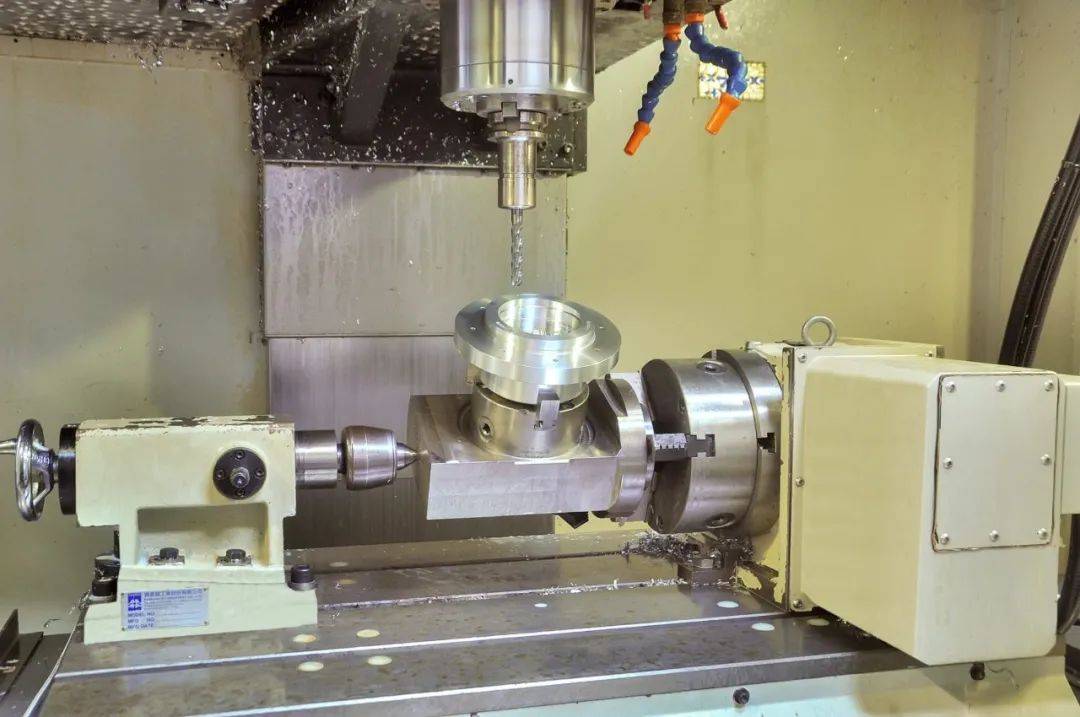
Most engineering materials are available for short runs. Common choices:
Aluminum 6061/7075 – Best balance of cost, machinability, and strength. Ideal for brackets, housings, heat sinks.
Stainless Steel (303, 304, 316L) – Corrosion‑resistant, used in medical, food, marine applications.
Brass/C360 – Excellent machinability, often for electrical terminals or decorative parts.
POM (Delrin) – Low friction, high stiffness; gears, bushings, jigs.
ABS / PC – For non‑structural housings and prototypes.
Pro tip: For short runs, avoid exotic alloys (e.g., Inconel, Titanium Grade 5) unless necessary – they double machining time and tool wear.
05Lead Times and What Affects Them
Standard short run CNC machining lead times (from CAD file to parts in hand):
Factors that extend lead time:
Large part size (over 300 mm in any dimension)
Hard materials (tool steel, titanium)
Secondary operations (threading, welding, assembly)
06Common Applications and Case Studies
Case 1: Custom automotive repair part
A mechanic needed 8 replacement shifter forks for a 1990s sports car. Original parts were discontinued. Short run CNC machining from 4140 steel produced identical parts in 4 days at $45 each – versus $0 if unavailable.
Case 2: Small business product launch
A hardware entrepreneur designed a bicycle phone mount. Initial market test required 50 units. Short run CNC machining from 6061 aluminum cost $28 per part, delivered in 6 days. After positive feedback, he scaled to 500 units using the same process – no tooling change.
Case 3: Research lab fixture
A university lab needed 12 custom vacuum chamber adapters with o‑ring grooves. Short run machining from 304 stainless steel met ±0.02 mm tolerance and was ready in 7 days, allowing the experiment to stay on schedule.
07How to Optimize Your Design for Short Run CNC Machining
Follow these five rules to reduce cost and lead time:
1. Design for standard tooling – Use hole sizes that match common drill bits (e.g., 3mm, 5mm, 6mm) rather than custom diameters.
2. Avoid deep cavities – Keep depth-to-diameter ratio below 4:1 to prevent long machining cycles.
3. Use generous fillets – Internal corners should have at least 1 mm radius to avoid slow EDM finishing.
4. Reduce setups – Design parts that can be machined in one or two orientations (minimize need for custom fixtures).
5. Specify realistic tolerances – Only apply tight tolerances (±0.01 mm) to critical mating surfaces. Looser ±0.1 mm everywhere else cuts machining time by 30%.
08Step-by-Step Process for Ordering Short Run CNC Machining
1. Prepare 3D CAD file – STP or IGES format preferred. Include all dimensions and tolerances.
2. Select material and finish – Refer to the material table above.
3. Request quotes from 2–3 suppliers – Provide the CAD file, quantity, and material. Most return quotes within 24 hours.
4. Review DFM feedback – A good supplier will flag problematic features (e.g., undercuts, thin walls) and suggest changes.
5. Approve sample – For runs over 20 pieces, request a first-article inspection report.
6. Release production – Typical payment terms: 50% upfront, 50% upon completion.
7. Receive parts and inspect – Use calipers, micrometers, or a CMM to verify critical dimensions.
09Quality Standards and Inspection
Reputable short run CNC machining follows international standards:
ISO 2768-1 – General tolerances for linear and angular dimensions (medium or fine class)
ISO 2768-2 – Geometrical tolerances (flatness, straightness, perpendicularity)
Surface roughness – Typically Ra 1.6–3.2 µm as-machined; Ra 0.8 µm achievable with finishing pass
Always request a CMM (coordinate measuring machine) report for critical features. For non‑critical parts, a visual and dimensional check by the machinist is standard.
10When NOT to Use Short Run CNC Machining
Short run CNC machining is not optimal for:
Quantities above 500 pieces – At that volume, injection molding or die casting becomes cheaper per part.
Very large parts (> 1 meter) – CNC machine beds are limited; consider fabrication or large-format 3D printing.
Extreme volume production – If you need 10,000 identical parts monthly, dedicated automation is more cost‑effective.
11Actionable Conclusion: Your Next Steps
Short run CNC machining is ideal for low-volume production, typically 1–100 parts, especially for prototypes, pilot runs, replacement parts, or market testing. Compared with traditional mass production, it requires lower upfront cost, offers flexible lead times, and allows faster adjustments after design changes.
The key to success is confirming material, tolerances, surface finish, inspection requirements, and quantity upfront. For very small quantities, unit cost is affected by programming and setup time, but with a clear drawing and machinable design, small-batch CNC machining is much more efficient than hand work or large-volume tooling. At YPMFG, short run CNC projects are reviewed for manufacturability, material selection, and process fit to help control cost and lead time, ensuring parts are produced correctly the first time.
Immediate actions to take:
1. Define your part’s critical dimensions – Identify which features must be accurate to ±0.01 mm and which can be ±0.1 mm.
2. Choose a standard material – Start with aluminum 6061 or POM unless application requires otherwise.
3. Get three competitive quotes – Use platforms or direct outreach to machine shops that advertise short run capabilities.
4. Request a design-for-manufacturing review – Most shops provide this free; it saves 20–40% on cost.
5. Order a small sample run (1–5 pieces) – Verify fit and function before committing to the full batch.
By following this guide, you can confidently leverage short run CNC machining to bring your parts to market faster, with lower risk and no wasted tooling investment.