
China's 3D printing technology is reshaping the entire chain from beginning to end, which covers from design verification to end product manufacturing. This technology is no longer just a concept in the laboratory. It has now become a strategic tool in the hands of manufacturing decision-makers. This tool has both flexibility and scale effects. What does it mean? This means that companies can complete prototype iterations in hours instead of weeks. This means that the cost of manufacturing complex structures will not increase non-linearly with geometric complexity. It also means that the geographical layout of the supply chain will gain a new degree of freedom.
1. § The myth of decision makers: the double cage of cost and time
What are the limitations of traditional manufacturing processes? The long cycle of mold development and the huge initial investment constitute the first difficult threshold to cross. For an injection mold of moderate complexity, it often takes six to eight weeks from design to test molding. And its cost can easily exceed tens of thousands of yuan. Once the design needs to be modified, the entire process almost needs to be completely scrapped and started all over again. This does not include warehousing costs, logistics costs and the opportunity costs lost due to lagging market response. This solution based on basically changing the equation is provided by China 3D Printing. The core logic of additive manufacturing is "layer by layer accumulation", which bypasses the mold link. For small batch production or prototype manufacturing, the time is compressed to one to two days, and the fixed apportionment part of the single-piece cost almost disappears.
A common example can be used to illustrate the situation: There is a consumer electronics company. During the new product development stage, the engineering team had to make four major changes to the internal bracket structure. If traditional CNC processing is used, each modification would have to wait for a week, and three to five samples would need to be obtained. However, with local 3D printing services, the waiting time for each modification is reduced to twenty-four hours, and twenty samples for assembly testing can be obtained at a time. In the end, the entire verification cycle was shortened from the estimated two months to three weeks, and the benefits of the early launch of the product far exceeded the expenditure on printing services.
In the decision-making reference system, when the production quantity is lower than a certain threshold, such as within 5,000 pieces, the comprehensive cost of a single piece of 3D printing, including time cost, is often lower than that of open mold production. As designs go beyond two iterations, the marginal benefits of additive manufacturing increase exponentially. When the geometric structure of the product contains special-shaped curved surfaces, internal flow channels or lattice structures, traditional processes cannot even be manufactured economically.
2. § The Dilemma of Engineers: The Broken Bridge from Drawings to Real Things
Designers' imaginations are often constrained by what are called 'manufacturability rules', which are limited by manufacturing processes. Draft angle, wall thickness uniformity, parting surface position, these rigid constraints of traditional processes are like an invisible cage, imprisoning breakthroughs in product performance. However, 3D printing brings almost absolute freedom to design. There is no need to ask 'whether this structure can be demoulded', but 'whether this structure can achieve optimal mechanical properties'.
Comparison of common design paradigms:
Traditional design (constrained by subtractive manufacturing)
Features: Regular geometry, equal wall thickness, tool path need to be avoided
Performance: a compromise between functionality and manufacturing
Assembly: Multiple parts connected by fasteners
Additive design (adapted to additive manufacturing)
Features: Topology optimization, variable thickness lattice, conformal cooling channels
Performance: Functional solutions close to theoretical limits
Assembly: A single part realizes the function of a complex component
An industrial equipment manufacturer was faced with the need to reduce the weight of a hydraulic manifold and to improve its performance. The traditional design was made of seven independent parts welded together, with a total weight of 12 kilograms. The internal flow channel had right-angle turns, resulting in serious pressure losses. After redesigning using additive thinking, the entire manifold was manufactured as an integral component. The internal flow channel adopted smooth curves and a bionic branch structure. The weight was reduced to five kilograms, the pressure drop was reduced by 40%, and all potential leakage points were eliminated.
3. § Procurement Confusion: How to Solve Supply Chain Vulnerability
The risk of fluctuations in the global supply chain has evolved from an occasional event to a normal challenge. The uncertainty of cross-border logistics, tariff fluctuations caused by geopolitics, and interruptions in the supply of raw materials have exposed the inherent fragility of the "just-in-time" inventory system. Distributed manufacturing, a concept that has been discussed for many years, is getting a real practical carrier through 3D printing technology.
Deploy digital inventory to regional service centers close to the point of use, which means printing the required number of parts only when they are needed. There is an agricultural machinery company that has digitized the drawings of more than 500 vulnerable spare parts for old models. In the past, these spare parts had to be maintained in high inventories in central warehouses, and a large amount of money was invested in metal parts that might only be used twice a year. After the transformation, the central warehouse was replaced by a 3D printing workstation with an area of less than 20 square meters. When a customer reports for repair, the workstation prints and sends it out within 24 hours. The overall spare parts inventory cost is reduced by 85%, but the satisfaction rate increases from 91% to 98%.
Three-tier structure of risk mitigation mechanism:
1. At the physical level, there are multiple printing devices of different types, which serve as backups for each other. Even if one of them fails, it will not affect the overall production capacity.
2. For the data layer, there are encrypted STP files, or 3MF files, which are mirrored and stored on multiple secure servers around the world.
3. At the agreement level, there is a pre-signed agreement with flexible production capacity, which can activate nodes with spare capacity within forty-eight hours.
4. § Rational review of common issues
Q: Can the material performance of 3D printing be comparable to traditional processes?
Answer: Yes. At present, the mechanical properties of printed parts made of PEEK, titanium alloy, and AlSi10Mg materials have reached more than 95% of forging standards.
Q: Does the surface roughness of the printed parts meet the requirements for direct use?
A: It cannot be directly applied to high-gloss surfaces. The process it relies on is that SLM needs to be sandblasted or machined before it can be used. MJF can meet the requirements of most functional surfaces.
Q: When does the cost of printing a single piece become lower than the cost of molding?
A. When the demand was lower than 2,000 pieces that year, the specific turning point required calculation of mold amortization, warehousing and capital costs.
Q: Can the printing accuracy reach ±0.05mm?
Yes, it can be achieved under certain conditions. Regarding resins, it can reach plus or minus 0.03 mm. For metals, stabilization within plus or minus 0.1 mm requires design compensation.
Q: Does the printing speed match the mass production cycle?
A, it does not match the kind of cycle that is measured in seconds, but as a supplementary process, it is fully capable of spare parts, tooling and small batches.
Q: How to verify the internal quality of prints?
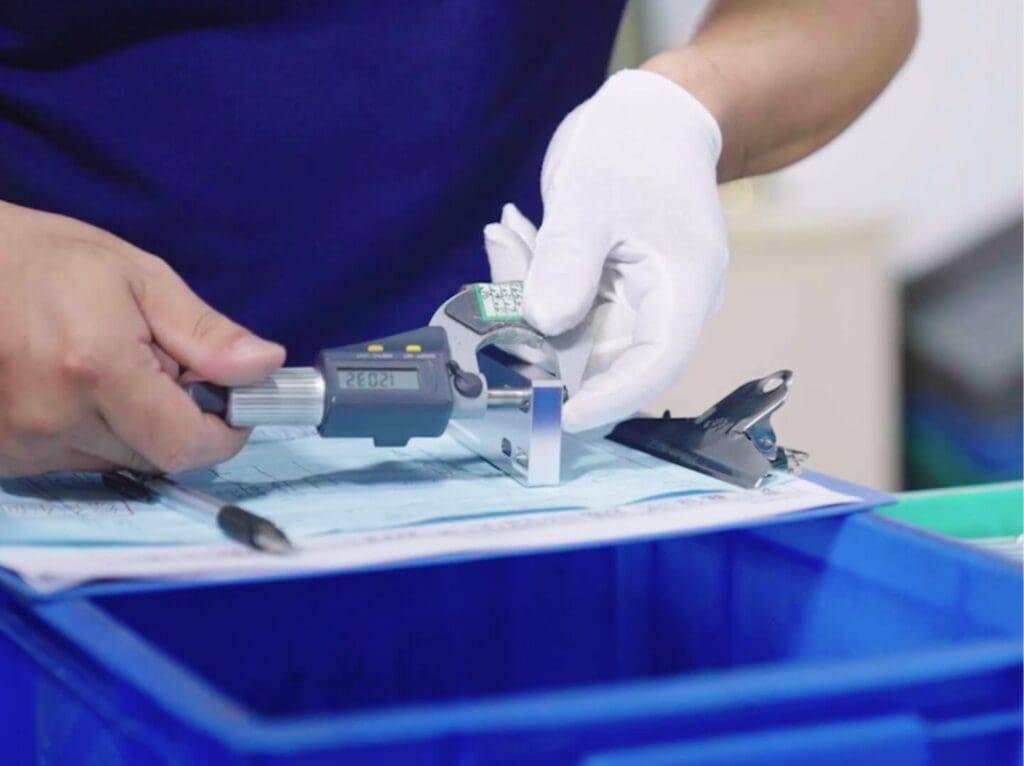
A: Use industrial CT scanning to carry out 100% non-destructive inspection on the first piece of each batch, and build a correlation model between process parameters and porosity.
5. § The cornerstone of action: the rational path from cognition to deployment
Advancement itself is not where the value of technology lies. Rather, the value of technology depends on how well it fits business needs. For policymakers, the top priority is not just casual talk. The key is to build a systematic evaluation framework.
Core dimensions of the evaluation matrix:
Geometric Complexity Quotient: How many features in your products fall into the category of “impossible or extremely difficult to manufacture with traditional processes”?
Demand Volatility: Does your part demand fluctuate in unpredictable pulses?
In terms of revenue or customer satisfaction, what is the marginal contribution of shortening the delivery cycle by one day? Is this where the value of response time lies?
Design iteration frequency: In the past twelve months, how many substantive revisions have been made to the drawings of your core product?
Practical advice for starting a pilot project:
1. Starting from the internal tooling, select three fixtures or inspection tools that currently have high outsourcing costs and long delivery times, try to redesign them, and then print them.
2. Build a digital parts warehouse, sort out fifty spare parts, these spare parts have the lowest turnover rate, and complete the full-parameter digital modeling of these spare parts.
3. For a new low-volume component, implement dual paths in parallel, that is, run the two paths of traditional outsourcing and printing services at the same time, and then conduct a three-month cost and timeliness comparison.
4. To cultivate that kind of internal additive thinking, you can arrange for its core engineers to complete an in-depth topology optimization workshop, rather than just limited to learning software operational matters.
Additive manufacturing is not an isolated technology option; it is actually a cognitive revolution involving manufacturing freedom, supply chain flexibility, and product performance limits. It will not completely replace all traditional processes overnight, but those organizations that can take the lead in thoroughly understanding and using its unique economic laws will occupy an asymmetric and relatively unique advantageous position in future competition. The ultimate question worth asking is not "Is 3D printing mature enough?" but "What should your actual product look like outside the mental prison formed by the mold?" When you start to use this perspective to examine every manufacturing decision, the seeds of this change have already been sown. Now it's time to pick up the batch of samples that have still not arrived after three weeks of waiting, and then ask the next question, that is, if I can get it tomorrow, how will my design be different?