
"Kao Gong Ji" said, "The materials are beautiful and the workmanship is good, which is beneficial to the time." However, titanium alloy is a material that is beautiful in appearance, but it is difficult to find exquisiteness.
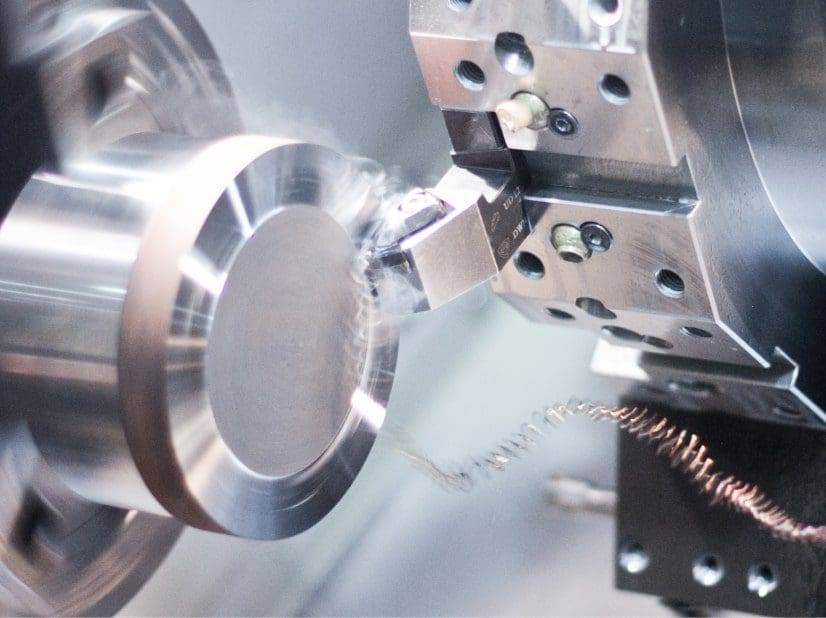
The parts called titanium alloy CNC turning use CNC lathes to turn titanium rods into precision rotary bodies, ranging from bone nails to engine casings. Its specific strength is higher than steel, and its corrosion resistance is better than stainless steel. However, its thermal conductivity is very low, and its elastic modulus is like a stubborn donkey. When turning, heat accumulates at the tip of the tool and the chips become a mess. This is the first difficulty.
A batch of orders for titanium alloy bolts were taken over by an aviation parts factory. The engineer patted his chest and said: "According to the 45 steel parameters, the speed will be doubled!" As a result, three blades were scrapped in one morning, with scaly appearance on the surface and dimensions outside the tolerance range. This is a classic tragic case of "thinking with steel to drive titanium". Through comparison, we can know that steel chips are as smooth as silk threads, while titanium alloy chips are like chewed gum—sticky, tough, and difficult to break.
Tool selection is the most important thing. Carbide-coated blades are the basic part, but the cutting edge must be sharp. Blunt knives are meant for squeezing rather than cutting. The rebound of the titanium material will increase, and heat will be generated due to friction, which will burn out the knives in an instant. There used to be a workshop that used universal blades for cheap, requiring three tool changes for each product, which in turn reduced efficiency by 70%. On the contrary, although the price of special titanium alloy blades (for example, with TiAlN coating) is 30% more expensive, the service life is extended by five times. This is a strategy: give up small amounts and save big expenses.
Cutting parameters are like walking a tightrope. Once the linear speed exceeds 60 meters per minute, the temperature of the blade tip will suddenly exceed 1000°C, and the blade will soften like mud. If the speed is low, built-up edge will easily occur, resulting in a rough surface. According to experience, the speed is 40 to 50 meters per minute during rough turning, and can be slightly increased to 60 to 70 meters per minute during fine turning. The feed rate is 0.1 to 0.15 mm per revolution. It should be noted that the chip breaker must be sharp, otherwise the chips will wrap around the workpiece and scratch the processed surface – a medical device factory did not set up high-pressure cooling, and the chip entanglement resulted in 20 pieces of titanium hip joint stems being scrapped in three days. The boss could not sleep at night.
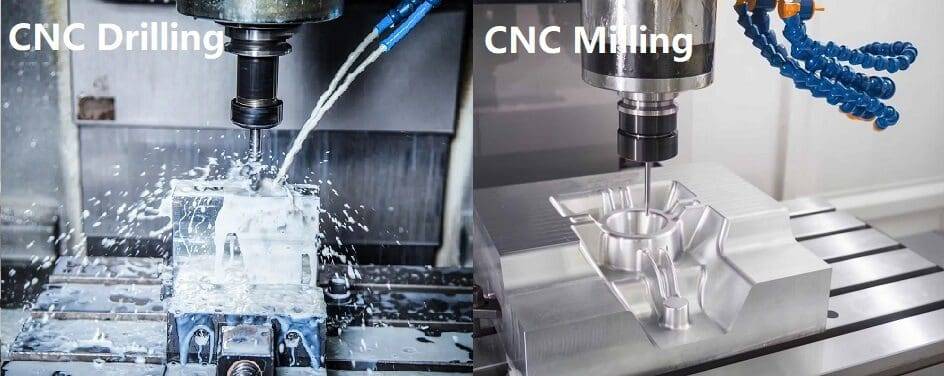
The chips are washed away by the coolant, and the heat is taken away by the coolant. The coolant is not a supporting role but the protagonist. Ordinary water-based liquid is sprayed on and evaporates instantly, leaving the tip of the knife still in a dry state. Cooling requires high pressure, ranging from 70 to 100 bar. The flow rate should be large and directed towards the cutting area, so that the chips can be washed away and the heat can be taken away. A racing parts supplier joked to himself: "In the past, titanium for cars was like splashing water in the desert, but now it is finally taking the lead." In addition, minimal quantity lubrication, also known as MQL, can also be used for finishing with compressed air, but its chip breaking ability is slightly worse.
Every common defect that occurs has its own causes. Among them, surface burns are caused by excessive speed or insufficient cooling; thread rot is caused by the tool retraction speed not being synchronized with the spindle; dimensional drift is caused by the low thermal expansion coefficient of titanium alloy, but the thermal deformation of the machine tool cannot be ignored. I once saw a factory that continued turning for four hours without stopping in order to meet the deadline. Eventually, the diameter of the part changed from Φ20.00 mm to Φ19.94 mm. Why is this? It turned out that the spindle bearing was heating up and the screw was elongating. The countermeasure to this situation is to add a waiting time to the program or use the thermal compensation function.
The key to cost control is to achieve a balance. The price of titanium alloy bars is several hundred yuan per kilogram. Once scrapped products occur, it means losses. However, the cost of cutting tools only accounts for 5% to 10% of the cost of a single piece. If the cutting tools are overspared, the wear of the cutting tools will lead to dimensional instability, and ultimately the entire batch of products will be damaged. If the product is scrapped, you might as well do the following calculation: Assume that the gross profit of each product is 500 yuan. If a scrap occurs due to saving 30 yuan in tool costs, then there will be a net loss of 470 yuan. A smart decision-maker would rather spend 10 yuan more in tool costs per product in exchange for a 99% yield rate.
If efficiency is to be improved, where is the path? High-speed turning is HSC. It is matched with ceramic inserts and the linear speed can reach 200 meters per minute. However, it is only suitable for extremely rigid systems, and it also needs to be sprayed like a waterfall. For machine tools with insufficient thrust, they still operate honestly in the low-speed range. There is another path: using swing turning or polygon turning to reduce the process, but its programming is complicated. It needs to be done step by step, but don’t be greedy for speed.
At this point, readers may ask: Is turning titanium alloy necessarily slow, expensive, and difficult? Not so. At that time, the Wright brothers' aircraft engines used cast iron, and titanium alloys were still in the ore. The dilemma we are facing now is just a normal state in the technology climbing stage. As Chesterton said: "Anything worth doing is worth screwing up and doing again."
Q1: What should I do if the tool wears too fast when turning titanium alloy?
Initial conclusion: Reduce the linear speed to less than 40 meters per minute, and then start high-pressure cooling. Make sure that the blade coating is TiAlN or AlCrN, and the cutting edge is designed with a positive rake angle.
Q2: How to quickly solve the problem of chips entangled with the workpiece?
The first sentence leads to the conclusion that the feed rate should be increased and an insert with a chip breaker should be used. At the same time, the coolant pressure should be increased to above 80 bar to cut off long chips.
Q3: What is the reason for the scaly texture on the surface?
For A, the conclusion drawn in the first sentence is that due to the small cutting depth or the lack of tool relief angle, the elastic recovery of the titanium material causes friction. The feed per revolution should be increased to 0.12 mm, and a sharper blade should be used.
Q4: Thread turning tools are prone to chipping. Are there any tips?
Multiple cuts are used, at least 7 times. The radial depth of cut decreases during each cut. The last two knives have no depth of cut and only perform smoothing operations. At the same time, extreme pressure cutting oil must be applied.
Q5: How to troubleshoot the poor dimensional consistency between batches?
The first sentence leads to the conclusion that we must first confirm whether the machine tool warm-up time is sufficient. This time must be at least 30 minutes. The temperature fluctuation of the coolant must then be detected and controlled within a range of plus or minus 2°C.
At this point, I can reiterate the key points: In the field of CNC turning of titanium alloys, the tool is like a spear, the parameters are like a shield, and the cooling is like a nail. Without any one of these, it will be difficult to escape unscathed. The suggestions for action are: before accepting an order, simulate processing through a test bar, and at the same time record the tool life and surface quality thresholds; when entering the mass production stage, random inspections must be carried out every 50 pieces produced, and the wear amount of the blade flank surface (VB ≤ 0.2 mm) must be checked. Remember, titanium is a material that is not afraid of slow speed, but is afraid of chaotic processing. The road is long and far away, but those who keep searching will eventually see the light.