
Quick answer:
A CNC 5 ejes (5-axis CNC) machine adds two rotary axes to the standard three linear movements, allowing the cutting tool to approach the workpiece from any direction. This eliminates multiple setups, improves surface finish, and makes complex geometries possible in a single operation. It is widely used in aerospace, medical implants, mold making, and precision automotive parts where accuracy and part complexity are critical.
If you design or manufacture parts with undercuts, compound angles, or organic contours, 5-axis machining is often the most efficient way to achieve tight tolerances without excessive fixture costs. However, the higher machine cost, programming complexity, and post-processor requirements mean it is not always the right choice for simple prismatic parts. Understanding when 5-axis adds real value—and when 3-axis or 3+2 strategies suffice—is essential to making a cost-effective purchasing decision.
What Does “5 Ejes” Mean in CNC Machining?
The term “5 ejes” refers to a CNC machine that can move a cutting tool or workpiece along five independent axes simultaneously. In addition to the standard X, Y, and Z linear axes, the machine includes two rotary axes—typically labeled A, B, or C depending on the configuration.
This allows the tool to maintain a constant tangential relationship to the part surface. The result is better surface finish, longer tool life, and the ability to machine features that would otherwise require multiple fixtures or manual repositioning.
How 5-Axis Machining Works

There are two primary types of 5-axis machines: trunnion and swivel-rotary. In a trunnion design, the workpiece tilts and rotates on a table. In a swivel-rotary design, the tool head pivots while the table remains stationary. Each has trade-offs in rigidity, part weight capacity, and accessibility.
Simultaneous 5-axis machining keeps all five axes moving together during cutting. This is necessary for complex surfaces like turbine blades or hip implants. In contrast, 3+2 positioning locks two rotary axes at a fixed angle and cuts in standard 3-axis mode. This is faster, easier to program, and often sufficient for parts with angled features.
The choice between simultaneous and 3+2 depends on part geometry, tolerance requirements, and production volume. Many shops use both strategies on the same machine.
When 5-Axis Machining Is the Right Choice
5-axis machining becomes valuable when a part has features that cannot be reached with a straight tool path. Common indicators include:
Deep cavities with steep side walls
Compound angles that require angled holes or pockets
Freeform surfaces (organic curves, ergonomic shapes)
Thin-walled parts that need minimal vibration
Parts requiring tight tolerances on multiple faces
For simple flat parts with features only on one side, a 3-axis CNC machine is usually more economical. The additional cost of 5-axis equipment and programming is justified only when it reduces total process time, eliminates secondary operations, or improves quality beyond what 3-axis can achieve.
Key Cost Factors: Machine vs. Programming vs. Setup
The purchase price of a 5-axis CNC machine is typically 1.5 to 3 times higher than a comparable 3-axis model. But the total cost of ownership includes programming, tooling, fixturing, and maintenance.
In many cases, the higher machine cost is offset by reduced fixture costs, fewer setups, and less manual handling. The break-even point depends on part complexity and batch size.
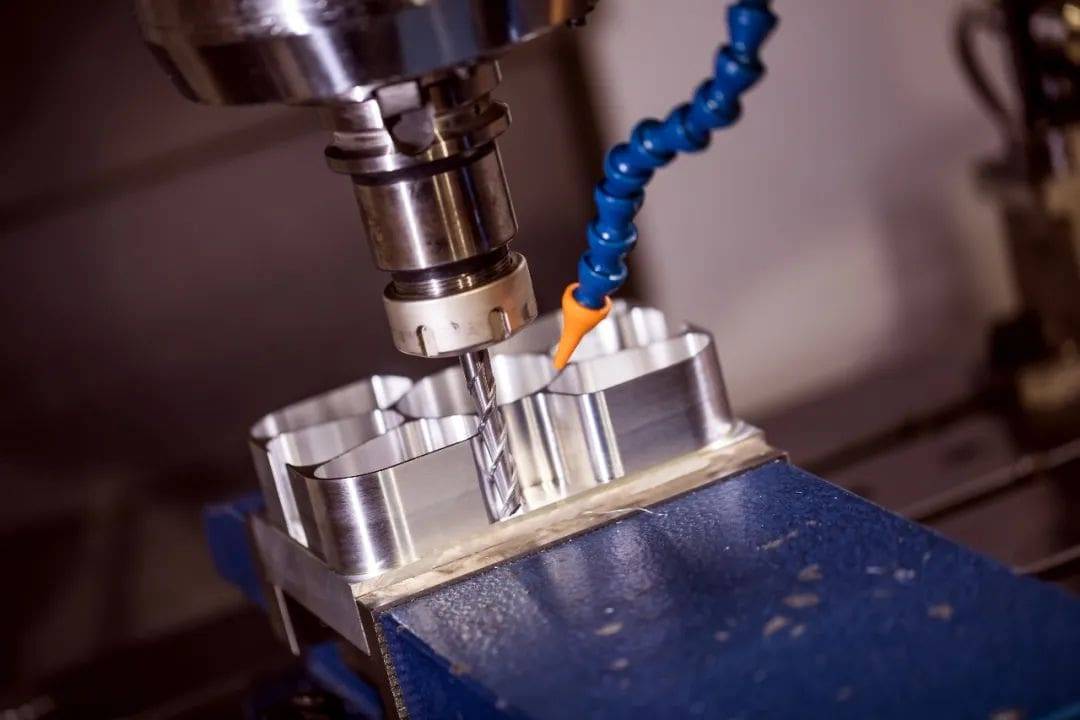
Common 5-Axis Machine Configurations
Different configurations suit different part types. The most common are:
Trunnion table: Workpiece tilts on a rotary table. Good for medium-sized parts. Limited by table weight capacity.
Swivel head: Tool head rotates; table is fixed. Suitable for heavy or large parts.
Rotary table with tilting head: Hybrid design, often used in aerospace.
Dual rotary table: Both axes are in the table. Common in smaller precision machines.
Each configuration affects chip evacuation, machine rigidity, and accessibility. For example, a trunnion machine may struggle with deep, narrow cavities because the table tilt angles limit tool reach. A swivel head machine offers better access but often has lower stiffness at extreme angles.
Questions Buyers Often Ask About 5-Axis CNC
Is 5-axis machining always faster than 3-axis?
Not always. For simple parts, 3-axis is faster because setup and programming are minimal. 5-axis saves time on complex parts that would otherwise require multiple fixtures or manual repositioning.
Do I need a 5-axis machine if I only make prototype parts?
Yes, for complex prototypes that require multiple setups on a 3-axis machine. The single-setup advantage reduces errors and speeds up iteration. For simple prototypes, 3-axis remains more cost-effective.
What is the learning curve for 5-axis programming?
Significant. CAM software for simultaneous 5-axis requires specialized training. Many shops start with 3+2 positioning, which is easier, before moving to full simultaneous machining.
Can a 5-axis machine replace a 4-axis machine?
Yes, a 5-axis machine can perform all 4-axis operations. However, if your parts only need one rotary axis, a 4-axis machine may be more economical.
How do I choose between trunnion and swivel head?
Consider part weight and access needs. Heavy parts favor swivel head. Medium parts with good access favor trunnion. Small, complex parts benefit from dual rotary tables.
Do I need a post-processor for 5-axis programming?
Yes. Every 5-axis machine requires a custom post-processor that translates CAM toolpaths into machine-specific code. Generic posts rarely work correctly.
What is the typical maintenance requirement for 5-axis machines?
Higher than 3-axis. Rotary axes, bearings, and scales require regular calibration. Coolant management is critical to prevent chip accumulation in moving parts.
Can I retrofit a 3-axis machine to 5-axis?
Technically possible but rarely cost-effective. Retrofitting requires adding a rotary table and upgrading the control system. The result often lacks the rigidity and accuracy of a dedicated 5-axis machine.
Choosing the Right 5-Axis Solution for Your Application
Selecting a CNC 5 ejes machine should start with your part portfolio,not a brand or price range. List your most complex parts—those with angled features, multiple faces, or tight tolerances—and evaluate whether a single setup is achievable. Then consider the trade-off between machine cost and the labor savings from fewer setups and fixtures.
YPMFG helps buyers evaluate whether a 5-axis approach is justified for their specific parts. You can send your part drawings or CAD files for an engineering review, and the team will recommend the most suitable machining strategy—whether that is 3-axis, 3+2, or full simultaneous 5-axis. This process also includes a cost comparison and a setup reduction estimate, so you can make a data-driven decision before investing in new equipment.
Need Help Selecting the Right 5-Axis Approach?
The difference between a good and a poor 5-axis decision often comes down to understanding your part geometry and production volume before you buy. Rather than starting with a machine specification, start with a part review.
Contact YPMFG to request a machining feasibility assessment or a custom manufacturing quote. The team can review your specifications, suggest the optimal CNC configuration, and provide a clear breakdown of estimated cycle time, setup count, and unit cost. This lets you compare your current process against a 5-axis solution without guessing.