
Quick answer:
M codes (miscellaneous function codes) control auxiliary actions on a CNC lathe, such as spindle start/stop, coolant on/off, tool change, and program end. Unlike G codes, which define geometry and movement, M codes manage the machine’s non-cutting operations. Understanding these codes is essential for safe operation, efficient cycle time, and avoiding crashes. Whether you are writing or reviewing CNC programs, knowing the correct M code sequence can prevent tool damage, reduce scrap, and maintain consistent part quality.
If you are sourcing CNC turned parts or managing a machine shop, you already know that program reliability directly impacts delivery timelines and part cost. A single incorrect M code can stop production or damage the spindle. This guide explains the most common M codes for CNC lathe, their correct usage, and what to check when reviewing programs for quality and safety.
What Are M Codes in CNC Lathe Programming?
M codes, short for miscellaneous function codes, are commands that control machine actions not related to cutting geometry. On a CNC lathe, these include spindle rotation direction, coolant activation, tool change sequences, tailstock engagement, and program stop or end.
Each M code is typically placed on a separate line or combined with a G code in a single block. The machine controller reads the M code and executes the corresponding action immediately or at the end of the block, depending on the code type.
Most M codes are standardized, but some may vary by machine manufacturer. Always verify M code assignments against your specific lathe control manual.
Common M Codes for CNC Lathe Operations
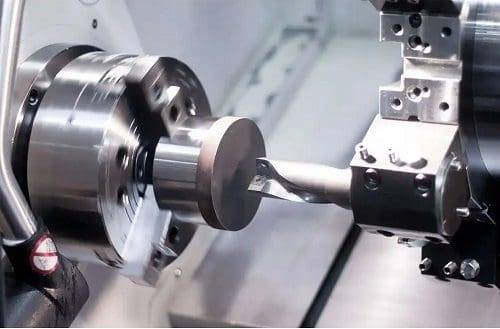
The table below lists the most frequently used M codes in CNC lathe programming. These codes apply to Fanuc, Haas, and similar controllers unless noted otherwise.
Always confirm M code behavior on your machine. Some older controls use different codes for tailstock or chuck functions.
M Codes vs G Codes: Key Differences
G codes define the cutting path, feed rate, and coordinate system. M codes control the machine’s auxiliary functions. In a typical CNC lathe program, both code types work together in a single block.
For example:
G01 X2.0 Z-1.5 F0.01 M08
This block moves the tool to X2.0 and Z-1.5 at a feed rate of 0.01 inches per revolution while turning on coolant (M08).
The key distinction: G codes answer “where and how to cut.” M codes answer “what else should the machine do.”
A program with correct G codes but incorrect M codes can still crash the tool, overheat the part, or fail to hold tolerances. For buyers and engineers reviewing programs, checking M code logic is as important as verifying dimensions.
How M Codes Affect Machine Safety and Part Quality
M codes directly impact operational safety and finished part quality. Here are specific examples:
M00 and M01 allow operator inspection before critical cuts. Without these stops, a worn insert or misaligned tool can go undetected.
M03 and M04 determine cutting direction. Using reverse spindle when forward is required can break the insert or damage the workpiece.
M08 and M09 control thermal stability. Coolant on during roughing and off during finishing can prevent thermal expansion errors.
M10 and M11 affect clamping force. A chuck that does not close fully can cause the part to shift during cutting.
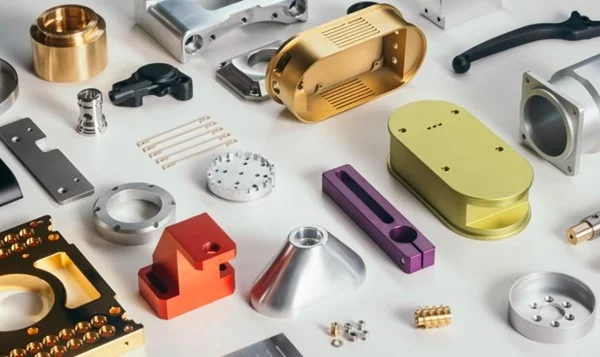
M12 and M13 support long parts. Engaging the tailstock reduces vibration and improves surface finish on slender shafts.
For CNC machining projects requiring tight tolerances, a review of M code usage can reveal potential failure points before production starts.
Common Mistakes When Using M Codes
Even experienced programmers may overlook M code details. Common errors include:
Placing M05 (spindle stop) before M09 (coolant off), causing coolant to run without spindle rotation
Omitting M01 for first-article inspection, resulting in scrapped parts before quality check
Using M06 on a lathe that requires manual tool change, causing alarm or crash
Forgetting M11 (chuck close) after loading a new part, leading to workpiece ejection
Incorrect M98 subprogram call, causing infinite loop or wrong tool path
A simple code review checklist can catch most of these issues before the machine runs.
Questions Operators and Buyers Often Ask
What happens if I use the wrong M code on a CNC lathe?
The machine may alarm, stop mid-cycle, or execute an unintended action. In severe cases, the tool can collide with the chuck or the part can be ejected. Always simulate new programs before running.
Can M codes vary between different CNC lathe brands?
Yes. While M03, M05, M08, and M09 are nearly universal, codes for chuck, tailstock, and tool change may differ. Always reference the machine-specific programming manual.
Do M codes affect cycle time?
Indirectly yes. For example, coolant on/off timing and program stop placement can add seconds per cycle. Over a production run of thousands of parts, optimizing M code placement reduces total cycle time.
Should I review M codes when ordering custom CNC parts?
If you are working with a new supplier, ask whether they verify M code logic during programming. Consistent M code discipline is a strong indicator of overall shop quality standards.
Is M06 required on all lathes?
No. Some lathes use a turret index command instead of M06. Confirm with your machine control documentation.
Can I combine multiple M codes in one block?
Some controllers allow multiple M codes per block if they control different functions. However, placing only one M code per block is safer and easier to debug.
What is the difference between M00 and M30?
M00 stops program execution without resetting. The operator can resume from the same position. M30 ends the program and resets the cursor to the beginning for the next cycle.
How do I check M code compatibility with my machine?
Review the machine’s programming manual or contact the manufacturer. For custom projects, YPMFG can assist with program review and ensure M code logic matches your equipment.
Choosing the Right CNC Programming Support for Your Project
M codes are a small but critical part of any CNC lathe program. A single incorrect command can lead to tool breakage, part scrap, or extended downtime. For buyers and engineers, working with a shop that understands M code discipline reduces production risk.
YPMFG supports CNC machining projects that require thorough program review, including M code verification. When you send your specifications to YPMFG,the engineering team evaluates the entire program logic, not just dimensions. This approach helps avoid common programming mistakes and ensures consistent output across production runs.
If you are sourcing turned parts or evaluating a new supplier, ask for a program sample or discuss how M codes are managed in their workflow. Small details in programming often reflect the overall quality of a machine shop.
For your next project, send your part specifications to YPMFG for a free engineering review. The team can compare your current program approach with best practices for M code usage, helping you reduce setup time and improve first-pass yield.