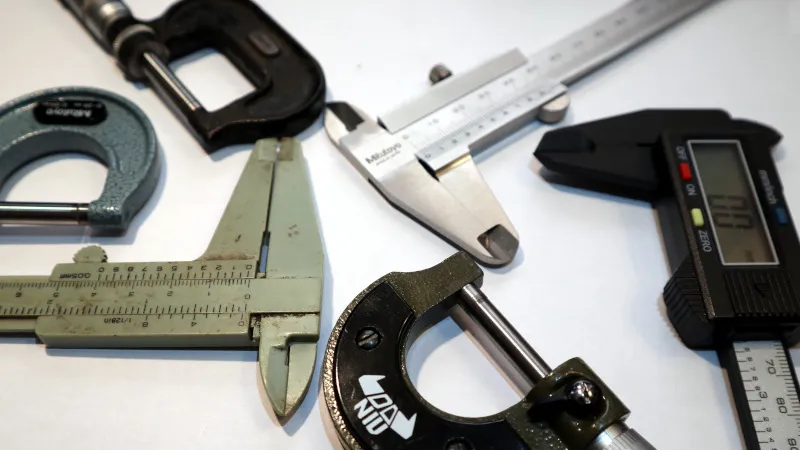
Titanium CNC service is the specialized process of using computer-controlled machining to cut, drill, and shape titanium alloys into high-precision components. This guide provides a complete, actionable overview of what makes reliable titanium CNC service – from material challenges to quality control – helping you select the right partner for your project.
01 Why Titanium Requires Specialized CNC Service
Titanium alloys (such as Grade 5 Ti-6Al-4V) are widely used in aerospace, medical, and automotive industries because of their high strength-to-weight ratio and corrosion resistance. However, these same properties make titanium difficult to machine. Unlike aluminum or standard steel, titanium has low thermal conductivity – heat stays near the cutting edge, causing rapid tool wear. It also work-hardens quickly: if the tool rubs instead of cuts, the surface becomes harder, leading to tool failure and poor surface finish.
A common case: An aerospace parts manufacturer needed 500 titanium bracket components. They first used a general CNC shop that treated titanium like stainless steel. The result – 40% of parts had surface cracks, and tools needed replacement every 15 minutes. After switching to a dedicated titanium CNC service that applied correct feeds, speeds, and tool geometries, the rejection rate dropped to under 2%, and tool life exceeded 200 parts per edge.
02 Core Elements of Professional Titanium CNC Service
1. Machine Requirements
Titanium CNC service demands rigid, high-torque machines with low spindle vibration. Minimum recommended: 20 HP spindle power and 15,000 RPM max speed (lower speeds with high torque are preferred for roughing). Machine frames must be cast iron or polymer concrete to dampen harmonics.
2. Tooling Selection
Carbide grades : Micro-grain carbide (0.2–0.5 µm grain size) with AlTiN or TiAlN coating. Avoid uncoated or TiN-coated tools – they fail within minutes.
Geometry : Sharp edges with positive rake angles (8°–12°) and large helix angles (35°–45°) to reduce cutting forces.
Coolant : High-pressure (300–1000 psi) through-spindle coolant is mandatory. Flood coolant alone cannot remove heat fast enough.

3. Cutting Parameters (Proven Starting Points)
Note: These values are for Grade 5 titanium. Reduce by 20–30% for harder grades like Grade 23 (ELI).
4. Quality Control Measures
A trustworthy titanium CNC service implements:
In-process inspections : Every 10–20 parts for critical dimensions using CMM (coordinate measuring machine).
Surface finish testing : Ra values typically ≤ 1.6 µm for general use, ≤ 0.4 µm for medical or aerospace.
Non-destructive testing (NDT) when required: dye penetrant or eddy current to detect micro-cracks.
03 Common Applications and Real-World Cases
Case 1 – Medical implant prototype
A startup needed 20 titanium hip stem prototypes with complex 3D contours and ±0.01 mm tolerances. The CNC service used 5-axis machining with high-pressure coolant and a custom toolpath strategy to avoid work hardening. All parts passed dimensional inspection and surface finish of Ra 0.2 µm – ready for clinical trials without secondary polishing.
Case 2 – Automotive connecting rods
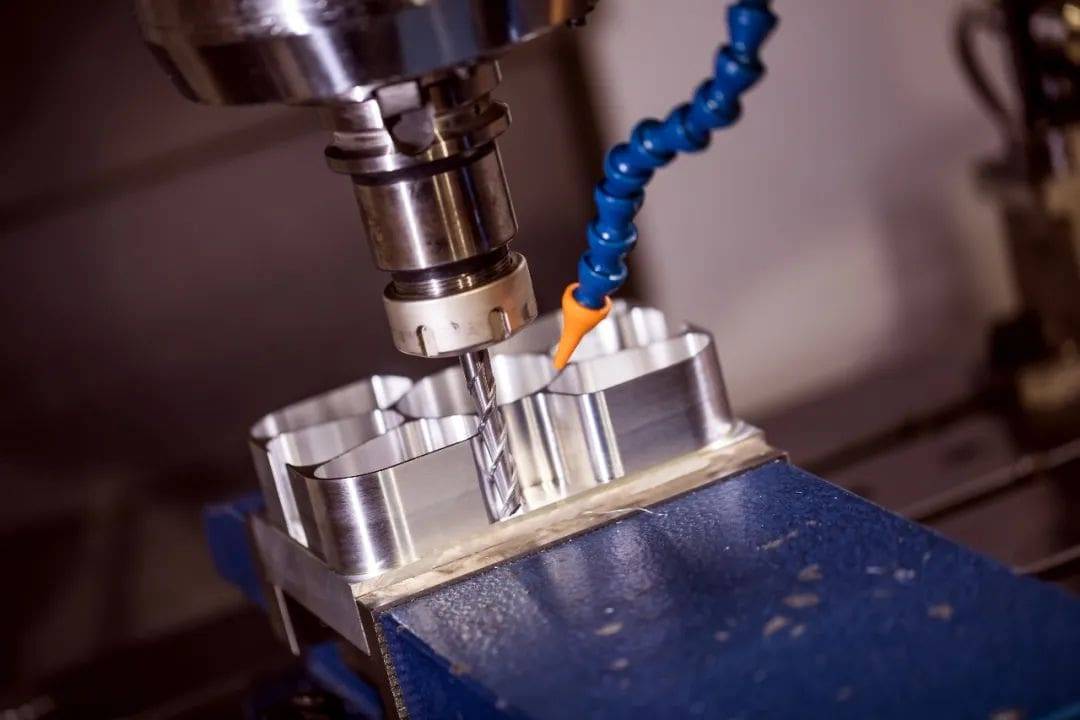
A performance engine builder ordered 100 titanium connecting rods. The first CNC provider attempted to machine them on a standard 3-axis mill using general-purpose tools. Parts showed chatter marks and inconsistent bolt hole positions. The replacement titanium CNC service employed a 4-axis horizontal mill, carbide end mills with variable helix angles, and a rigid fixturing solution. Final parts achieved concentricity within 0.005″ and passed 500-hour fatigue testing.
Case 3 – Marine pump housing
A marine equipment manufacturer required corrosion-resistant titanium housings with deep internal cavities. The chosen CNC service simulated the entire process using CAM software to predict tool deflection and heat buildup. They reduced cutting speed by 25% from standard parameters but increased feed by 15% – maintaining productivity while preventing work hardening. All 50 housings were delivered with zero defects.
04 How to Select a Reliable Titanium CNC Service (Actionable Steps)
Follow these five steps to avoid common failures:
1. Verify machine and coolant capability – Ask: “Do you have through-spindle coolant at 300+ psi? What is your spindle torque at 200 RPM?” If the answer is vague, move on.
2. Request a test cut – Provide a simple titanium block and ask them to machine a small feature with your required tolerance. Measure the result yourself.
3. Check tool management records – A professional shop will track tool life per material. For titanium, they should expect 60–120 minutes of cutting per carbide end mill (roughing).
4. Review quality documentation – Ask for sample inspection reports (CMM, surface profilometer). Look for SPC charts showing process capability (Cpk ≥ 1.33 is standard).
5. Ask about chip control – Titanium produces stringy, hazardous chips. A competent service uses chip breakers, high-pressure coolant to fracture chips, and a chip conveyor system. If they don't mention chip management, they lack titanium experience.
05 Core Principles to Repeat and Remember
Heat is the enemy – Without high-pressure through-coolant, titanium CNC service will fail. Never accept flood-only cooling.
Work hardening is irreversible – Once a surface hardens, you must remove the hardened layer entirely. Prevention (correct feeds and sharp tools) is the only practical solution.
Tool wear monitoring is non-negotiable – Replace tools at 80% of predicted life. A worn tool in titanium creates defects instantly.
Rigid setups save parts – Titanium's springiness demands solid fixturing. Ask about workholding methods – soft jaws, vacuum chucks, or custom fixtures.
06 Actionable Conclusion
To get high-quality machined titanium parts:
1. Do not treat titanium like steel or aluminum – it requires specialized parameters, tools, and coolant.
2. Verify your CNC service provider's titanium track record – ask for previous similar parts, test cuts, and process documentation.
3. Prioritize thermal management – make through-spindle high-pressure coolant a mandatory requirement.
4. Accept that titanium machining costs more – tool wear is 5–10x higher than steel. A low quote often means corners will be cut, leading to part failure.
When you choose a titanium CNC service that follows the guidelines above – rigid machines, correct tooling, high-pressure coolant, and rigorous quality checks – you will receive parts that meet specifications, avoid surface defects, and perform reliably in demanding environments. For any critical application (aerospace, medical, motorsports), never compromise on these fundamentals. Your final action: Prepare a clear RFQ with tolerances, quantities, and quality requirements, then use the five selection steps to qualify providers before awarding the job.