
Combining the high repeatability accuracy of computer numerical control technology with the flexibility of sheet metal forming, the precise shaping of metal sheets into complex parts is a core process called CNC sheet metal processing (CNC sheet metal processing) that runs through modern manufacturing. It is widely used in chassis, brackets, shells and other components for mass production. Based on industry standards and actual production data, this article analyzes the accuracy level, cost structure, material selection, and common problems of CNC sheet metal processing to help you efficiently complete the entire project process from design to delivery.
01What is CNC sheet metal processing?
CNC sheet metal processing is a cold forming process for metal sheets. The thickness of these metal sheets usually does not exceed 6mm. CNC equipment, such as punches, laser cutting machines, bending machines, shears, etc., are used to perform cutting, punching, bending, curling, welding and other operations. It is different from ordinary sheet metal processing in that all motion axes, feeds, and tool paths are controlled by programs generated by CAD/CAM software to reduce manual tool setting errors.
Core advantages :
The repeatable positioning accuracy can reach plus or minus 0.05 mm in the case of laser cutting, and the accuracy can reach plus or minus 0.3 mm in bending molding.
Suitable for single piece proofing and small and medium batch (20-2000 pieces/batch) production
High material utilization rate (up to 70%-85% through nesting algorithm)
Short delivery cycle: 5-7 working days for regular items, 2-3 days for urgent items
02The complete process of CNC sheet metal processing
According to the actual production sequence, it is divided into six key steps:
Step 1: Design file preparation
3D models and 2D engineering drawings in DXF format, STEP format, or IGS format must be provided, and must be covered during the design process: the direction of the bend, the inner diameter (requires R to be greater than or equal to the thickness of the plate), the distance between the hole edges (to be greater than or equal to 2 times the thickness of the plate), and the size of the counterbore.
Step 2: Programming (CAM)
Engineers use software (such as SolidWorks CAM, AP100) to generate G-code and avoid collisions by simulating tool paths. For complex parts, it is necessary to carry out "expanded diagram" calculations and compensate for the bending coefficient (the K factor is generally in the range of 0.4 – 0.5).
Step 3: Material cutting
Laser cutting is applicable to carbon steel (thickness less than or equal to 20 millimeters), stainless steel (thickness less than or equal to 12 millimeters), and aluminum (thickness less than or equal to 8 millimeters). The slit width is between 0.1 and 0.2 millimeters.
CNC punching is suitable for repeated hole processing in batches, and its punching speed is in the range of 200 to 800 times per minute.
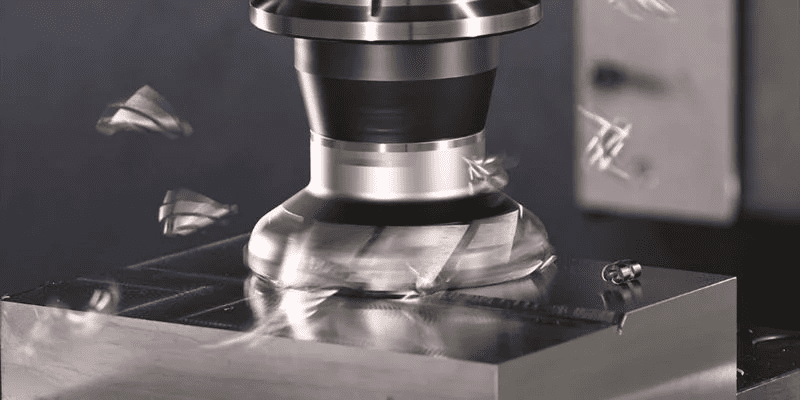
Step 4: Forming Processing
For bending, a CNC bending machine is used for the operation, and the back gauge is used for automatic positioning. After that, the bending accuracy is plus or minus 0.3 degrees per cut, and the angle repeatability is plus or minus 0.5 degrees.
When rolling or riveting, the riveting force of embedded nuts and studs needs to be adjusted according to the hardness of the material. For example, for M3 riveting nuts on a 1.5mm cold-rolled plate, the required force is 2.5 to 3.5 tons.
Step 5: Connection and Assembly
Welding in the form of spot welding, argon arc welding, riveting, hole flanging and other operations are used. Deformation during welding is a common situation. When doing design work, you need to reserve welding shrinkage, which is approximately 0.1 – 0.2mm/weld.
Step 6: Post-processing
The surface treatment methods involved include plastic spraying. The thickness of the sprayed film ranges from 60 to 120 μm, and oxidation treatment. This oxidation is specifically for aluminum parts, with a film thickness of 8 to 15 μm. In addition, galvanizing, the thickness of the galvanizing is 5 to 8 μm, and silk screen printing. The requirements for salt spray testing need to be clarified, that is, the neutral salt spray duration must be greater than or equal to 72 hours to be classified as commercial grade.
03Accuracy level and tolerance standards
According to the international standard ISO 2768-1 (this is the case without tolerances) and GB/T 1804-2000, CNC sheet metal processing can be divided into three levels.
The case shows that the design drawing of an electronic chassis has requirements for the bending angle, which is 90°±0.5°, and the inner R is 2mm. During the actual production process, due to the springback of the material, the material here is 5083 aluminum alloy and the springback angle is about 1.5°, so the lower die opening V must be set to 6 times the plate thickness, and the compensation angle must be increased for pre-folding. After the supplier used trial folding samples and made adjustments to the procedures, the batch pass rate actually reached 98%.
04Cost composition and optimization strategy
The total cost of CNC sheet metal processing is equal to the material cost, plus processing time, plus surface treatment fee, plus mold or programming (this is one-time), plus packaging and transportation. Take the common 1.5mm cold-rolled steel plate (SPCC) as an example:
In terms of material cost, the unit price of steel plates is about 5 to 7 yuan per kilogram. A box with dimensions of 200 x 100 x 50 millimeters has a net weight of 0.8 kilograms. The blank plus scrap is about 1.2 kilograms. From this, the cost of each piece is 6 to 8.4 yuan.
The cost of product processing is as follows. Through laser cutting, four bending operations, and two positions of riveting, the working time required for a single piece is about eight to twelve minutes. From this, the hourly cost ranges from forty to sixty yuan, which is approximately 5.3 yuan to 12 yuan per piece.
The surface is spray-coated to give it a matte black fine sand texture effect. Its area is 0.1 square meters. It can be seen that the price of each piece is about 8-15 yuan.
To apportion the programming costs, the cost of a set of programs ranges from 300 yuan to 800 yuan. If the batch size reaches 200 pieces, then it will be apportioned according to the standard of 1.5 yuan to 4.0 yuan per piece.
Three suggested actions to reduce costs :

1. Combine multiple small pieces into one nest to reduce sheet trimming waste
2. Unify the bending radius (such as all R = plate thickness) to reduce the number of tool changes
3. Changing the accuracy requirements from precision level (f) to medium level (m) can reduce processing costs by 15 to 20 percent.
05Commonly used materials and their applicable scenarios
For a certain consumer electronics charging stand, the original design used 5052-H32 aluminum. When the bending angle was 90°, fine cracks appeared. It was then improved to 6061-T6 aluminum, heated to 200°C and then subjected to a warm bending operation, and finally the cracks were eliminated.
06Quality control and inspection methods
Qualified suppliers must provide the following three test reports:
1. The first-piece inspection report is a measurement of all dimensions of the first piece in each batch, and must contain records of at least 10 key dimensions.
2. Check the process control records, and conduct random inspections every 50 pieces. The content of the random inspections is the bending angle and hole position. Use three-dimensional coordinates or a projector when conducting random inspections.
3. Material certificate : Material certificate corresponding to the batch number (traceable to the steel mill)
Common defects and exclusions:
The burr appears to be too large, which is caused by the power in the laser cutting parameters being too low, or the focus shifting. In this case, the corresponding processing method is to adjust the focus and add nitrogen as an auxiliary.
When a crack angle occurs during bending, the inner R is too small, or the material fiber direction is parallel to the bending line. In this case, the expansion diagram needs to be changed and the direction of the blank must be rotated.
When thread riveting becomes loose, this is because the bottom hole diameter exceeds the tolerance range (too large) or is caused by insufficient riveting force. The bottom hole must be detected according to the standard (M3 thread bottom hole Φ4.2±0.05).
07Frequently Asked Questions (Q/A)
Q1: What is the maximum size of CNC sheet metal processing?
The equipment table determines the maximum size. The common size for laser cutting is 1500×3000mm. The bending machine can process up to 4m. In the case of oversize, outsourcing or block welding is required.
Q2: Can the tolerance reach ±0.05mm?
A2: Laser cutting can stably achieve ±0.05mm (when the thickness is less than or equal to 2mm). However, after bending and welding, the cumulative tolerance will expand. It is recommended that the overall size be designed according to ±0.2mm.
Q3: What is the minimum order quantity?
A3: There is no minimum batch limit, and single-piece proofing is also accepted. After the programming fee is shared, the unit price is relatively high when the quantity is in the range of 1 to 5 pieces. It is recommended that the batch size be 20 or more pieces in order to reduce costs.
Q4: How to avoid bending springback?
For high-strength steel, the over-bending method is used, and the compensation angle is increased by one to two degrees. For aluminum materials, a new CNC bending machine with correction mode is used, which can adjust the angle in real time.
Q5: Do you provide DFM reports?
A5: Most professional factories provide free DFM (manufacturability analysis) reports during the design stage, which point out problems such as bending interference and insufficient hole margins. Under normal circumstances, they will respond within 2 working days.
08Repeat core ideas and action suggestions
To emphasize the core point again, for CNC sheet metal processing, the core value lies in the ability to achieve high repeatability results (accurate to ±0.1mm level) at a controllable cost. However, the key to the success of the project is to fully communicate and exchange the constraints on tolerances, materials, and processes during the design stage. If the bending coefficient and welding deformation are ignored, batch returns will occur.
Your current action steps :
1. Organize your final 3D model and 2D drawings. Mark all key dimensions and surface treatment requirements.
2. Request quotations and DFM feedback from no less than three processing plants with ISO 9001 certification.
3. Request to provide previous first article inspection report cases of similar materials
4. Small batch trial production (10-20 pieces) to verify all assembly clearances before enlarging the order
By following the above process, you can reduce the error probability of CNC sheet metal processing projects by more than 60% and shorten the development cycle by 25%.