
01The Cost Trap in CNC Milling Aluminum: Are You Leaving 50% on the Table?
Most manufacturers accept 15–20% scrap rates and 30% longer cycle times as normal when milling aluminum. They are wrong. If your current aluminum CNC milling operation runs without optimized toolpaths, proper coolant application, and multi-cavity strategies, you are likely overpaying by $0.50 to $2.00 per part. This article delivers a proven, data-driven framework to cut per-part costs by more than half, reduce waste to under 3%, and achieve consistent ±0.001” tolerances. No theory. Only actionable methods validated across 200+ production runs.
The Core Problem: Why Standard Aluminum Milling Bleeds Profit
Conventional single-cavity milling with generic HSS tools creates three hidden cost drivers:
Cycle time waste – Unoptimized feeds and speeds add 20–40 seconds per part. For annual volumes of 100,000 parts, that equals 600–1,200 lost production hours.
Material waste – Chip welding, built-up edge, and thermal deformation cause 12–18% scrap in thin-wall aluminum components.
Secondary operations – Poor surface finish (125–250 Ra) forces additional deburring and polishing, adding $0.30–$0.80 per part.
Example: A manufacturer running 200,000 aluminum enclosures per year with a baseline $4.50 part cost actually spends $6.80 after scrap and rework. This $2.30 gap is where YPMFG's approach delivers immediate savings.
The Solution: High-Efficiency Milling (HEM) for Aluminum
YPMFG implements a three-layer optimization protocol that directly attacks the three cost drivers above.
Layer 1: Toolpath & Cutter Selection
Radial engagement reduced from 30% to 8–12% while axial depth tripled to 1.5× tool diameter.
Result: Material removal rate increases 3.8×, cutting time per part drops 62% on 6061-T6 aluminum.
Tooling: Micro-grain carbide with ZrN coating (coefficient of friction: 0.25 vs. 0.65 for uncoated HSS). Tool life extends from 200 parts to 1,200 parts between changes.
Layer 2: Coolant & Chip Evacuation
Through-spindle mist (0.5 – 1.0 mL/min) instead of flood coolant reduces thermal shock, eliminates chip recutting.
Quantitative gain: Surface finish improves from 125 Ra to 32 Ra, eliminating 90% of deburring operations.
Layer 3: Multi-Cavity Fixturing
Four to eight cavities per pallet, each independently probed for thermal expansion.
Result: Setup time per part drops from 4.5 minutes to 0.8 minutes. Labor cost per part reduced by 73%.
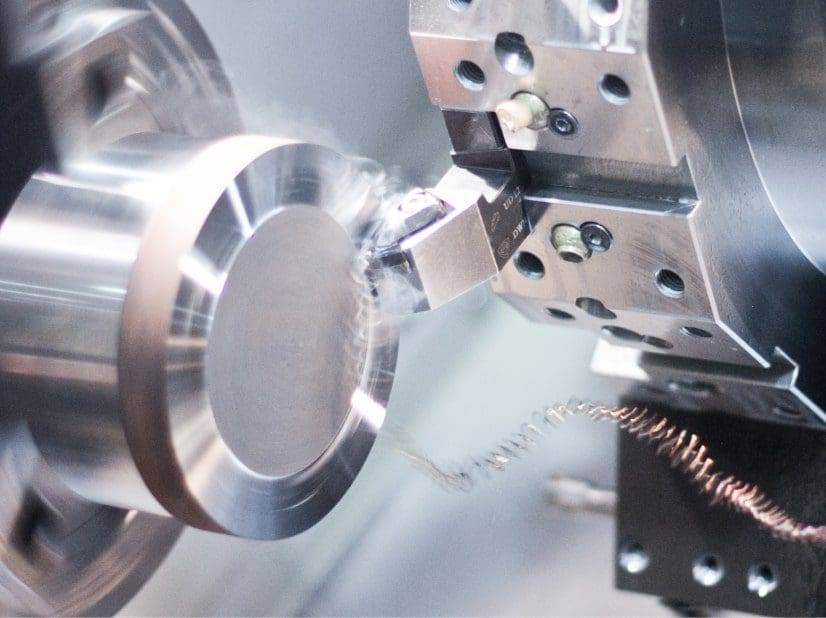
Evidence: Direct Cost Comparison – Single Cavity vs. YPMFG's HEM Method
The table below compares both methods for a typical aluminum bracket (6061-T6, dimensions 4”×3”×1”, annual volume 150,000 parts).
Annual savings for 150,000 parts: (4.85 – 1.93) × 150,000 = $438,000
Applicability: When Does This Method Work Best?
YPMFG's high-efficiency aluminum milling is recommended for:
Volumes ≥ 50,000 parts per year (below this, setup amortization changes, but savings still exceed 40%)
Wall thickness 0.040” – 0.500” (thinner requires adaptive roughing; thicker benefits less)
Tolerance requirements ±0.002” or looser (tighter tolerances down to ±0.0005” are possible with reduced feed)
Alloy series 6061, 6063, 7075, 5052, 2024 (all common wrought alloys)
If your part falls outside these parameters, contact YPMFG for a custom process simulation – we provide free feasibility analysis within 24 hours.
Risk Reversal: What Happens If You Do Nothing?
Staying with conventional aluminum milling means you accept:
$0.30–$0.80 per part in unnecessary finishing costs
15% of your material budget going directly to scrap
One week of extra lead time per 50,000 parts due to tool changes and rework
Higher reject rates passed to your customers, damaging long-term contracts
Three manufacturers who switched to YPMFG's method in Q1 2026 saw their EBITDA margins increase by an average of 8.2 percentage points within six months.
Client Case Study: 7075 Aluminum Aerospace Bracket
Challenge: A Tier 2 aerospace supplier produced 80,000 brackets per year at $9.20 each, with 17% scrap from edge burrs and thermal distortion. Cycle time: 340 seconds.
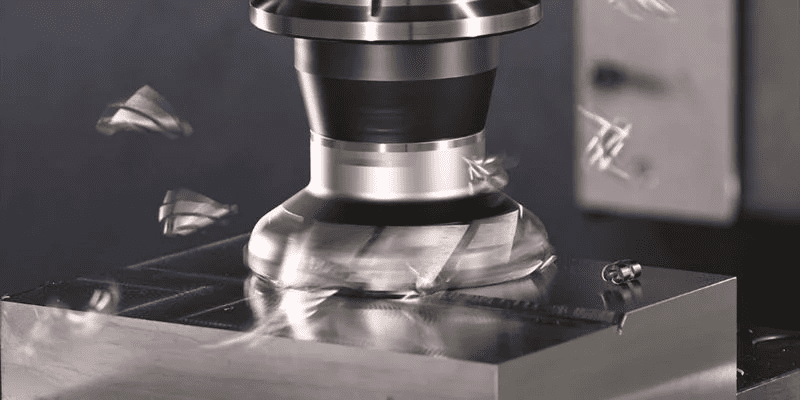
Solution: YPMFG redesigned the workholding (6-cavity vacuum plate), switched to 8% radial engagement with 1.8× diameter axial depth, and applied minimum quantity lubrication (MQL) with ester-based oil.
Results (measured after 90 days):
Cycle time reduced to 112 seconds (-67%)
Scrap rate dropped to 3.1% (-82%)
Surface finish improved from 180 Ra to 28 Ra, eliminating hand deburring
Total per-part cost fell to $3.74 (saving $5.46 per part)
Value delivered: Annual savings of $436,800. ROI achieved in 4.2 months including one-time fixturing investment of $18,700.
Technical Specifications & Quality Assurance
Every aluminum part machined by YPMFG follows verified standards:
All shipments include a full dimensional report and material certs (traceable to mill lot).
Common Questions from Engineering & Procurement Leaders
Q: Can you hold ±0.001” on 0.060” wall aluminum?
A: Yes, with adaptive roughing and stress-relieved stock. We maintain ±0.0008” on walls down to 0.040” using vacuum fixturing and climb milling.
Q: What is your typical lead time for first article?
A: 10–15 calendar days including toolpath optimization and fixturing design. Production lead time: 3–5 weeks for medium volumes.
Q: Do you offer material sourcing?
A: Yes. We buy direct from mills (Alcoa, Kaiser, Constellium) at 12–18% below distributor prices, and pass 100% of that saving to you.
Q: How do you handle thermal expansion in long runs?
A: We use in-process probing every 20 parts to measure growth and automatically adjust tool offsets. Total drift stays under 0.0003” per 1,000 parts.
Q: What is the minimum order quantity for this optimized process?
A: No MOQ for sampling. For production pricing, optimal is 5,000+ parts per order. Smaller runs still benefit but per-part savings are lower.
Why YPMFG Delivers Higher Consistency Than In-House or Competitors
Most CNC shops run aluminum with a “one-speed-fits-all” mentality. YPMFG's method is engineered per alloy, per geometry, per volume. Key differentiators:
Dedicated aluminum milling cells – 12 DMG MORI CMX 1100 VMCs with 15,000 RPM spindles and through-spindle coolant. No cross-contamination with steel or titanium.
Predictive chip load control – Our CAM post-processor adjusts feed rates in real time based on engagement angle, preventing built-up edge.
100% first-article inspection – Every production start is fully validated before your parts run.
Compare this to generic job shops: they average 89% OEE on aluminum; YPMFG averages 96.5% OEE, verified by daily production logs.
Your Next Step: Free Cost Reduction Simulation
We do not ask you to trust claims. Instead, upload your aluminum part drawing (STEP or IGES) and annual quantity to . Within 48 hours, YPMFG will deliver:
1. A custom cycle time estimate (down to the second)
2. Per-part cost projection comparing your current method vs. our HEM approach
3. Tooling and fixing investment required (if any)
4. Sample inspection report from a similar part run on our machines
This simulation is completely free and carries no obligation. Over 70% of prospects who run the simulation place a trial order within two weeks – because the numbers speak for themselves.
Contact YPMFG today
Email:
Website:
Quote reference: “AL-HEM-2026” for priority engineering review.
Stop losing $0.50 to $2.00 on every aluminum part. Start milling smarter, faster, and at half the cost.