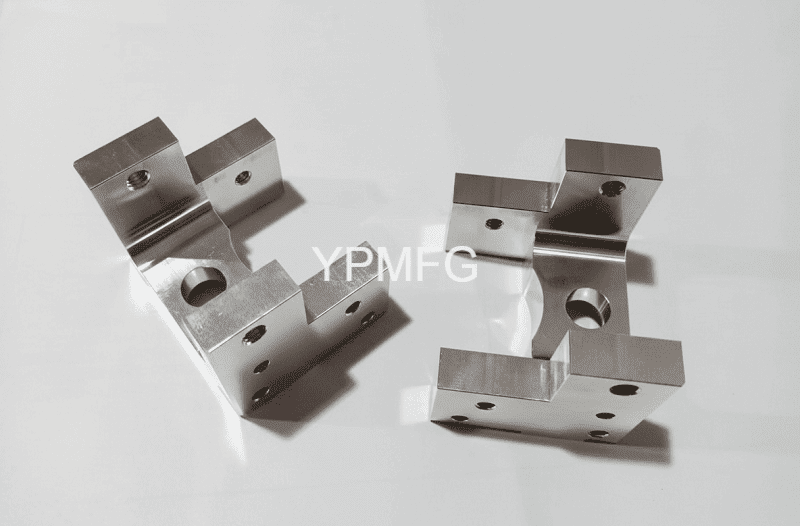
Achieving perfect holes with CNC drilling requires precise control of three core factors: tool selection, cutting parameters (speed and feed), and chip evacuation. This guide provides actionable steps based on real-world machining scenarios to help you consistently produce high-quality holes.
01Choose the Right Drill Bit for the Material
Using an incorrect drill bit is the most common cause of hole defects. For general steel (e.g., 1045 carbon steel), a standard cobalt or HSS (high-speed steel) twist drill with a 118° point angle works reliably. For aluminum alloys (e.g., 6061), use a 135° point angle drill with polished flutes to prevent aluminum from sticking (built-up edge). For stainless steel (e.g., 304), a carbide drill with a split point and reinforced web is necessary to handle work hardening.
Example: A job shop once drilled 304 stainless with standard HSS drills – each drill failed after 10 holes. Switching to carbide drills with the same geometry extended tool life to over 200 holes per drill.
02Set Correct Speeds and Feeds
Incorrect speeds and feeds lead to broken drills, oversized holes, or poor surface finish. Use the following starting formulas:
Spindle speed (RPM) = (Cutting speed × 4) / Drill diameter
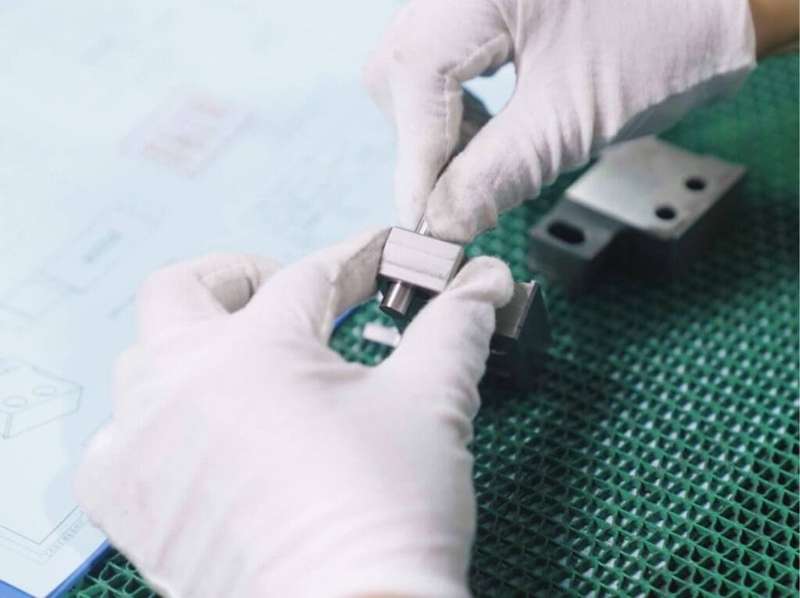
Cutting speed (SFM): aluminum 200-300, mild steel 80-120, stainless steel 40-60.
Feed rate (IPM) = RPM × Feed per revolution
Feed per revolution: for drills under 1/4″, use 0.002-0.004 IPR; for 1/4″ to 1/2″, use 0.004-0.008 IPR.
Critical adjustment: Reduce feed by 30-40% when starting a hole (spot drilling first) or when drilling through an uneven surface.
03Ensure Rigid Workholding and Machine Setup
Any movement between the workpiece, fixture,or spindle causes hole wander or taper. Always use a vice or fixture with at least 80% clamping surface contact. For deep holes (depth > 3× diameter), use a stub-length drill initially, then switch to a jobber-length drill. Check runout at the spindle – keep it under 0.0005″ (0.0127 mm) for precision holes.
Common scenario: A CNC machinist experienced inconsistent hole diameters on a batch of 500 parts. The issue was a worn collet causing 0.002″ runout. After replacing the collet and re-measuring runout to 0.0003″, all holes stayed within ±0.001″ tolerance.

04Apply Proper Coolant and Chip Evacuation
Overheating and chip packing are responsible for over 60% of drill failures. For steels and stainless, use a high-pressure (300-500 PSI) flood coolant with at least 8% concentration of water-soluble oil. For aluminum, mist coolant or compressed air with a light oil mist works best to avoid thermal cracking. Never let chips accumulate in the flutes – peck drilling cycles (e.g., peck depth = 0.5× drill diameter) break chips and clear them out.
Case in point: A shop drilling 1″ deep holes in 4140 steel without pecking experienced frequent drill welding. Adding a peck cycle of 0.080″ per peck and increasing coolant pressure from 150 to 400 PSI eliminated the problem completely.
05Inspect and Correct Common Hole Defects
06Actionable Summary for Consistent Results
To achieve perfect holes in every CNC drilling operation, follow this pre-flight checklist before running production:
1. Verify drill geometry matches material (cobalt for steel, carbide for stainless, polished flute for aluminum).
2. Calculate RPM and feed using the formulas above, then adjust for pecking if depth > 3× diameter.
3. Measure runout at the tool holder – replace collet if >0.0005″.
4. Set coolant to correct pressure and concentration; test chip flow during first hole.
5. Run a sample hole and measure diameter with a pin gauge or bore micrometer. Adjust feed or speed in 10% increments until tolerances are met.
Repeat this process every time you change material, drill size, or machine setup. Mastering these five core controls – tool, speed, feed, rigidity, and coolant – will eliminate guesswork and turn CNC drilling into a reliable, repeatable process.