
01CNC Turning Pin Parts: A Complete Machining Guide from Drawing to Finished Product
This article presented to you is about the core processing plan of machining CNC turning pin parts, which includes process selection, parameter setting, tolerance control, and cost optimization. Whether you are a purchasing engineer or a mechanical designer, the following content will directly solve the accuracy, efficiency and repeatability issues that you are most concerned about.
1. Core processing path: ensure that the pin parts are qualified the first time
The key to controlling CNC turning pins is to control the axial length and diameter tolerances. The typical process is as follows:
1. For drawing review, it is necessary to confirm the materials involved, such as 304 stainless steel, 12L14 free-cut steel, 7075 aluminum, etc., as well as the maximum outer diameter, length, and key tolerances, which are usually IT6-IT8 level tolerances.
2. In terms of tool selection, priority should be given to coated carbide tools, that is, CVD or PVD coated tools, for small-diameter pins.
3. The key point of programming is to use G50 to set the coordinate system, leave a margin of 0.2 to 0.3mm when performing a rough turning cycle through G71, and use G70 to perform fine turning to achieve the final size.
4. Through cooling and lubrication, high-pressure water-based emulsion (pressure ≥15bar) can effectively break chips and take away the heat generated during the cutting process, thus preventing the pin from elongating and deforming due to heat.
In this case, there is a situation where an auto parts supplier has to produce every month. The product it produces is stainless steel positioning pins. The diameter is 4.00±0.01mm, the length is 25mm, and the quantity is 100,000 pieces. At the beginning, the scrap rate reached 5%, and the main reason for this was thermal elongation, which caused dimensional drift. Later, some measures were taken to increase the cooling pressure from 8bar to 20bar. At the same time, constant linear speed cutting was adopted, that is, Vc=120m/min. Through these measures, the scrap rate dropped to 0.8%.
2. Authoritative reference values of key process parameters
The following representation data are based on the standards specified by ISO 3685 and the practical experience accumulated in the industry, and can be directly used for program setting:
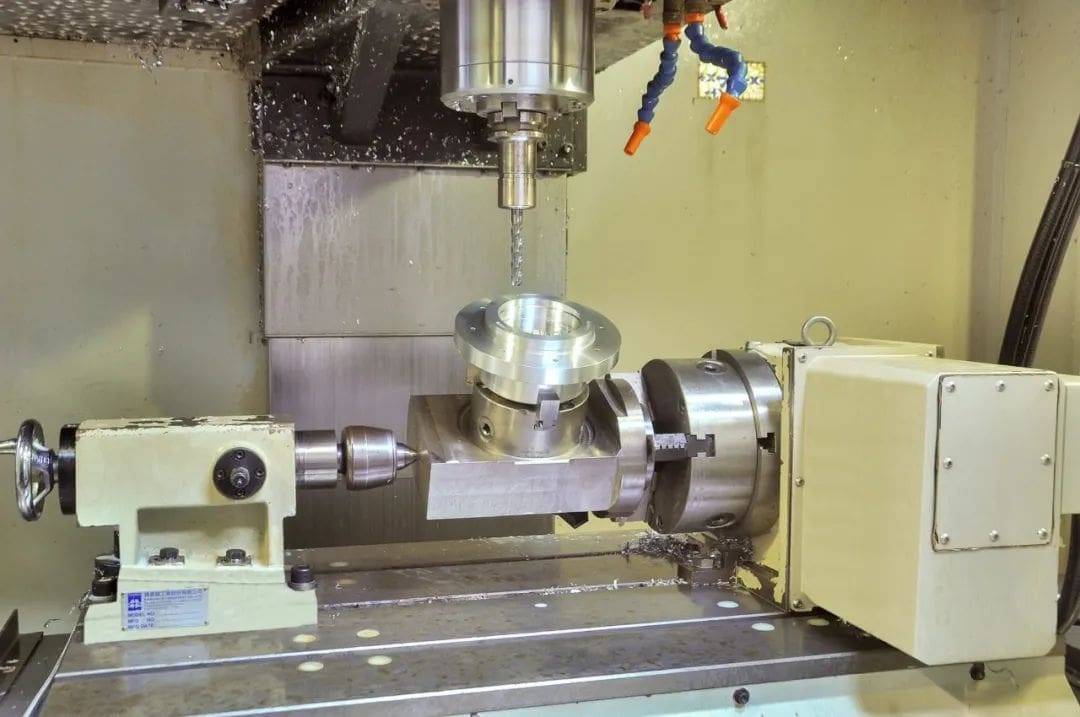
In CNC turning pin machining, reasonable chip control is the key. It is recommended to use a chip-breaking groove type tool, just like the FP or RM groove type in the ISO standard, and to cooperate with the spindle synchronous peck turning, which is the G74 method, to prevent long chips from wrapping around the pin.
3. Tolerances and detection methods: achieving 6 Sigma capabilities
Usually the most common failure modes of pin parts are diameter out of tolerance and cylindricity out of tolerance. The following control measures must be implemented:
1. The manufacturing process capability index (Cpk) is like this: before being officially put into mass production, fifty products must be continuously processed, and the value of Cpk is calculated. Only when this value is greater than or equal to 1.33, can this batch of products be started for mass production. For a pin whose tolerance zone is less than or equal to 0.01 mm, the required Cpk value must be greater than or equal to 1.67.
2. The equipment used for measurement includes a micrometer with a digital display and a resolution of 0.001 mm for diameter measurement, an instrument with an optical projection function for length measurement, and a measuring instrument that operates with the help of air pressure and can indicate the measurement results for roundness detection.
3. The compensation method is to carry out on-machine measurement every 200 pieces, and use macro variable #501 (that is, X-axis wear compensation) to automatically correct the tool compensation. After YPMFG used this method, it reduced the diameter control deviation from ±0.008mm to ±0.002mm.
For the prevention of common problems, asymmetry in pin end chamfers is often caused by inaccurate tool centering. During processing, you can use a tool setter or test-cut a cylindrical surface to measure the X-direction offset value. This measurement process needs to be verified with the help of a standard block gauge.
4. The direct impact of material selection on processing efficiency
Cutting forces and tool life vary significantly depending on the material. Here is the cutting energy efficiency ranking of the most commonly used materials for pins (in order from high to low):
Easy-cut steel (12L14/1215) has relatively low cutting force and a tool life that is five times that of 304 stainless steel. It is suitable for high-volume (more than 100,000 pieces) and low-cost pin production.
There is such a case, regarding brass (C36000), its state is that the chips are in the shape of fragments, and there is no need for chip breaking operation. Its surface can reach Ra0.2μm, but its strength has low performance.
It should be noted that aluminum alloy (2024/7075) will have built-up edge. In this case, it is best to use high-pressure cooling and H13 type tools.
Stainless steel (303/304) is extremely work-hardened and has specific requirements for cutting depth, that is, each cutting depth must be greater than the thickness of the hardened layer (greater than 0.1mm), and at the same time, the tool must be avoided.
For those elongated pins whose aspect ratio exceeds 10 times, such as those with a diameter of 2mm and a length of 30mm, when performing CNC turning pin machining, a guide bush, or a live center on the tailstock, must be used. During programming, a "constant depth of cut" strategy must be adopted, and step turning is performed in 3 to 4 times, with a radial depth of cut of 0.2mm each time to offset the radial bending force.
5. Cost optimization: three proven methods to reduce unit time
1. For the application of composite tools, an integrated back chamfering tool is used. This tool can complete the two processing steps of diameter hole and chamfering at one time, thereby reducing the time required for tool change. Cases show that through this method, the processing time of a single piece can be reduced from the original 45 seconds to the current 28 seconds.
2. Automatic bar feeder : With the remaining material head length of the spindle <30mm, the material utilization rate increases by 12%.
3. In terms of tool life management, the number of pieces processed by each tool will be recorded. When the specified period is reached, the tool will be forced to be replaced. In the case of processing 304 stainless steel pins, Tungaloy AH8015 is selected, and its life is set to 600 pieces. Compared with replacement based on experience, the loss caused by unexpected shutdown can be reduced by 73%.
6. Frequently asked questions and solutions (Q/A format)
Q1: There are vibration marks on the outer surface of the pin. How to quickly eliminate them?
First, reduce the feed to 0.03mm/r, if that doesn't solve the problem, then check the spindle bearing clearance (should).
Q2: The diameter tolerance is ±0.005mm. The size is too large after continuous processing of 100 pieces. What should I do?
Due to tool tip wear, immediately compensate 0.003mm in the negative direction of the X-axis, and shorten the tool change interval to 80 pieces.
Q3: The slender pin is bent and deformed. Is it effective to adjust the program parameters?
Use a guide bush or tool holder, and use reverse turning, that is, feed from the tailstock side toward the spindle, otherwise it will be invalid.
Q4: There are burrs on the end face of the pin after turning, so the deburring efficiency is low?
A: When performing programming operations, add the G72 end face cutting cycle, leaving a 0.05mm finishing allowance, and finally use a ceramic brush or centrifugal roller to remove it.
Q5: How to judge whether the coolant concentration affects the surface quality?
A: Use a refractometer for testing. The concentration of the emulsion should be within the range of 6% to 8%. When the concentration is lower than 4%, the degree of lubrication will be insufficient and the surface will appear whitish.
7. Action suggestions: Immediately improve the quality of pin turning
To reiterate the key conclusion of this article: the success of fine and precise CNC turning pins is equal to the correct tool geometry, coupled with stable cooling pressure, coupled with online measurement compensation.
Step 1: Check whether your current processing parameters are within the range of the table recommended in the second section of this article, especially the linear speed and feed per revolution.
The next step is to carry out Cpk monitoring for key tolerance pins, and retain the measured data of 50 pieces for each batch.
The third step is to cooperate with suppliers that have the processing capabilities of Swiss-type machines and guide bushings. For example, YPMFG will provide a full-process CPK report and conduct an audit of tool wear data every month.
According to the above specifications, your pin parts can stably achieve ISO 2768-m level or even higher accuracy, while at the same time, the cost per piece will be reduced by 15% to 20%. If you need a customized process solution, please provide drawings, materials and expected annual usage, so that prototypes can be obtained within a week.