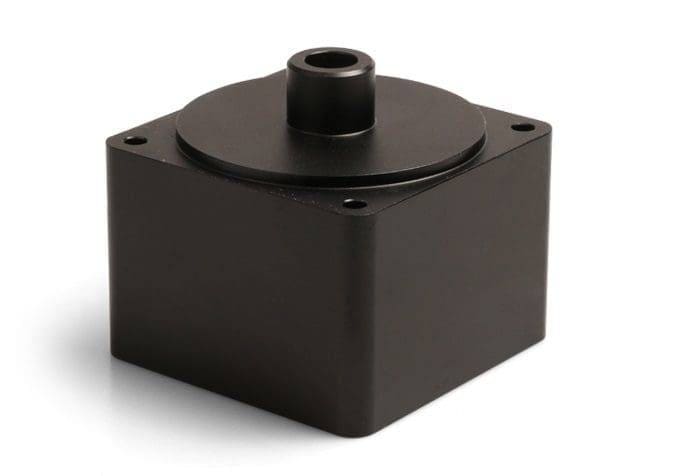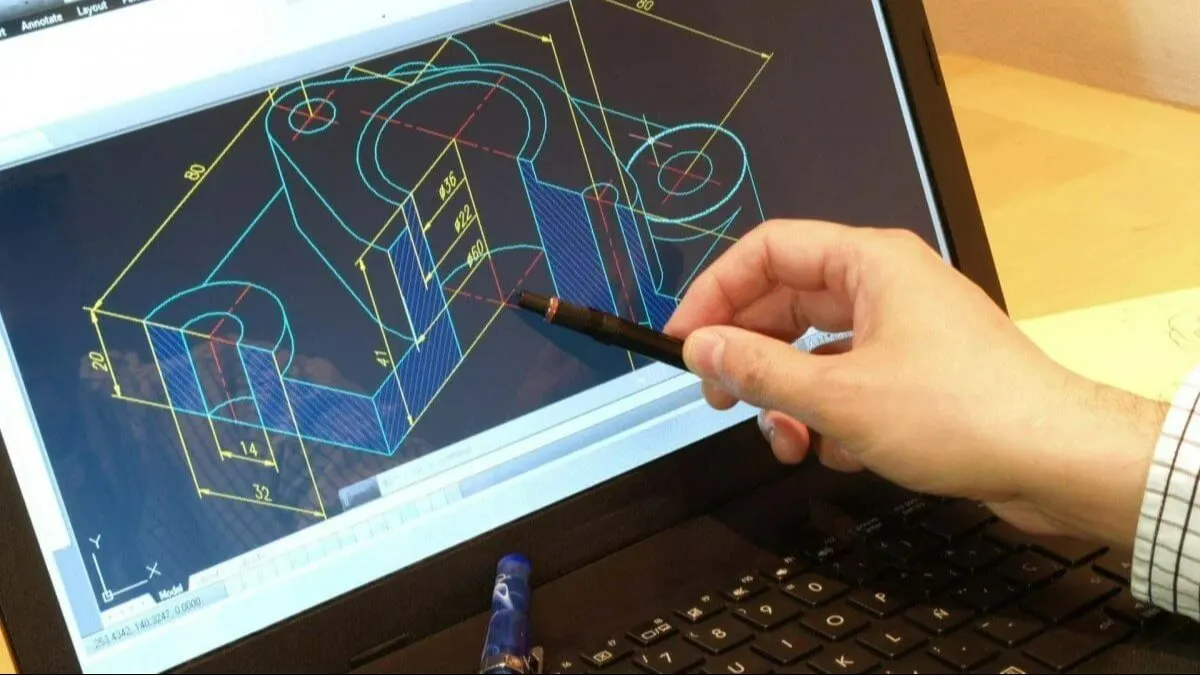
In the vast dimensional coordinate system of the manufacturing industry, CNC turning processing occupies an extremely critical position. It belongs to the core process link range that needs to be passed to complete the molding of shaft and disk parts. Initially, the raw materials start at the unloading station, and then go through a series of processes until they are finely operated in front of the machine control panel. These links are all very important. Among them, path verification at each edge cutting point is the key. This verification can accurately determine the compliance rate of the final product and determine whether the product can meet relevant high-quality standards.
1. Process link front-end calibration
During the production process, pre-screening the tolerances of the material blanks at the feeding position is an extremely critical step. This step can identify possible tolerance problems in the material blanks at an early stage, thereby avoiding a series of subsequent production problems caused by tolerance inconsistencies. At the same time, for Zeroing out the geometric tolerance of the chuck tooling reference surface must not be ignored. Accurate calibration can ensure that the geometric tolerance of the chuck tooling reference surface is in ideal conditions, providing an accurate basis for subsequent processing. In addition, the thermal extension prediction of the spindle runout is also of great significance. It is possible to know in advance the changes in runout when the spindle is in a hot state, and then make corresponding preparations.
There are some common cases of trial and error in batches. These cases focus on loading materials immediately without performing cold offset calibration. This oversight caused the coaxial degree deviation of the first 12 workpieces to exceed the IT7 tolerance zone, which in turn caused the proportion of defects in a single batch to suddenly rise to 18%. It can be clearly seen from this that the core calibration logic must be advanced at all. If the compliance investment in front-end verification is skipped, subsequent full-link compensation will only lead to idling of production capacity. This not only wastes a lot of time and resources, but also seriously affects production efficiency and product quality. Therefore, we must pay attention to front-end verification to ensure the smoothness and efficiency of the production process.
2. Dynamic iteration of parameter matrix
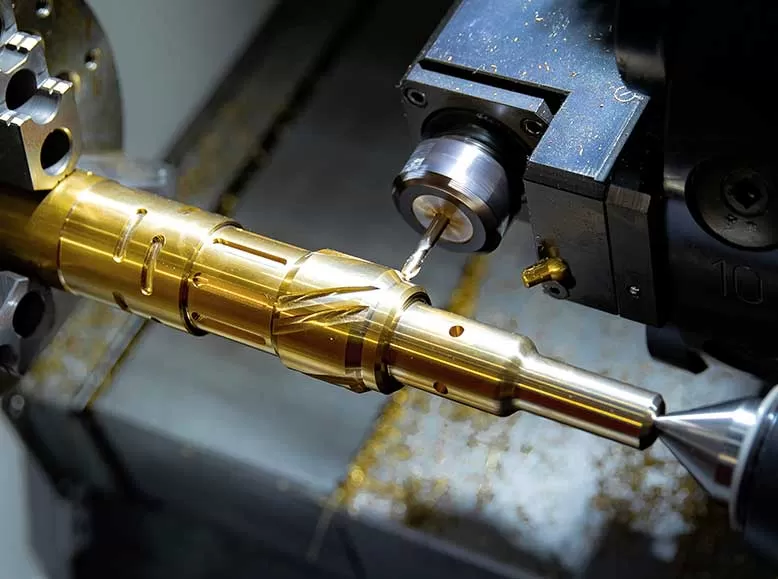
The cutting linear speed, feed rate and back cutting amount are subjected to three-dimensional matching die forging, the servo bandwidth of the CNC system is dynamically optimized, and the tool wear curve is buried in hourly data. General benchmark data in the industry shows that if the linear speed of the carbide titanium alloy bar is set and fixed in the range of 100 to 120m/min, and the speed reduction is not performed in the upgrade stage, the average tool life will be directly reduced from the conventional 42 pieces to 17 pieces.
Understanding the implementation measures of the core technology of CNC turning processing is a key link for the manufacturing unit to achieve the goal of reducing costs and improving efficiency. This can accurately indicate the efficient use of various process techniques in the CNC turning process of the manufacturing unit, thereby achieving cost reduction and efficiency enhancement in a better way, laying a solid foundation for the stable development and competitiveness improvement of the manufacturing unit.
3. Closed-loop control of process losses
The chip removal guide groove must be monitored in real time, the oil pressure threshold of the hydraulic system must be sampled and re-inspected every four hours, and the environmental amplitude of the machine tool constant temperature warehouse should be strictly controlled within the ±1°C range. In the past, a common blind spot operation phenomenon was that if the cooling pipe nozzle was not calibrated in a single month, the surface roughness defect rate of the related workpieces would increase by 7 percentage points month-on-month, which would in turn increase the manpower of the subsequent polishing stations and increase the redundancy of more than 30% of working hours.
According to the principle of "precaution will lead to failure, failure to preempt will lead to failure", the iteration of full-link loss control is not a simple one-time phased behavior. It is like a precision-operating clock, carrying out a refined rolling cycle over and over again. In this process, any breakpoint oversight is like an invisible black hole hiding in the dark, silent but extremely destructive, and will mercilessly swallow up production capacity.
In view of the high-frequency common questions in the practical operation, standardized Q/A logic is used to dismantle them one by one:
Q1: Is it necessary to preheat the spindle before CNC turning?
After starting up, the equipment must be idle to perform preheating operations, and the duration must be controlled within 10 to 15 minutes. This must be done to offset thermal stress, thereby avoiding the problem of excessive coaxiality deviation in the starting batch.
Q2: Do I need to find the origin again when changing the same tool during batch processing?
A2: Only after extremely rigorous and detailed confirmation that the tool compensation parameters match perfectly without any errors can we be allowed to skip the recalibration of the entire process. At this time, only a small backtest of the datum level can lock the error range.
Q3: How to quickly deal with built-up edge when processing aluminum parts?
First, increase the cutting line speed appropriately, and adjust the feed rate simultaneously. Then immediately replace the cutting edge with accumulated chips on the surface, and then restart the machining process.
Q4: Is it feasible to continue working if the temperature of the machine tool's constant-temperature warehouse exceeds 2°C?
Under the current environmental conditions, the processing of long-axis high-precision parts must be stopped until the environment meets compliance standards. For conventional rough machining categories, you can set compensation parameters and advance the work through peak shifting.
Anyone who attempts to skip process calibration nodes in order to shorten working hours to seize short-term production capacity will eventually be held accountable for defective products during the finished product inspection process. All the investment lost due to cutting corners and materials must be paid back in several times the amount plus profits. This is obviously completely contrary to the underlying logic of process control.
Production managers at the manufacturing end must immediately determine the underlying principle of "calibration first before mass production", place the verification points of the entire work step at the top of the scheduling SOP, and review the fluctuation curve of the cutting data every week to update the parameter matrix. Only in this way can we achieve excellent operational results with real profitability in the fiercely competitive stock situation in the industry.