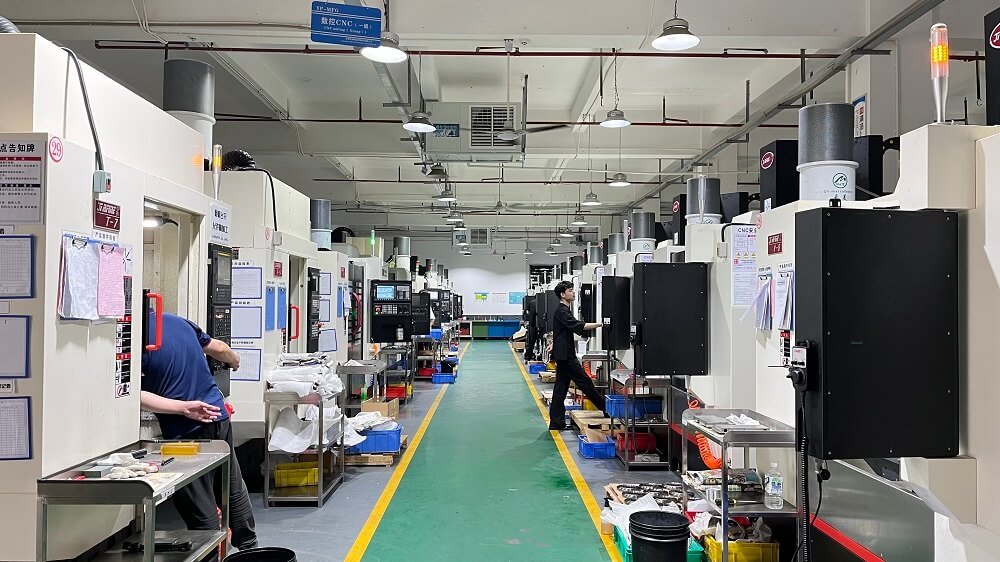
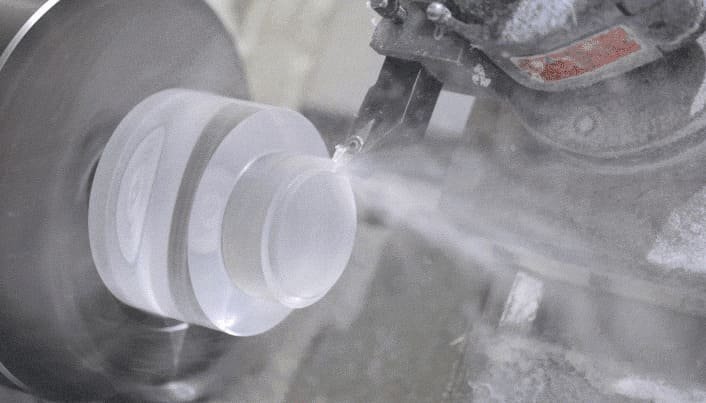
Customized heavy sheet metal fabrication is the process of cutting, bending, welding, and assembling thick-gauge metal plates (typically 3/16″ to 1″ or thicker) into engineered components and structures according to exact client specifications. Unlike light fabrication, heavy sheet metal work requires specialized equipment—high-tonnage press brakes, large-format laser or plasma cutters, robotic welders, and post-processing lines—capable of handling material thicknesses above ¼”. This guide covers every decision point you need: material selection, tolerance standards, process capabilities, quality control, and cost factors. By the end, you will know exactly how to specify your project, evaluate fabricators, and avoid common pitfalls.
01What Is Customized Heavy Sheet Metal Fabrication? (Core Definition)
Heavy sheet metal fabrication refers to transforming raw metal plates (steel, stainless steel, aluminum, etc.) with thickness ≥ 4.8 mm (3/16″) into custom parts through:
Cutting: CNC plasma (up to 2″), fiber laser (up to 1″ for mild steel, ¾″ for stainless), waterjet (any thickness, no HAZ), or oxy-fuel (over 1″).
Forming: Press brake bending with tonnage capacity from 150 to 1000+ tons, handling lengths up to 20 feet and thicknesses up to 1″ (mild steel).
Joining: Welding (MIG, TIG, stick, submerged arc), fastening, or adhesive bonding.
Finishing: Grinding, shot blasting, priming, painting, powder coating, or galvanizing.
Why “customized”? Off-the-shelf plates or standard brackets rarely fit heavy machinery, industrial chassis, mining equipment, agricultural implements, or structural supports. Custom fabrication means every dimension, hole pattern, edge prep, and weld specification is made to your drawing.
02Key Materials & Their Real-World Applications
Choose material based on load, environment, and weldability. Below is a verified selection guide based on ASTM/EN standards:
| Material | Thickness Range | Common Custom Parts | Tensile Strength | Corrosion Resistance |
|---|---|---|---|---|
| Mild steel (A36, S235JR) | 3/16″ – 1″ | Base plates, brackets, machine frames | 400-550 MPa | Low (needs coating) |
| Grade 50 steel (A572) | ¼″ – ¾″ | Heavy equipment chassis, crane components | 450-620 MPa | Low |
| Stainless 304/316 | 3/16″ – ½″ | Food/chemical industry parts, marine brackets | 515-620 MPa | High (316 excellent) |
| AR400/AR500 (abrasion-resistant) | ¼″ – 1″ | Dump truck liners, crusher parts | 1200-1500 MPa | Medium |
| Aluminum 5052/6061 | ¼″ – 1″ | Lightweight heavy-duty structures (truck bodies) | 240-310 MPa | Good |
Case example – Common scenario: A Midwest agricultural equipment manufacturer needed 500 custom mounting brackets from ½″ A36 steel. They initially used laser cutting with no edge prep, leading to weld cracking. Switching to plasma cutting with beveled edges (35°) and pre-heating to 150°F eliminated defects. The lesson: material thickness dictates edge prep and preheat requirements per AWS D1.1.
03Critical Tolerances & Standards You Must Specify
Heavy fabrication tolerances differ from light sheet metal. According to ISO 2768-1 (coarse or medium) and custom industry standards:
| Feature | Standard Tolerance (no special callout) | Precision Tolerance (extra cost) |
|---|---|---|
| Cut hole diameter (±) | ±0.8 mm (1/32″) | ±0.4 mm (1/64″) |
| Hole-to-hole position | ±1.0 mm (0.040″) | ±0.5 mm (0.020″) |
| Bend angle | ±1.5° | ±0.5° |
| Flatness (per 1 m) | ±2.0 mm | ±1.0 mm |
| Weld leg length | ±2.0 mm | ±1.0 mm |
Actionable advice: For heavy parts, never request tighter than needed. A chassis bracket that requires ±0.1 mm precision may increase cost by 300% and cause rejections. Use “general tolerance ISO 2768-m” for most features, and only add specific callouts for critical interfaces (e.g., bearing bores, alignment pins).
04Step-by-Step Custom Fabrication Process (What to Expect from a Shop)
A reliable heavy fabrication job follows these 7 stages. Ask your supplier for a process map matching this sequence:
1. Drawing review & DFM (Design for Manufacturing) – Shop checks for material availability, bend radii (minimum inside radius ≥ material thickness for steel), hole distance from edge (≥ 2× thickness), and weld access.
2. Material sourcing – Certified mill certs (MTRs) traceable to ASTM/EN standards.
3. Nesting & CAM programming – Optimizes plate usage (typical yield 75-85% for heavy parts).
4. Cutting – Plasma for thick carbon steel (fast, slight HAZ), laser for thinner (<½″) or stainless, waterjet for no heat distortion.
5. Forming – Press brake with V-die opening = 8× material thickness for air bending. For ½″ steel, use 4″ V-die; required tonnage ≈ 25 tons per foot.
6. Welding & assembly – Weld procedures (WPS) qualified per AWS D1.1 or ASME IX. For heavy sections, preheat and interpass temperature control is mandatory.
7. Finishing & inspection – Dimensional check (CMM or hard gauges), NDT (dye penetrant or ultrasonic for critical welds), then coating.
Case example – Common scenario: A construction company ordered 200 steel base plates (¾″ thick, 12″×12″) with four 1″ holes. The first supplier used oxy-fuel cutting, producing oversized holes (1.125″) and heavy dross. After switching to a waterjet shop, holes came at 1.005″ with no dross, eliminating secondary reaming. Waterjet cost 20% more but saved 45 minutes of rework per plate.
05Cost Drivers & How to Get Accurate Quotes
Heavy customized fabrication pricing is not per-pound. Main cost components (based on 2026 North American shop rates):
| Cost Element | Typical Range (USD) | Key Influencing Factor |
|---|---|---|
| Material | $0.80 – 3.50/lb (steel vs. stainless) | Thickness, grade, mill certs |
| Cutting | $50 – 200/hour (machine time) | Thickness, nesting efficiency |
| Forming (per bend) | $15 – 80 (setup + per part) | Length, tonnage, complexity |
| Welding (per foot) | $20 – 120 (MIG to TIG) | Weld size, position, preheat |
| Finishing (per sq ft) | $5 – 25 (blast+prime) | Profile, coating type |
| Engineering/DFM | $100 – 300 per hour | Complexity of review |
Cost-saving tip: Combine multiple parts on one plate to share cutting and setup. For example, four small brackets nested on a single ½″×48″×96″ plate reduced per-part forming cost by 40% because the press brake could bend all four in one handling.
06Quality Assurance & Certifications to Demand
For heavy fabrication used in structural or safety-critical applications, require documented evidence of:
ISO 9001:2015 (minimum quality management)
AWS D1.1 (structural welding) or D1.3 (sheet steel)
Material test reports (MTRs) with heat numbers traceable to ASTM A36, A572, etc.
NDT reports (if specified): VT (visual) for all welds, PT (dye pen) for surface cracks, UT (ultrasonic) for internal flaws on thickness > ½″.
Dimensional report – at least first-article inspection (FAI) per ASME Y14.5.
Red flags: A fabricator who cannot provide MTRs, welds without WPS, or uses uncalibrated gauges. Avoid.
07Common Mistakes & How to Avoid Them (Real-World Lessons)
Based on hundreds of fabrication projects, these errors recur:
Mistake 1: Specifying bend radius < material thickness for steel. Result: cracking. Fix: Inside radius ≥ 1× thickness for mild steel, ≥ 2× for high-strength.
Mistake 2: Ignoring springback. For ½″ steel bent to 90°,actual angle after release may be 92-94°. Fix: Over-bend by 2-4° or use bottoming (coining).
Mistake 3: No edge distance for holes. Hole center < 1.5× thickness from plate edge leads to tear-out. Fix: Maintain ≥ 2× thickness edge distance.
Mistake 4: Welding heavy plates without preheat. For carbon steel > ¾″, preheat to 150-300°F (per AWS D1.1 Table 5.1). Fix: Use infrared thermometer and record interpass temperature.
08How to Select a Custom Heavy Sheet Metal Fabricator (Checklist)
Use this 10-point checklist when evaluating shops:
1. Maximum thickness capacity (press brake tonnage and cutting table size).
2. In-house vs. outsourced finishing (outsourced adds lead time).
3. Certificates (ISO 9001, AWS, ASME).
4. Sample parts or case studies similar to your thickness.
5. Lead time for prototype vs. production (typical: 2-4 weeks for heavy custom).
6. Quality lab equipment (CMM, hardness tester, tensile puller).
7. Does they provide DFM feedback before quoting? (Good shops do.)
8. Minimum order quantity (some require MOQ 50+ parts).
9. Payment terms (standard 30% deposit, 70% before shipment).
10. References from your industry (ask for two).
09Action Plan: Getting Your First Custom Heavy Sheet Metal Part
Step 1 – Prepare a complete drawing with: material, thickness, tolerances, weld symbols, surface finish, and quantity. Even a hand sketch with clear dimensions is acceptable for quoting.
Step 2 – Send the drawing to 3-5 fabricators with the phrase: “Please provide DFM feedback and a firm quote for 10 prototypes and 100 production units.”
Step 3 – Compare not just price but lead time, included NDT, and coating.
Step 4 – Order a first-article (one part) before full production. Inspect it thoroughly.
Step 5 – For repeat orders, establish a quality agreement with acceptance criteria and sampling plan (e.g., AQL 1.5).
10Reinforced Core Takeaway
Customized heavy sheet metal fabrication is not commodity work. Success depends on: (1) matching material to service environment, (2) applying realistic tolerances (avoid over-specifying), (3) requiring weld procedures and preheat for thick sections, and (4) selecting a fabricator with audited quality systems. Do not assume every laser or brake can handle ½″ plate—verify capacities in writing. By following this guide, you will reduce rework, cut costs by 15-30%, and receive parts that assemble correctly the first time.
Final action recommendation: Download our free heavy fabrication specification template (available from industry associations like FMA or SME) to use with your next RFQ. Always request a first-article inspection report and keep it as your baseline. For critical applications, perform a random weld cross-section check at an independent lab. Your investment in proper specifications today prevents field failures tomorrow.