
Looking ahead at the beginning: the future is already here, and customized manufacturing is like a rushing river. However, the technology of CNC machining is not a mysterious knowledge, but a real knowledge. At present, some of our colleagues are troubled by doubts about accuracy, and some are restricted by cost constraints. Don't worry, wait for me to analyze and solve the mystery from my own perspective as a client.
For customized CNC processing, the key lies in the word "ding". For the mass production of non-standard parts, there is a unique charm that one drawing corresponds to one object. It is often seen that some small factories have just started up and are eager to come up with samples and have the machines started to operate in a hurry before the drawings have been reviewed. What will be the consequences? The hole positions were off by three centimeters, and the assembly process was like playing chess with the wrong piece, which made the whole thing look disappointing.
Question: Why are the drawings perfect but the finished products so different?
Answer: If the tolerance design is inappropriate and there is no margin for fit, even if the gods come, it will be difficult to save it. GD&T must be marked, and the accuracy limit of the machine tool itself needs to be considered.
Therefore, reverse thinking is reflected in: Most people think that more detailed drawings will be better, but in fact, overdoing it is as inappropriate as underdoing it. Just like a certain electronics team, the drawings are fully marked with ±0.005mm, but they have no idea that their design only requires ±0.05mm. As a result, firstly, the quotations soared sharply, and secondly, the cycle was extended. This is the so-called "killing a chicken with an ox's knife, but getting kicked by the ox". Going further step by step means: first determine the critical dimensions, then place the non-critical parts, and finally leave the process benchmark. Follow these three steps to save money and worry.
Question: When choosing materials, is the more expensive the better?
Answer: This is not the case; the strength of aluminum alloy 6061 and 7075 is doubled, and the price difference is also doubled. Choose materials based on force simulation, not based on feeling.
The transition through comparison shows that looking at the old traditional processing methods, the understanding of materials seems rigid; while customized CNC can respond and change flexibly. There is a medical device start-up company that originally used titanium alloys, resulting in high costs. Later, PEEK plastic and partial metal inserts were used. The performance was not reduced, but the cost was cut in half. This is the wonderful thing about using inductive arguments: it can be seen from many cases that matching the material to the scene is far better than blindly piling up the material.
Tolerance design is the key to custom processing. If there are no reasonable tolerances, then subsequent assembly and lifespan are completely unreliable and illusory. To give suggestions, the general tolerance standard of ISO 2768 needs to be followed. Special places must be marked, and other places can be relatively relaxed. Your drawings should be like rigorous and precise legal provisions with strict regulations: they should clearly define the bottom line range, but also provide a certain amount of flexibility in between.
Q: How does the tool path affect the surface?
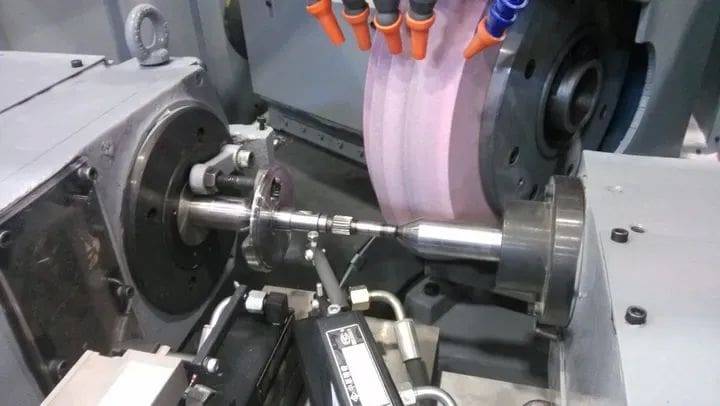
Answer: The vibration pattern is determined by the path. Down milling versus up milling is like the difference between walking and mopping. Down milling will produce a smooth effect, while reverse milling will produce a rough appearance. The choice should be made based on needs.
A slow-paced detailed analysis of someone's custom-made special-shaped stent with a wall thickness of just 1mm. If you follow the conventional path and cut it directly to the end, the result will be like a twist. Later, it was changed to the method of layering and spiral cutting, and the final product was as smooth as a mirror. I also saw an auto parts dealer who had a demand for ten threaded holes. If drilling and tapping are performed separately, the efficiency will be very low; if helical interpolation is used together, nine holes can be completed with one cut, which is really fast. This is the so-called "conquering more with less", showing true ability in humorous places.
Q: How to judge whether the quotation is reasonable?
A: Compare labor hours to material costs. If the quotation is lower than twice the price of the raw materials, then there must be a problem – either the heat treatment step has been omitted, or the waste materials have been secretly replaced.
The panoramic view shows that customized CNC is not in an isolated state. It involves the design link, the programming link, the fixture link, and the post-processing link. A certain robot team once wanted to save money on fixtures and used double-sided tape to fix workpieces. However, the result was that the workpiece quickly detached during the machining process, and the broken tool damaged the protective door. It can be said that it was a loss for both the wife and the soldier. So it can be said that the fixture is like the foundation. If it is unstable, the building will collapse.
Tool paths, the ingenuity of path planning, can turn decay into magic. When roughing, a trochoidal path should be used to protect the tool. When finishing, use contour paths and go all out to pursue smoothness. Moreover, the behavior of software simulation cannot be omitted, because only by seeing can you believe it is real.
Q: Why are the results different twice for the same procedure?
Answer: When the temperature rises, thermal elongation occurs. It is normal for the Z-axis to drift by 0.02mm when the spindle rotates for half an hour. The response strategy is to turn on the machine to preheat and add coolant.
Critical reflection: Most engineers are superstitious about the latest machine tools, but they neglect maintenance. Common case: There is a custom processing workshop that purchased a five-axis machine but does not have a constant temperature workshop. In the two seasons of summer and winter, accuracy is as erratic as a drunkard's. Looking at another factory in turn, it uses an old three-axis machine with online measurement, and it is very stable every time. It can be seen that the environment and process are better than the hardware stack. Where there is emotional resonance, you should ask yourself: Has my workshop been calibrated?
Question: Is surface roughness Ra0.8 necessary?
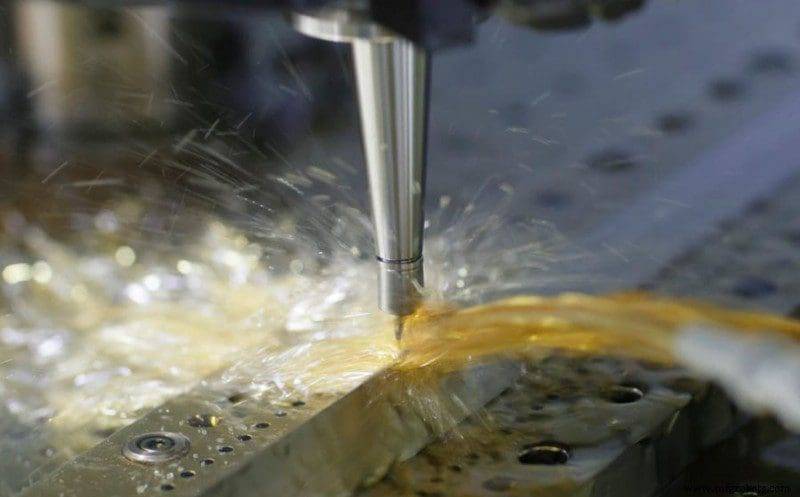
Answer: Not necessarily. Sealing surfaces are required, while decorative surfaces can be treated with relaxed requirements. Ra3.2 has achieved conditions that meet the conditions in 80% of scenarios.
Looking to another stage in the future, with the widespread application of on-machine inspection and adaptive processing, customized CNC will be like "Lego", defined by designers, optimized in the cloud, and manufactured locally. However, at present, we still need to be based on reality.
This is what needs to be regrouped: a certain aerospace part has requirements for surface roughness, a commonly abused parameter, and the required value is Ra0.2. However, this is actually a misunderstanding of the standard. The correct way to do this is to make a selection based on function. For example, if there is contact fatigue, a delicate surface is needed, while if there are lubrication grooves, a microscopic oil reservoir is needed.
Suggestions for action:
Before the drawings are issued, a "manufacturability review" must be carried out. Give the craftsman a cup of tea in exchange for a lifetime of peace and quiet.
The first item must be tested for three-dimensional coordinates, so don’t believe in “passing it by visual inspection”.
Establish a blacklist of suppliers—anyone who fails to notify the supplier of scrap or fails to report the replacement of materials will be removed immediately.
The core point is repeated: Customized CNC machining is an art of balance. Tolerance, material, path, roughness, these four are closely related to each other. Don’t pursue the ultimate of a single point, but the optimization of the system.
Frequently Asked Questions Q/A:
Q: What should I do if the tap is prone to breaking when tapping aluminum parts?
Step 1: Abandon cutting taps, use extrusion taps, and add lubricating alcohol. Step 2: Enlarge the diameter of the bottom hole. To what extent? Zooming in at 0.05mm is the safest choice.
Q: How to avoid deflection in deep hole processing?
First, a pecking drilling cycle is used. After every 3mm of drilling, the tool is retracted to remove chips, and then the drill is guided to make the positioning hole first. The accuracy is improved by 50%.
Q: Can’t the vacuum suction cup suck thin-walled parts?
Increase the density of the sealing strip, or change it to glue and mill the bottom surface. It should be noted that the thickness of the glue layer should be kept uniform, otherwise the workpiece will be skewed.
Q: How to quickly estimate processing time?
In terms of material removal rate, aluminum can reach 10 cubic centimeters per minute, and steel can reach 3 cubic centimeters per minute. In addition, the tool changing time is five minutes, and the clamping time is also five minutes.
Q: When will thread milling cutters and taps replace each other?
For case A, when the hole diameter is larger than M6 and the pitch needs to be changed, use a milling cutter; if there are large quantities of through holes, use a tap. The cost is three times different, so choose according to your needs.
At the end, sublimation is achieved: the road to customized CNC is like climbing a mountain. There are those who choose to take the cable car to get there quickly, and there are others who would rather walk on foot for a more steady approach. In fact, there are no shortcuts at all, it's just a matter of skill. I hope you can do this: don’t be constrained by parameters, and don’t be confused by gimmicks. Use reason as a sharp blade, experience as a ruler, and carefully carve out the fine products needed by the times. In the next ten years, small batch quantity customization will become the main development trend. The skills you have now will be transformed into treasures of wealth tomorrow. Act quickly, don't let this wonderful time pass you by.