
Quick answer:
The CNC turning process uses a rotating workpiece and a stationary cutting tool to remove material and create cylindrical parts. It is one of the most common and efficient machining methods for producing shafts, bushings, pulleys, and other round components. CNC turning is widely used across automotive, aerospace, medical, and industrial equipment sectors because it delivers tight tolerances, consistent repeatability, and fast cycle times. Choosing the right turning center, tooling, and material is essential to achieving part quality and controlling production costs.
If you are sourcing turned parts for the first time, understanding the basic steps, machine types, and key process parameters will help you communicate clearly with your machining partner and avoid costly misinterpretations.
What Is CNC Turning?
CNC turning is a subtractive manufacturing process in which a bar of material is held in a chuck and rotated at high speed while a cutting tool moves along programmed axes to shape the part. Unlike milling, where the tool rotates, the workpiece rotates in turning.
The process is controlled by a computer numerical control (CNC) program that dictates every movement of the cutting tool. This allows for precise control over dimensions, surface finish, and geometry.
Common parts produced by CNC turning include:
Shafts and axles
Bushings and bearings
Fittings and connectors
Rollers and pulleys
Threaded fasteners
Custom prototypes
How the CNC Turning Process Works
The CNC turning process follows a standard sequence of steps. Understanding each stage helps you evaluate a supplier’s capability and identify potential quality risks.
Step 1: Program Preparation
A CNC programmer creates a toolpath based on the part drawing. The program includes spindle speed, feed rate, depth of cut, and tool change sequences. For simple parts, the program may be generated manually. For complex geometries, CAM software is used.
Step 2: Material Setup
The raw material, typically a round bar, is loaded into the lathe’s chuck. For bar-fed machines, the material is automatically advanced. Proper clamping force is critical to avoid vibration or part movement during cutting.
Step 3: Rough Turning
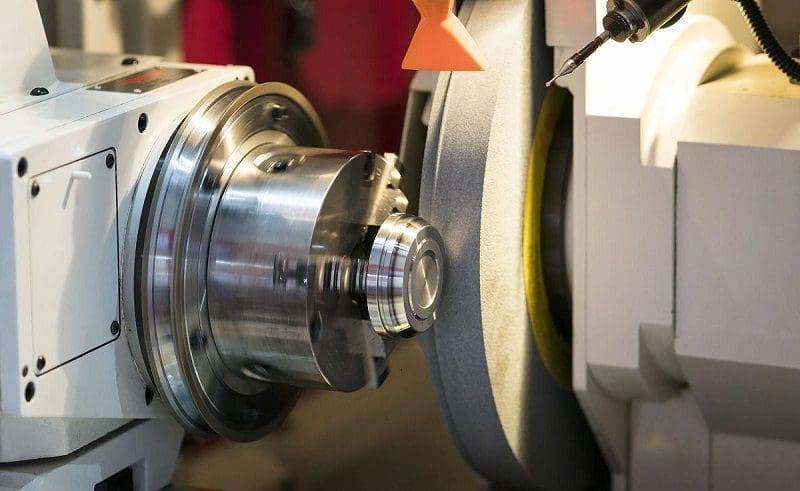
The cutting tool removes large amounts of material at a high feed rate to approach the final shape. Roughing passes prioritize material removal speed over surface finish.
Step 4: Finish Turning
The tool takes lighter passes at a slower feed rate to achieve the final dimensions and surface finish. Tolerance requirements determine whether additional finishing passes are needed.
Step 5: Secondary Operations
Many turned parts require additional features such as cross holes, flats, or slots. These can be performed on a CNC turning center with live tooling, which allows milling and drilling operations without moving the part to another machine.
Step 6: Inspection
Finished parts are measured using calipers, micrometers, CMM, or optical comparators. Key dimensions, surface finish, and concentricity are verified against the print.
Types of CNC Turning Machines
Choosing the right machine type affects part complexity, cycle time, and cost.
For most general machining needs, a 2-axis lathe offers the best balance of cost and capability. If your part requires cross-drilling or back-side machining, a multi-axis center with live tooling reduces handling and improves accuracy.
Key Parameters That Affect Quality and Cost
Every CNC turning job is defined by a few critical parameters. Understanding these helps you assess quotes and avoid common sourcing mistakes.
Spindle Speed (RPM)
Higher speeds improve surface finish but increase heat and tool wear. The optimal speed depends on material type and tool coating.
Feed Rate (IPR or MMPR)
Feed rate controls how fast the tool moves per revolution. Slower feeds improve finish but increase cycle time.
Depth of Cut
Roughing passes use a deeper cut to remove material quickly. Finishing passes use a shallow cut for precision.
Tolerance Range

Standard CNC turning tolerances range from ±0.005″ to ±0.001″. High-precision applications may require ±0.0005″ or tighter. Tighter tolerances increase machining time and inspection cost.
Surface Finish (Ra)
Typical turned finishes range from 63 to 32 microinches Ra. Achieving lower values may require additional polishing or grinding.
Common Materials for CNC Turning
The material choice directly impacts tooling cost, cycle time, and part durability.
Aluminum – Lightweight, easy to machine, good thermal conductivity. Common for automotive and consumer products.
Steel (1018, 4140, 1215) – Strong and durable. Requires slower speeds and rigid setup.
Stainless Steel (303,304, 316) – Corrosion resistant. More difficult to machine, higher tool wear.
Brass and Copper – Excellent machinability, good electrical conductivity. Used for fittings and electrical components.
Plastics (Delrin, Nylon, PTFE) – Lightweight, low friction. Requires sharp tooling and careful heat management.
Each material behaves differently under cutting forces. A knowledgeable machining partner should recommend appropriate feeds, speeds, and tool coatings for your specific material.
Common Questions About CNC Turning
Is CNC turning the same as CNC lathing?
Yes. CNC turning is performed on a lathe, and the terms are often used interchangeably. However, modern turning centers can also perform milling and drilling operations.
What is the difference between turning and milling?
In turning, the workpiece rotates. In milling, the cutting tool rotates. Turning is best for cylindrical parts. Milling is better for prismatic shapes with flat surfaces and complex cavities.
Can CNC turning produce threads?
Yes. Single-point threading or thread chasing can be programmed into the turning cycle. Thread rolling is also available for high-volume applications.
What tolerances can CNC turning achieve?
Standard tolerances are ±0.005″ to ±0.001″. With careful setup and inspection, tolerances down to ±0.0005″ are achievable, though cost increases with tighter requirements.
How long does a typical CNC turning cycle take?
Cycle time depends on part size, material, and complexity. A simple bushing may take 30 seconds. A multi-step shaft with secondary operations may take several minutes.
Does CNC turning work for non-round parts?
Standard turning only produces round parts. However, with live tooling and C-axis control, non-round features such as flats, hexes, and keyways can be added in the same setup.
What surface finish can I expect from CNC turning?
Typical finishes range from 63 to 32 microinches Ra. For smoother finishes, grinding or polishing may be required after turning.
How do I choose between a 2-axis and multi-axis turning center?
If your part is purely cylindrical with no cross features, a 2-axis lathe is sufficient. If your part requires holes, slots, or back-side machining, a multi-axis center reduces handling time and improves accuracy.
Selecting the Right CNC Turning Partner
Not all machine shops offer the same level of process control, inspection, or engineering support. When evaluating a partner for your CNC turning work, consider the following:
Do they have experience with your material and tolerance requirements?
Can they provide engineering support for design for manufacturability (DFM)?
Do they offer live tooling for combined turning and milling?
What inspection equipment do they use, and are they able to provide certification and documentation?
How do they handle prototype vs. production runs?
YPMFG supports projects that require both standard and complex turned parts. Whether you need a single prototype or a high-volume production run, their team can review your specifications, recommend the most efficient process, and provide a detailed quote with clear lead times.
Making a Better Long-Term Decision
The CNC turning process is straightforward in concept, but the difference between a good part and a consistently high-quality part lies in the details: machine selection, toolpath optimization, material handling, and inspection rigor.
When you understand how the process works and what questions to ask, you reduce the risk of delays, rework, and unexpected costs. Focus on part geometry, tolerance requirements, and material behavior, and choose a machining partner who can provide custom solutions and engineering evaluation from the start.
To get started, send your part specifications to YPMFG for review. Their engineering team can assess your application, suggest material and process improvements, and provide a competitive quote.