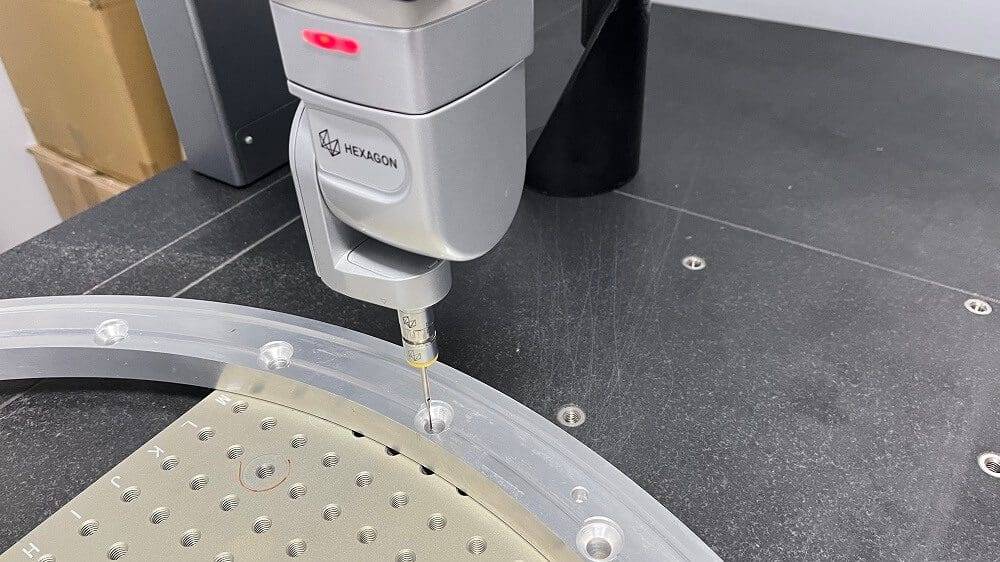
CNC turning is one of the most common and efficient methods for producing high-precision mechanical parts, especially cylindrical components like shafts, bushings, and threaded fasteners. This guide provides practical, step-by-step insights into achieving reliable results for CNC turning of mechanical parts, based on industry-proven practices and real-world case studies.
01What You Need to Know Before Starting a CNC Turning Job
To ensure your CNC turned parts meet specifications without delays or cost overruns, focus on three core factors: material selection, tolerance requirements, and surface finish.
Material – Choose machinable grades (e.g., 6061 aluminum, 1215 steel, brass C360). Harder materials (e.g., stainless 316, Inconel) require slower speeds and rigid setups.
Tolerances – Standard CNC lathes hold ±0.005″ (±0.13mm). High-precision turning achieves ±0.0005″ (±0.0127mm) but increases cost and lead time.
Surface finish – Typical turning leaves 32–63 µin Ra. With proper insert geometry and feeds, 16–32 µin Ra is achievable without secondary operations.
> Common case: A manufacturer needed 500 steel bushings with 0.001″ concentricity. Initial quotes used general-purpose inserts, causing chatter and rework. After switching to sharp, positive-rake inserts and reducing feed rate by 20%, all parts passed inspection on the first run.
02Step-by-Step Process for Reliable CNC Turning of Mechanical Parts

Follow these six steps to avoid common failures:
1. Review the drawing – Identify critical dimensions (usually those with GD&T callouts like ⌀, concentricity, or perpendicularity).
2. Select the correct workholding – For short parts (<3× diameter), use a 3-jaw chuck. For long slender parts, add a tailstock or steady rest.
3. Choose tooling based on material – Carbide inserts with chipbreakers designed for your material group (ISO P, M, K, N, S, H). For steel (P), use CVD-coated grades; for stainless (M), use sharp, tough PVD-coated inserts.
4. Set cutting parameters – Start from manufacturer’s recommended speed and feed, then adjust down 10–15% for interrupted cuts or thin walls.
5. Run first article inspection – Measure all critical dimensions on the first part before full production.
6. Adjust offsets – Use tool wear offsets to maintain tolerance across batch runs (typically check every 20–50 parts for high-volume jobs).
03Critical Quality Checks for CNC Turned Parts
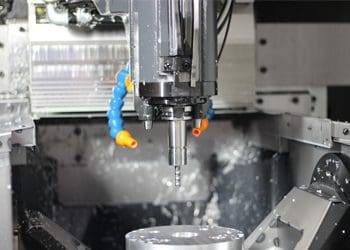
Inspect these five features on every CNC turned mechanical part:
Real-world example: A hydraulic component supplier found 8% of their turned shafts failed due to bore taper. The cause was worn guideway on the CNC lathe. After re-scraping the ways and re-calibrating, taper was reduced from 0.0012″ to 0.0003″, eliminating all failures.
04Most Common CNC Turning Mistakes and How to Avoid Them
Mistake #1: Ignoring material hardness variation – Leads to tool breakage. Fix: Request material certs and test hardness on incoming stock.
Mistake #2: Using the same insert for roughing and finishing – Roughing inserts have stronger edges but leave poor finish. Fix: Dedicated finishing insert (small nose radius, sharp edge) for final pass.
Mistake #3: Neglecting chip control – Long stringy chips damage parts and wrap around tools. Fix: Use chipbreaker geometry matching your feed rate (e.g., medium chipbreaker for 0.008–0.012 IPR).
Mistake #4: Overlooking thermal growth – After 30+ minutes of running, the spindle and workpiece expand, changing diameters. Fix: Run a warm-up cycle (5 minutes at operating speed) and apply adaptive offset control.
05Actionable Recommendations for High-Quality CNC Turning
To consistently produce mechanical CNC turning parts that meet specifications and reduce scrap:
1. Always perform a process FMEA (Failure Mode and Effects Analysis) before production – List each potential failure (e.g., tool wear, thermal drift, chatter) and its mitigation.
2. Document your proven parameters – Create a simple table for each material-diameter combination. Example: “4140 steel,1.5″ OD, rough: 600 SFM, 0.012 IPR, finish: 800 SFM, 0.006 IPR.”
3. Inspect in-process, not just final – Check critical diameters every 10 parts for high-volume runs (500+ parts). This catches drift early.
4. Use a tool life monitoring system – Replace inserts after a fixed number of parts or minutes cutting, not when parts go out of spec.
Final core point: Precision CNC turning of mechanical parts is not about the most expensive machine or tools – it’s about matching material, tooling geometry, cutting parameters, and inspection frequency to the part’s specific requirements. Start with a proven baseline, measure the first part rigorously, and adjust one variable at a time. Implement the step-by-step process above, and you will achieve reliable, repeatable results on every turning job.