
Selecting the right CNC precision machining supplier directly affects product quality, lead time, and total project cost. A reliable supplier is not simply the one with the lowest quote or the strongest marketing. It is the one that can prove its capability with documents, data, and consistent communication.
Focus on five points when evaluating a supplier: quality certifications, machining capability, material traceability, inspection equipment, and response quality. Check whether they have ISO certification, can hold your required tolerances, provide material certificates and inspection reports, and offer practical DFM feedback when the drawing has risks. At YPMFG, these details are reviewed early in precision CNC machining projects to avoid tolerance issues, delivery delays, or unclear quality responsibility later.
This guide uses common sourcing scenarios to help you judge whether a supplier is truly suitable for long-term cooperation, instead of relying on brand names or unverified claims.
01Verify Quality Certifications – Not Just a Paper
A genuine CNC precision machining supplier must hold internationally recognized quality management certifications. According to ISO 9001:2015 requirements, certified suppliers follow documented processes for continuous improvement and defect prevention. For automotive components, IATF 16949 is mandatory; for aerospace parts, AS9100D is the baseline.
Common case: A mid‑size automotive parts manufacturer once selected a supplier that claimed “ISO experience” but held no active certificate. After 500 units, the supplier delivered 12% of parts out of tolerance – the buyer had no audit rights and no corrective action process. The result: a $47,000 loss and a three‑week project delay. Always request the supplier’s current certificate and verify its scope on the accreditation body’s website.
02Assess Real Machining Capabilities – Tolerances and Equipment
Do not rely on marketing statements like “high precision.” Ask for documented capability studies. A capable CNC precision machining supplier should clearly state:
Minimum and maximum part dimensions
Standard tolerance (e.g., ±0.005 mm / ±0.0002 inch)
Number of axes (3‑axis, 4‑axis, or 5‑axis machining)
Materials regularly processed (aluminum, stainless steel, titanium, engineering plastics)
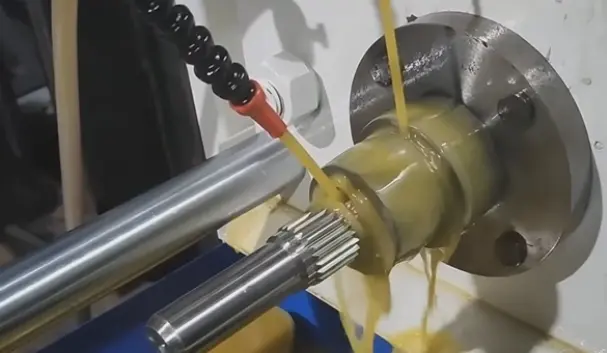
Common case: A medical device company needed a titanium bone screw with a ±0.002 mm tolerance on the thread root. Two suppliers claimed they could do it. The first sent samples with inconsistent diameters (range 0.008 mm). The second provided a capability report (Cpk > 1.33) from an in‑process CMM log. The second supplier became the long‑term partner because they proved capability with data, not promises.
03Demand Material Traceability – From Mill to Finished Part
Lack of traceability is the number one cause of field failures in regulated industries. A trustworthy CNC precision machining supplier must provide:
Original mill test reports (MTRs) matching the heat number of the raw stock
Batch‑level traceability for each production run
A documented non‑conformance reporting system
Common case: An aerospace subcontractor received 200 brackets made from 7075 aluminum. No MTRs were provided. When a crack appeared during anodizing, the supplier could not trace the material batch. The entire lot was scrapped – $32,000 loss. The buyer later added a contract clause requiring “full traceability with MTRs prior to machining.” Never skip this step.
04Inspect the Inspection Equipment – What They Use to Measure
The supplier’s measuring tools determine whether parts truly meet your drawing. A professional CNC precision machining supplier will have:
Coordinate Measuring Machines (CMM) with calibrated probes
Optical comparators for complex contours
Surface finish testers (Ra, Rz)
Gage blocks and pin gages with current calibration certificates (ISO 17025 accredited lab)
Common case: A hydraulic valve manufacturer received parts that all passed the supplier’s “quick check” with a digital caliper. However, the valve spool stuck during assembly. The buyer’s incoming CMM revealed a 0.015 mm form error on the bore – the supplier had no CMM and only measured two points per diameter. The lesson: ask for the list of inspection equipment and their calibration due dates before placing an order.
05Evaluate Communication and DFM Feedback – Before Cutting Metal
A high‑performing supplier acts as a design for manufacturability (DFM) partner, not just an order taker. Within 24‑48 hours of receiving your drawing, they should provide:
A DFM report highlighting potential tolerance stack‑ups or tool access issues
Proposed alternative geometries to reduce cost without compromising function
A clear lead time breakdown (material sourcing, setup, machining, inspection, shipping)
Common case: A startup designed a complex sensor housing with an internal sharp corner (0.2 mm radius). A reactive supplier simply quoted the drawing and machined it with a custom micro end mill, costing $1,800 for tooling and breaking three tools. A proactive supplier suggested a 0.5 mm radius with a slight wall thickness increase – the part remained functional, tooling cost dropped to $120, and lead time reduced by 40%. Always test a supplier’s responsiveness with a small, challenging sample part.
06Core Conclusion – Repeat the Verifiable Criteria
The most reliable CNC precision machining supplier is not the one with the lowest hourly rate or the fastest quoted lead time. It is the supplier that can prove, with documents and data,their adherence to quality standards, real machining capabilities, full material traceability, calibrated inspection equipment, and proactive engineering communication. These five factors consistently separate long‑term partners from transactional vendors.
07Actionable Next Steps
- Create a simple supplier scorecard based on the five criteria above. Include verifiable items such as certificates, capability reports, MTR samples, calibration lists, and DFM examples.
- For the trial order, do not send your most difficult part first. Use one simple part and one medium-complexity part with representative geometry to test real supplier capability.
- Run a remote audit. Ask for a video walkthrough of the CMM room, material storage area, and tool crib. Also request photos of calibration labels.
- Add key clauses to your purchase order, such as “Supplier shall provide MTRs before machining” and “FAIR per AS9102 or equivalent is required before batch production.”
- After 30 days, review the supplier again using the same scorecard. Share the results with them to support continuous improvement.
This evidence-based process helps you identify CNC precision machining suppliers that deliver accurate parts on time with complete documentation. At YPMFG, we also recommend verifying documentation, inspection capability, and communication quality before long-term cooperation, because this protects your production schedule and lowers sourcing risk.