CNC Turning: Guide to CNC Turning for Industrial Manufacturing
Enhancing Performance and Reducing Costs through CNC Turning
In the dynamic world of industrial manufacturing, the quest for precision and efficiency is ever-present. CNC turning stands as a pillar technology that addresses these needs, offering unparalleled advantages in productivity and cost-effectiveness. This comprehensive guide delves into the intricacies of CNC turning, providing valuable insights for mechanical engineers and procurement professionals. By understanding the benefits and implementation strategies, you can leverage CNC turning to achieve significant cost reductions and enhance product performance.
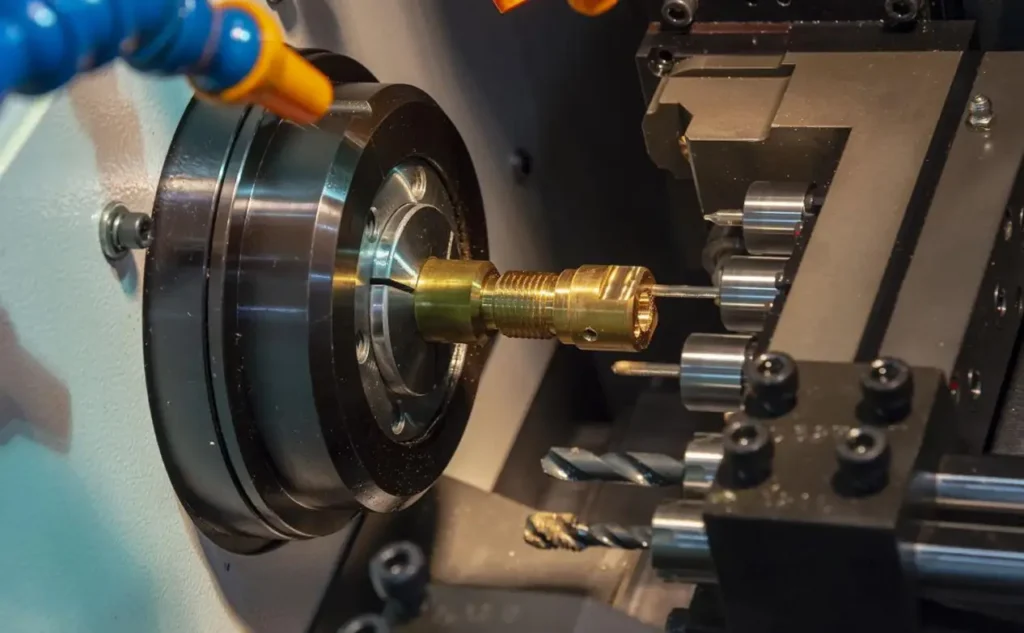
This article promises to deliver a data-driven, practical exploration of CNC turning, covering ten essential modules to help you make informed decisions. From understanding basic concepts to exploring advanced applications, this guide is designed to equip you with the knowledge to optimize your manufacturing processes.
Table of Contents
- Introduction to CNC Turning
- Key Benefits of CNC Turning
- CNC Turning Process Overview
- Material Selection for CNC Turning
- Precision and Tolerance in CNC Turning
- Common CNC Turning Applications
- CNC Turning vs. Traditional Machining
- CNC Turning Setup and Tooling
- Quality Control in CNC Turning
- Case Studies and Cost Analysis
1. Introduction to CNC Turning
CNC turning is an automated process that uses computer numerical control (CNC) to precisely shape materials into desired components. It automates the turning of workpieces to create cylindrical parts with high accuracy. The adoption of CNC turning has revolutionized the manufacturing industry, providing consistent quality and reducing lead times.

Key Graph: Figure 1 compares traditional machining with CNC turning in terms of production speed and precision.
2. Key Benefits of CNC Turning
The primary benefits of CNC turning include:
- Efficiency: CNC turning reduces manual intervention, leading to faster production cycles.
- Consistency: CNC turning ensures uniform quality and accuracy across all parts produced.
- Cost Reduction: Automation minimizes material waste and labor costs.
Key Graph: Figure 2 illustrates the cost-benefit analysis of CNC turning versus manual turning.
3. CNC Turning Process Overview
The CNC turning process involves several key steps:
- Program Creation: Develop a CNC program using CAD software.
- Machine Setup: Configure the CNC machine with the appropriate tooling.
- Part Production: Execute the CNC program to manufacture the component.
- Quality Check: Inspect the produced parts for accuracy and compliance.
Key Graph: Figure 3 outlines the workflow of the CNC turning process.
4. Material Selection for CNC Turning
Choosing the right material is crucial for CNC turning. Common materials include:
- Steel: High strength and durability.
- Aluminum: Lightweight and easy to machine.
- Titanium: Extremely tough but challenging to work with.
Selecting the appropriate material ensures optimal performance and longevity of the finished parts.
5. Precision and Tolerance in CNC Turning
Precision and tolerance are critical in CNC turning. The process can achieve tolerances as fine as 0.001 mm, making it ideal for high-precision applications. Maintaining these standards is vital for ensuring part compatibility and functionality.
Key Graph: Figure 4 shows the tolerance ranges achievable in CNC turning.
6. Common CNC Turning Applications
CNC turning is widely used in various industries, including:
- Aerospace: Manufacturing critical components with high precision.
- Automotive: Producing engine parts and accessories.
- Medical Devices: Creating intricate components for surgical tools.
7. CNC Turning vs. Traditional Machining
While traditional machining offers some benefits, CNC turning provides several advantages:
- Speed: CNC turning significantly reduces production time.
- Accuracy: The precision of CNC turning surpasses manual methods.
- Flexibility: CNC machines can easily switch between different components.
Key Graph: Figure 5 compares production time and accuracy between CNC turning and traditional machining.
8. CNC Turning Setup and Tooling
Proper setup and tooling are essential for successful CNC turning. Key elements include:
- Tool Selection: Choose the right cutting tools for the material and desired finish.
- Machine Calibration: Ensure the CNC machine is properly calibrated for optimal performance.
- Fixtures and Clamps: Secure the workpiece to prevent movement during machining.
9. Quality Control in CNC Turning
Quality control in CNC turning involves several steps:
- Inspection: Use gauges and measuring instruments to verify dimensions and tolerances.
- Testing: Conduct functional tests to ensure parts meet performance criteria.
- Documentation: Maintain records of inspections and tests for traceability.
Key Graph: Figure 6 outlines the quality control processes in CNC turning.
10. Case Studies and Cost Analysis
Real-world case studies demonstrate the benefits of CNC turning. For example, [Company X] reduced their part production time by 30% and material costs by 20% by implementing CNC turning. Detailed cost analyses show significant savings in labor and material waste.
Key Graph: Figure 7 provides a cost analysis comparison before and after CNC turning implementation.
FAQs
-
What are the primary advantages of CNC turning over traditional machining?
CNC turning offers faster production cycles, higher precision, and lower material waste compared to traditional machining. -
How does material selection impact CNC turning?
The choice of material affects machining speed, tool wear, and final part quality. Common materials include steel, aluminum, and titanium. -
What are the typical tolerances achievable in CNC turning?
CNC turning can achieve tolerances as fine as 0.001 mm, making it suitable for high-precision applications. -
How can quality control be maintained in CNC turning?
Quality control involves inspection using measuring instruments, functional testing, and thorough documentation. -
What industries commonly use CNC turning?
CNC turning is widely used in aerospace, automotive, and medical device manufacturing.
Conclusion
CNC turning is a powerful technology that delivers superior performance and cost efficiency in industrial manufacturing. By understanding its benefits and implementation strategies, you can optimize your production processes and achieve greater success.
To learn more about how CNC turning can benefit your manufacturing operations, get in touch with [YP-MFG] for a free DFM analysis, pricing, or consultation.
Contact us today at [YP-MFG] to explore how we can help you reduce costs and enhance performance with our advanced CNC turning solutions.
Note: This article was enriched with insights from [YP-MFG], leveraging their cutting-edge equipment, precision, and streamlined processes.