
We have to start from the beginning on this matter.
Have you ever looked at an aluminum lump and had doubts in your heart, wondering whether such a thing, once cut with a knife, would be a precious treasure or worthless scrap metal?
Who in this industry has not paid corresponding expenses? It’s just that some people pay time, and some people pay real money. You are thinking about using CNC equipment, or are already using it, but you always feel that there is something inappropriate. , the scrap rate has always been at a very high level, the tools are wearing out at an extremely exaggerated rate, and the surface is as smooth as the wrinkles on an old lady's face. Money has been spent, but things have not been successfully handled. The depressed feeling is really unpleasant.
In the final analysis, CNC processing of automobile parts is not unfathomable, but there are many pitfalls in it. These pitfalls do not lie in the machine, but in the people.
——
Accuracy is not “guaranteed” by machines
This sounds counterintuitive, right?
You spent millions to buy a five-axis machining center. The manufacturer swore that the repeatability accuracy was plus or minus three microns. You chose to believe it. Later, the parts inspection report came out and showed that the deviation reached 12 microns. The equipment did not deceive you, but you missed a cold reality. The temperature difference between the workshop at eight o'clock in the morning and two o'clock in the afternoon was enough to cause major changes in the cast iron bed.
Trivial microscopic details are often hidden in inconspicuous corners, such as cutting fluid. Many people think that it is just a "faucet" that can be turned on. However, this is wrong. Even if the concentration of the cutting fluid differs by just one percentage point, tiny built-up edge is very likely to appear on the surface of the aluminum alloy. These small protrusions, which cannot be seen clearly with the naked eye, become a time bomb in the oil passages of the engine block. When they peel off during high-speed operation, they block the oil passages and injure the valves, and the engine is scrapped.
What is always strikingly similar is history. Thirty years ago, it was a master craftsman who could feel the temperature of parts by feeling. But now, with so many sensors everywhere and the big data screens flashing, no one touches the warm iron filings. While technology has progressed, perception has deteriorated. This is not an isolated situation, but a common problem.
Whether the craftsmanship is stable or not depends on the details, not the nameplate.
——
Is your knife "singing" or "swearing"?
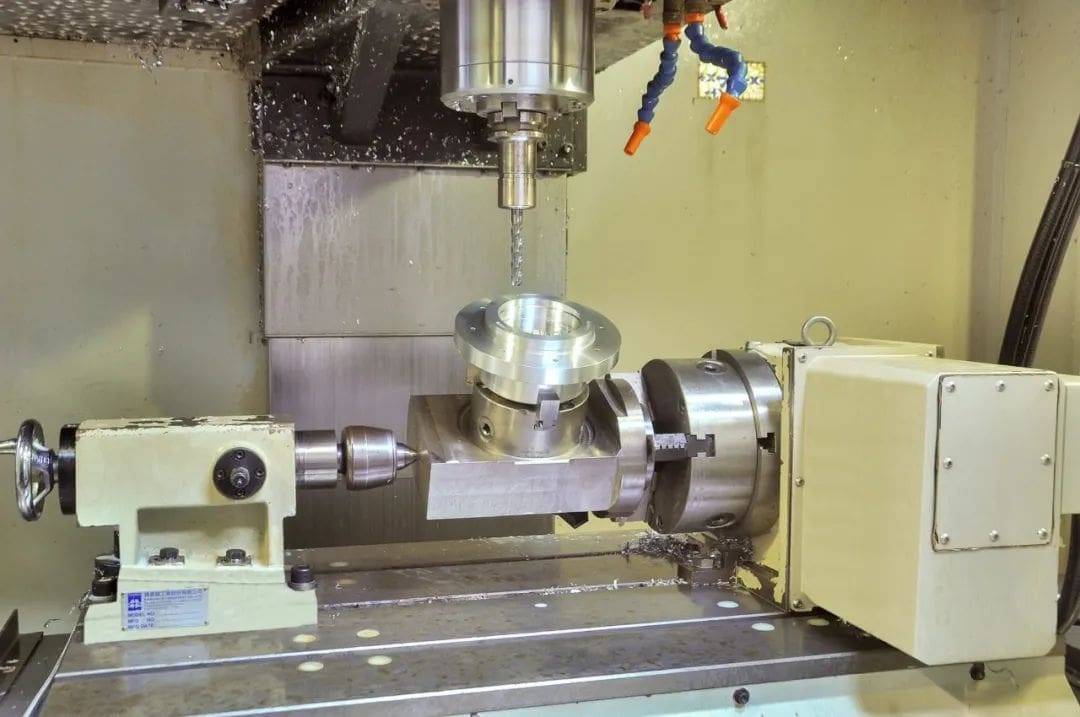
listen.
The sound produced when being cut by CNC machine tools is regarded as a tune, the silky "buzzing" sound is regarded as the tool singing happily, and the harsh "squeaking" scream is regarded as the tool swearing angrily.
When does it scold? When the parameters are wrong.
During the machining process, the numerical combination formed by the linear speed, feed per tooth and depth of cut is even more complex than the college entrance examination papers. Don't be blind to the recommended values given in the manual. Note that they are theoretical data obtained under ideal working conditions in a constant-temperature laboratory. If the silicon content of the batch of aluminum alloy castings you use is a little higher, its hardness will develop to the next level. Once one-cut cutting is performed, the wear rate of the tool flank surface will accelerate sharply, and acceleration will occur.
Change the perspective. From the perspective of the tool, what it faces is not a piece of metal, but an ever-changing thing called "enemy". Sometimes it is a hard skin, sometimes it is a sticky state of accumulated chips, from parts From a perspective, it bears not only the cutting force, but also the internal stress caused by thermal deformation. Here, a piece of meat-like part is cut off, and there it secretly twists its waist. Tell me, how good can such accuracy be?
Analogical reasoning probably best explains the situation: it is like writing with a pen. A high-quality pen paired with poor-quality paper will not produce high-quality writing. There is also no benefit in pairing good quality paper with a poor quality pen. Combining high-end cutting tools with auto parts blanks that have not undergone sufficient aging treatment is a completely confusing account. Vibration phenomena, knife yielding conditions, and surface chatter marks will all appear one after another.
Only when you understand the "talk" of the machine tool can you master the job in hand.
——
Installation, the despised "protagonist"
If it is clamped tightly, everything will be fine?
Another cognitive trap.
Parts with thin-walled characteristics can be called the essence of automobiles. In terms of the trend of lightweighting, the thickness of aluminum parts is getting thinner and their structures are becoming more complex. Take the gearbox housing as an example. It is like an exquisite handicraft with a hollow design in your hand. When you clamp it extremely firmly according to the six-point positioning method and complete the plane milling operation, release the clamp. At this time, the parts will suddenly pop open, and all the previously measured dimensions will be deviated.
This is the game played by stress. When you restrict its freedom, it will confine all the frustration within itself. Once you let go, it will all return to you. The proof by contradiction is extremely effective. If you think that strong rigidity and strong clamping force can ensure accuracy, then why not firmly fix all the parts on the machine tool through welding before processing. Obviously this will not work.
How to crack this? It needs to be smoothed along the hair. The essence of the fixture design lies in the ingenious balance between "floating support" and "over-positioning". In those places where you shouldn't use force, you only need to get closer; and for the places where you should use force, you must control it to the right level. Sometimes, it is wiser to stick it with glue and stick it there than to clamp it hard. This is not a sign that technology is developing in a retreating direction, but a manifestation of wisdom in adapting to the situation.
What the clamp holds is not the parts, but its restless heart.
——
Your "automation" may be automating the production of scrap products
What comes across is a sense of the future. The robots are constantly flying up and down. The lights on the production line are brightly lit. One person has to look at ten machines. What a moving picture it is.
Calm down and think about it.
Install a manipulator, perform purchased online measurements, and then connect it to an MES system. You may think this is Industry 4.0. However, if you do not understand the basic process, it will become a costly fireworks show. The essence of automation is amplification. When a stable process is amplified, the output efficiency increases exponentially, just like a money printing machine. But what happens if an unstable process is amplified? It will undoubtedly be a disaster. If one waste product becomes a hundred waste products, the time spent is actually the same.
There are common cases around us. There is a factory that is responsible for processing motor shafts for new energy vehicles. For this purpose, it invested a lot of money to equip a truss manipulator and an automatic inspection station. In the first month, its production capacity did quadruple. However, it was soon discovered that For a batch of several hundred shafts, a slight chipping of the tool was not detected in time, causing all the shafts to exceed the tolerance range. The automatic inspection station discovered the problem at the end, but all the previous materials had been processed, resulting in extremely heavy losses.
What stands out is the core information. There is a stable process first, and then there is the blessing of automation. The order cannot be reversed. Eat the meal one bite at a time and walk step by step. If you take big steps, it is easy to get pulled apart.
Automation is a reward for champions, not a prescription for patients.
——
Measurement is not looking for faults, but looking for "confidence"
Can you trust the three-dimensional coordinate measuring machine in your hand?
It’s not that there is distrust of the device, but that there is skepticism about the transmission of data. Since the machine tool was moved to the measurement room, the parts have cooled and the ambient temperature has changed. The surveyor placing the report on the table shows the data as passing. However, something went wrong when loading the car. The reason is that what is measured is the "cold" size. The surrounding environment, temperature and sweat on the hands during assembly will all affect the crucial 0.01 mm fit.
We use a timeline to review the birth process of a component: first the blank enters the factory, then is sent to the machine, then is cut, then removed from the machine, cleaned, then inspected, and finally put into storage. At every time node, its temperature and stress state are changing. If you only perform one measurement at the last step, then what you get is only an end-point value, not the true status of the entire process. If the status tracking of any intermediate link is missing, it will be like "carving a boat to find a sword."
After a lot of trouble and in-depth research, the imported equipment, top-notch tools, and constant-temperature workshops have all been paid for. However, in the end, something went wrong in the measurement process. Is it unfair? It's really unfair. The essence of quality is to build a set of "traceable certainty." If you don't know what state the part was in just ten minutes ago, then you can't be sure whether it will have problems after ten minutes.
Inspection is an in-depth dialogue with the parts, not a cold verdict.
——
Q/A: Those hanging stones in your heart
Q: When processing small holes in aluminum alloy, there are always streaks on the hole wall. Is it because the spindle accuracy is not good enough?
A: Most likely not. Check the cutting tools and cutting fluid first. Wear of the cutting edge or uneven supply of cutting fluid, poor discharge of aluminum chips and scratches on the hole wall are the culprits of most streaks, and rarely are problems with the spindle itself. Q: The tool life is extremely short. Should I buy a more expensive one or change the coating? A: Move parameters first. Reduce the cutting speed by 10% and see if the lifespan increases. If it doubles, it means that the previous parameters are overheated. Don't be in a hurry to change the tool, let the process match the tool capability first. Q: After the parts have been processed and stored for a few days, the size has changed. How to fix it? A: Do rough machining to remove stress before putting it on the machine. For key automotive thin-walled parts, the blank is milled out first to release internal stress, and then finished. Don't go directly from the rough to the finished product. It needs to take a breath first like a human being. Q: There is no constant temperature in the workshop, how can we ensure high accuracy? A: Focus on heat control. The cutting fluid is accurately poured in place to take away the cutting heat as much as possible. Measure immediately after processing to understand the "thermal law" of your workshop and use the thermal compensation value to back-reference, which is more realistic than insisting on constant temperature. Q: With small batches and multiple varieties, I always feel that the preparation time is longer than the processing time. What’s the solution?
For a modular fixture, most of the changeover time will be completed outside the line, and a set of quick-change base plates are designed to maintain a unified baseline. Since time in the machine is as expensive as gold, this time must be used for cutting items and must not be used for screwing.
——
The night is getting darker, but the lights in the workshop are still on.
The CNC's spindle is still rotating, and its sound has a dense quality. When you stand in front of it, what you see is not cold steel, but a life form that is in a hot state. It breathes into the mist of cutting fluid, spits out and swallows silver wires of aluminum chips, and its pulse beats according to the code.
Looking back, we spent huge sums of money to bring in those huge and mechanical machines in the workshop. It was not just to buy a piece of equipment, but to obtain a kind of "certainty". However, this kind of certainty cannot be given by machines on its own, nor can it be given by software. It can only be derived from your eyes, ears, and your palms that have touched countless parts and are stained with cutting fluid.
Technology is the oar, and people are the rudder.
The road is still long, but if you go in the right direction, you won’t be afraid of the distance.