
Quick answer: Five-axis CNC machining allows for the production of complex geometries in a single setup by moving the cutting tool along five different axes simultaneously. This process significantly improves precision, reduces assembly time, and enhances surface finish compared to traditional three-axis methods. It is the preferred manufacturing solution for high-tolerance components in aerospace, medical, and automotive industries where complex contours and tight tolerances are critical requirements.
Modern engineering demands components that balance intricate design with strict dimensional accuracy. Manufacturers often face challenges when trying to produce complex parts using multiple setups, which introduces cumulative errors and increases lead times. The shift toward integrated manufacturing processes addresses these pain points directly. By consolidating operations into a single machining cycle, businesses can achieve higher quality standards while optimizing their overall production workflow.
Understanding Five-Axis Kinematics
Five-axis technology expands the degrees of freedom available during the cutting process. Unlike standard three-axis machines that move only along the X,Y, and Z linear axes, five-axis equipment adds two rotational axes. These are typically designated as the A-axis (rotation around X) and the B-axis (rotation around Y). Some configurations may use a C-axis rotation instead, depending on the machine head or table design.
This additional movement allows the cutting tool to approach the workpiece from virtually any angle. The result is the ability to machine undercuts, deep cavities, and complex curves without repositioning the part. This capability is essential for producing organic shapes found in impellers, turbine blades, and prosthetic implants. The flexibility reduces the need for specialized fixtures and manual handling.
Key Advantages Over Three-Axis Machining
The primary benefit of five-axis machining is the reduction in setup times. Since the part remains fixed on the machine table throughout the entire process, operators avoid the time-consuming steps of unclamping, reorienting, and reclamping. This consolidation minimizes human error and ensures consistent alignment across all features. For high-volume production runs, this efficiency translates directly into lower labor costs and faster delivery schedules.
Surface finish quality also sees substantial improvement. The cutting tool can maintain an optimal orientation relative to the part surface, preventing gouging and reducing scallop marks. This is particularly important for mold making and aerodynamic components where smooth transitions are mandatory. Additionally, the shorter cutting tools required for five-axis setups reduce vibration and deflection, allowing for deeper cuts with better accuracy.
Material Compatibility and Limitations
Five-axis CNC centers can process a wide range of materials, including aluminum, titanium, stainless steel, Inconel, and various engineering plastics. However, harder materials like hardened steel or superalloys require specific tool paths and slower feed rates to prevent tool wear. The machine’s rigidity and spindle power must match the material properties to achieve efficient chip removal.
Certain geometric constraints still apply regardless of the number of axes. Extremely thin walls or fragile features may still require secondary operations to avoid deformation during cutting. Engineers must evaluate the part design for accessibility issues that even five-axis movement cannot resolve. Proper CAM programming is crucial to ensure the tool does not collide with the fixture or the part itself during complex rotations.
Selection Criteria for Procurement
When sourcing five-axis machined parts, buyers should prioritize the machine’s configuration type. Table-table, head-head, and table-head configurations each offer distinct advantages regarding payload capacity and travel limits. Table-table machines generally provide higher stiffness for heavy parts, while head-head setups offer greater flexibility for large, bulky components.
Tolerance capabilities are another critical factor. Standard five-axis machines can typically hold tolerances within ±0.025 mm, but high-end models with linear scales can achieve ±0.005 mm or better. Verify if the manufacturer uses calibrated measurement systems and provides first-article inspection reports. Consistent quality control processes are non-negotiable for critical applications in regulated industries.
Cost Factors and ROI Analysis
The hourly rate for five-axis machining is often higher than three-axis due to increased machine complexity and operator expertise. However, the total project cost is frequently lower because of reduced labor hours and faster turnaround times. Buyers should look at the total landed cost rather than just the unit price per part.
Tooling costs may also increase slightly due to the need for specialized cutters and longer reach tools. Yet, the elimination of multiple fixtures and the reduction in scrap rates often offset these expenses. For complex parts, the return on investment becomes evident through improved consistency and reduced assembly time in downstream processes.
Technical Documentation and Quality Assurance
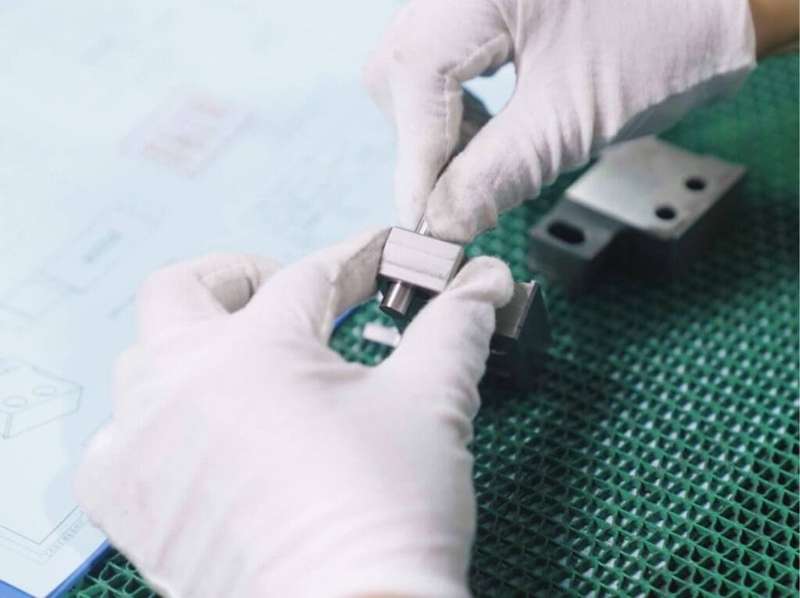
Reliable suppliers provide comprehensive technical documentation to support the manufacturing process. This includes detailed CAD models, CNC program files, and material certificates for all raw stock. Requesting a full inspection report with CMM data helps verify that all critical dimensions meet the specified tolerances.
Traceability is essential for industries such as aerospace and medical devices. Ensure that the manufacturer maintains a robust quality management system, such as ISO 9001 or AS9100 certification. These standards guarantee that every step of the production process is documented, audited, and controlled to prevent defects.
Common Questions About 5 Axis CNC Machining Parts
What is the minimum order quantity for custom parts?
Most manufacturers accept low minimums for prototype runs, often starting at just one piece. This allows engineers to validate designs before committing to larger batches. Volume discounts usually kick in once production quantities reach significant thresholds, making it feasible for both startups and established firms.
How does toolpath strategy affect surface finish?
Optimized toolpaths maintain constant contact pressure between the cutter and the workpiece. This prevents sudden changes in load that can cause chatter or uneven material removal. Advanced CAM software calculates these paths dynamically to ensure smooth transitions across complex curves and angles.
Can I machine highly reflective materials like polished aluminum?
Yes, but it requires specific cutting parameters and sharp tools to avoid smearing. Polished surfaces reflect light, making visual inspection difficult during machining. Operators often use higher spindle speeds and lower feed rates to achieve a mirror-like finish without leaving visible tool marks.
What software formats are accepted for quoting?
Most CNC shops accept STEP, IGES, and native CAD files like SolidWorks or Inventor. These formats provide accurate geometry data for simulation and programming. Providing assembly files helps the manufacturer understand how parts interact and identify potential interference issues early.
Need Help Selecting the Right Parts for Your Application?
Choosing the correct manufacturing partner for five-axis CNC machining parts requires balancing technical capability with service reliability. YPMFG specializes in delivering high-precision components that meet stringent industry standards. Our engineering team offers custom solutions tailored to your specific geometric and material requirements.
We provide comprehensive support, including engineering evaluation and detailed cost analysis before production begins. This proactive approach ensures that potential issues are resolved early, saving time and resources. You can send your specifications to YPMFG for a professional review and competitive quote.