
Quick answer:
A CNC milling service uses computer-controlled rotary cutters to remove material from a workpiece, producing precision parts with tight tolerances. It is the most common subtractive manufacturing process for metals and plastics, used across aerospace, automotive, medical, and industrial equipment sectors. Choosing the right service provider directly affects part quality, lead time, total cost, and project scalability.
CNC milling is often the first choice when you need complex geometries, repeatable accuracy, and consistent surface finishes. But not all milling services deliver the same level of engineering support, material flexibility, or quality control. Many buyers discover mid-project that their chosen shop lacks the capability for tight tolerances, multi-axis work, or secondary finishing—leading to delays and rework.
This article explains how CNC milling services work, what factors affect cost and quality, and what to check before sending your part files to a machine shop.
How CNC Milling Works
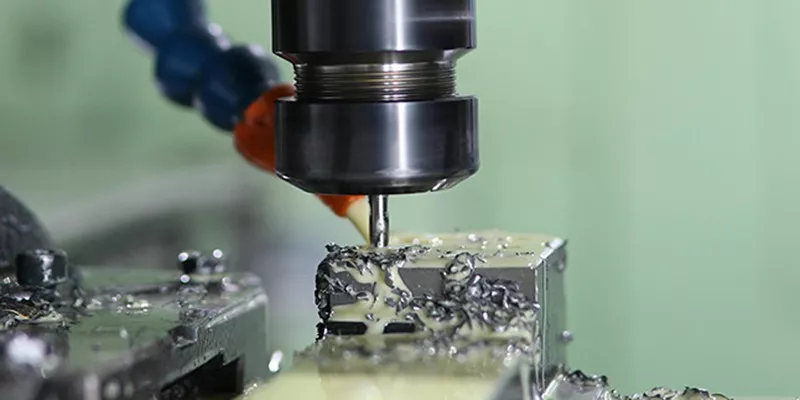
A CNC milling machine reads a digital CAD model and converts it into toolpaths. The machine moves a rotating cutting tool across multiple axes to remove material from a block—called the workpiece—until the final shape is achieved.
The process is subtractive, meaning it starts with more material than needed and cuts away the excess. This is different from additive manufacturing (3D printing) or formative processes like casting.
Most CNC milling services operate 3-axis, 4-axis, or 5-axis machines. The number of axes determines the complexity of geometries the machine can produce. A 5-axis mill can machine undercuts, angled features, and complex contours in a single setup, reducing lead time and improving accuracy.
Types of CNC Milling Services
The choice of service type depends on part complexity, material, volume, and budget. For prototypes, 3-axis milling is often sufficient. For production parts with tight tolerances, 5-axis CNC milling may be the better option.
Key Factors That Affect CNC Milling Cost
Material cost is the first variable. Exotic alloys like titanium or Inconel cost more to purchase and machine because they wear down tooling faster. Aluminum and brass are more economical.
Part complexity is the second major factor. Each additional feature—threads, tight tolerances, undercuts, or multiple setups—adds machining time. A part that requires 5-axis machining will cost more per hour than a simple 3-axis job.
Quantity matters. Setup costs are spread across the total run. A single prototype may have a high per-unit cost, while a batch of 500 parts benefits from amortized setup and optimized toolpaths.
Surface finish and secondary operations also add cost. Anodizing, plating, heat treatment, or inspection reports increase the total price.
YPMFG helps buyers evaluate these cost factors early. By reviewing your part geometry and material requirements, the team can suggest design adjustments that reduce machining time without compromising function.
Materials Commonly Used in CNC Milling
Aluminum 6061 and 7075 – Lightweight, machinable, corrosion-resistant. Common for aerospace brackets, enclosures, and automotive components.
Stainless Steel 304 and 316 – Strong, corrosion-resistant. Used in medical devices, food equipment, and marine parts.
Steel 1018 and 4140 – High strength, good wear resistance. Typical for shafts, gears, and structural components.
Titanium Grade 2 and 5 – High strength-to-weight ratio. Used in aerospace and medical implants.
Brass C360 – Excellent machinability. Common for fittings, valves, and electrical components.
Engineering Plastics – Delrin, Nylon, PEEK, and PTFE. Used for low-friction,lightweight, or chemically resistant parts.
Each material behaves differently under the cutting tool. Harder materials require slower speeds, specialized tooling, and more rigid machine setups. A reliable CNC milling service will have experience across this range and can advise on material selection based on your application.
Quality Control in CNC Milling Services
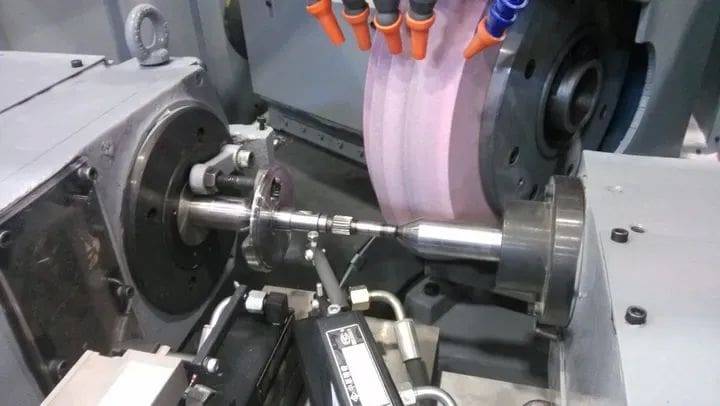
Quality starts with the machine itself. Modern CNC mills with linear scales, thermal compensation, and rigid frames hold tighter tolerances consistently.
Inspection is equally important. Most professional shops use CMM (coordinate measuring machine) reports, surface roughness testers, and go/no-go gauges to verify critical dimensions.
Ask your provider about:
First article inspection (FAI)
In-process inspection frequency
Dimensional reporting format
Material certification traceability
YPMFG provides full dimensional inspection reports with each order. This documentation helps buyers verify that every part meets the specified tolerance requirements before moving to assembly or shipment.
Common Questions About CNC Milling Services
How long does a typical CNC milling project take?
Lead time depends on part complexity, material availability, and current shop capacity. Simple parts in aluminum can ship in 5–7 business days. Complex multi-axis parts or those requiring exotic materials may take 2–4 weeks. Always confirm lead time before ordering.
What file formats do CNC milling services accept?
Most shops accept STEP, IGES, and native CAD files from SolidWorks, Fusion 360, or AutoCAD. Some also accept PDF drawings with critical dimensions. Always check the required format before sending.
Can CNC milling produce threads and tapped holes?
Yes. Threads can be cut using thread mills or taps. For production runs, thread milling is preferred because it produces stronger threads and longer tool life. Specify thread type and depth in your drawing.
What is the typical surface finish from CNC milling?
Standard milling produces a surface finish of 63–125 Ra. For smoother finishes, secondary operations like polishing or bead blasting can achieve 16–32 Ra. Specify your surface finish requirement in the RFQ.
How do I know if my part needs 3-axis or 5-axis milling?
If your part has undercuts, compound angles, or features on multiple faces, 5-axis milling may be necessary. A simple block with flat pockets and holes can be done on a 3-axis machine. Send your CAD file to YPMFG for a free engineering review.
What is the minimum wall thickness for CNC milled parts?
For metals, a minimum wall thickness of 0.020 in is typical. For plastics, 0.030 in is safer to avoid deformation. Thin walls require careful toolpath planning and high-speed machining to prevent vibration.
Does CNC milling work for one-off prototypes?
Yes. CNC milling is well suited for prototypes because no tooling or mold is required. Setup time is minimal, and design changes can be implemented quickly by updating the CAM file.
What certifications should a CNC milling service have?
ISO 9001 certification is the baseline for quality management. For aerospace or medical work, AS9100 or ISO 13485 may be required. Always verify that the provider’s certification scope matches your industry needs.
Choosing the Right CNC Milling Service for Your Application
The right provider should offer more than just machine time. Look for engineering support, material expertise, and transparent communication throughout the project.
Start by sending your part files for review. A good shop will identify potential issues—thin walls, sharp internal corners, or difficult tolerances—before quoting. This saves time and prevents costly surprises.
YPMFG works with buyers across industries to deliver precision-machined parts that meet functional and budget requirements. Whether you need a single prototype or a production run, the team can review your specifications, suggest material and design improvements, and provide a clear quote with lead time.
To get started, send your CAD file and tolerance requirements to YPMFG for an engineering assessment and competitive quote.