Quick answer:
CNC turning is a precision machining process where a rotating workpiece is shaped by a stationary cutting tool to produce cylindrical components. It is widely used for producing shafts, bushings, fittings, and other round parts with tight tolerances. The process is typically performed on a CNC lathe and supports a variety of materials,including metals and plastics. Understanding the capabilities and limitations of CNC turning is essential for selecting the right manufacturing approach for your project.
CNC turning is one of the most common and cost-effective methods for producing round parts, yet many buyers underestimate how material choice, toolpath strategy, and machine rigidity affect final part quality and lead time. Whether you are sourcing prototypes or production runs, knowing what to specify and what questions to ask can significantly reduce procurement risk and hidden costs.
What Is CNC Turning?
CNC turning is a subtractive manufacturing process that uses computer-controlled lathes to remove material from a rotating workpiece. The cutting tool moves linearly along multiple axes to create features such as diameters, grooves, threads, and tapers.
Unlike manual turning, CNC turning offers repeatability and precision. Once a program is verified, the machine can produce identical parts with minimal variation. This makes it suitable for both low-volume prototyping and high-volume production.
How CNC Turning Works
The workpiece is held in a chuck or collet and rotated at a programmed speed. The cutting tool is fed into the material to remove chips and form the desired shape. Modern CNC lathes can perform multiple operations in a single setup, including facing, drilling, boring, and threading.
Key components of a CNC turning operation include:
Spindle – rotates the workpiece at controlled speeds
Tool turret – holds multiple cutting tools for automatic changes
Tailstock – supports long workpieces to reduce deflection
Coolant system – manages heat and chip removal
Types of CNC Turning Operations
CNC turning covers several specific operations, each suited to different part features:
Straight turning – reduces the diameter of a cylindrical workpiece along its length
Taper turning – produces a conical surface
Facing – creates a flat surface at the end of the workpiece
Grooving – cuts narrow channels or recesses
Threading – cuts internal or external threads
Boring – enlarges or finishes an existing hole
Parting – cuts off a finished part from the stock
Materials Commonly Used in CNC Turning
The choice of material directly affects machining speed, tool wear, surface finish, and cost. Common materials for CNC turning include:
Aluminum – excellent machinability, lightweight, good thermal conductivity
Steel – high strength, suitable for structural and mechanical parts
Stainless steel – corrosion resistant, but requires slower speeds and rigid setups
Brass and copper – easy to machine, often used for fittings and electrical components
Plastics – such as nylon, acetal, and PTFE, used for low-friction or chemical-resistant parts
CNC Turning vs. CNC Milling
Many buyers compare turning vs milling when selecting a process. The key difference lies in workpiece motion:
In CNC turning, the workpiece rotates, and the tool remains stationary or moves linearly.
In CNC milling, the workpiece remains stationary, and the rotating cutting tool moves across multiple axes.
CNC turning is ideal for cylindrical or symmetrical parts. CNC milling is better for complex geometries with flat surfaces, pockets, or intricate contours. Some parts require both processes, often completed in a single setup on a multi-tasking machine.
Key Specifications to Review When Sourcing CNC Turning
When requesting a quote for CNC turning services, include the following specifications:
Material grade and condition – specify alloy, temper, or heat treatment
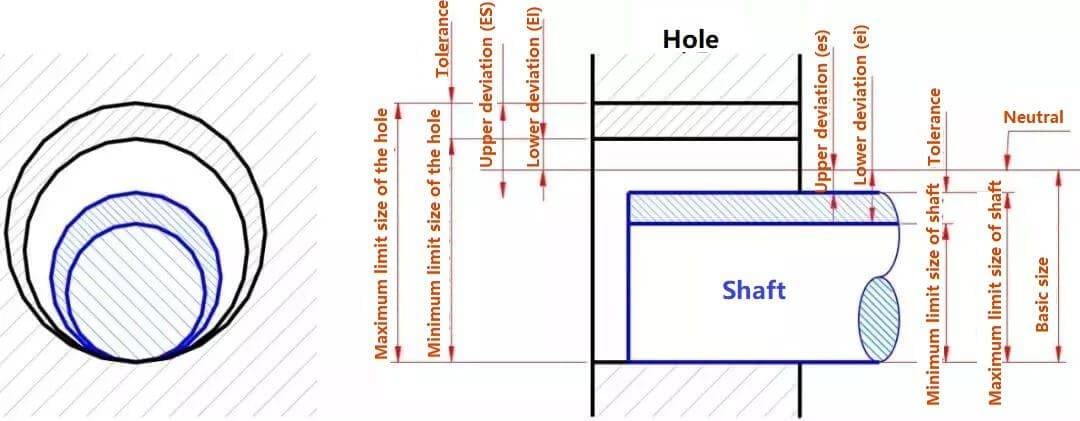
Tolerance requirements – standard tolerances are typically ±0.005 inches; tighter tolerances may increase cost
Surface finish – measured in Ra (microinches); common finishes range from 32 to 125 Ra
Thread specifications – pitch, class, and direction
Quantity – affects setup cost per part and cycle time
Secondary operations – such as heat treating, plating, or assembly
Common Questions About CNC Turning
What is the difference between CNC turning and manual turning?
CNC turning uses computer-controlled toolpaths for consistent accuracy and repeatability. Manual turning relies on operator skill and is slower, making it less suitable for production runs or tight tolerances.
Can CNC turning produce non-round shapes?
Standard CNC turning produces round features. Non-round shapes such as flats or hexagons require live tooling or a secondary milling operation on a multi-axis lathe.
What is the typical lead time for CNC turned parts?
Lead time depends on complexity, material availability, and quantity. Simple parts can ship in a few days, while complex or multi-operation parts may take several weeks.
How tight of a tolerance can CNC turning achieve?
Standard CNC turning can hold tolerances of ±0.005 inches. With careful setup and high-quality machines, tolerances as tight as ±0.0005 inches are possible.
Is CNC turning cost-effective for small quantities?
Yes, especially when using standard materials and simple geometries. Setup time is the main cost driver, so small batches are often quoted at a higher per-part price than larger runs.
What causes poor surface finish in CNC turning?
Common causes include incorrect feed rate, dull tooling, insufficient coolant, or excessive vibration. Adjusting cutting parameters and using sharp tools usually resolves the issue.
Do I need a drawing or CAD file to get a quote?
Most suppliers require a technical drawing or a 3D model with critical dimensions and tolerances. A clear specification helps avoid misunderstandings and rework.
Can CNC turning be used for prototyping?
Yes. CNC turning is a common choice for prototyping because it offers fast turnaround and material flexibility without the need for dedicated tooling.
Choosing the Right CNC Turning Partner
Selecting a machining partner for CNC turning involves more than comparing prices. You should evaluate their equipment capabilities, material sourcing options, and quality control processes. A partner with experience in your industry can often identify potential design issues before production begins.
YPMFG supports projects that require tight tolerances, custom material specifications, and secondary operations. Their team reviews part geometry and tolerances to recommend the most efficient turning strategy. You can send your specifications to YPMFG for an engineering review and a detailed quote.
Making a well-informed decision on your turning process and supplier helps reduce lead time, avoid rework, and control total project cost.