
Quick answer:
A CNC prototype is a functional part machined directly from CAD data using computer-controlled cutting tools. It is used to verify fit, form, and function before committing to production. CNC prototyping works with metals, plastics, and composites, and typically delivers parts in days rather than weeks. The process is well-suited for low-volume runs, functional testing, and iterative design validation.
Getting a physical part in your hands quickly is often the difference between a stalled project and a confident product launch. Engineers and procurement teams frequently face the challenge of balancing speed, accuracy, and cost when producing early-stage parts. A CNC prototype offers a reliable way to validate your design without the lead time or tooling investment of production-level manufacturing. Understanding how to approach this process can save weeks of development time and prevent costly downstream revisions.
What Is a CNC Prototype?
A CNC prototype is a part produced using computer numerical control (CNC) machining, where cutting tools follow programmed toolpaths to remove material from a solid block. Unlike additive methods, CNC machining starts with a dense, homogeneous material, which gives prototype parts mechanical properties close to final production parts.
This makes CNC prototyping particularly useful when you need to test mechanical strength, thermal performance, or assembly fit under realistic conditions. It also supports a wide range of engineering-grade materials, including aluminum, steel, brass, ABS, Delrin, and PEEK.
Why Choose CNC Machining for Prototyping?
Many prototyping methods exist, but CNC machining offers distinct advantages for functional validation.
Material fidelity: Parts are made from the same materials used in production, so test results are directly applicable.
Surface finish: CNC parts can achieve surface finishes as low as Ra 0.8 µm without secondary operations.
Tolerance control: Typical machining tolerances range from ±0.005 in. to ±0.001 in., depending on geometry and material.
No tooling costs: Unlike injection molding, CNC prototyping does not require hard tooling, making it cost-effective for 1 to 100 parts.
These factors make CNC prototyping the preferred choice for industries such as aerospace, medical devices, automotive, and industrial automation, where part performance must be verified before production scale-up.
Key Factors That Affect CNC Prototype Cost
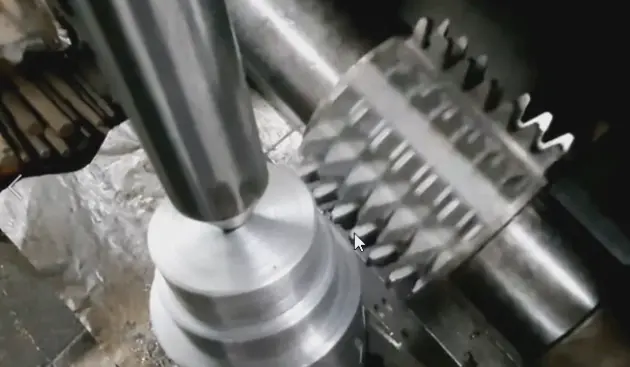
Prototype pricing is not arbitrary. Several variables determine the final quote, and understanding them helps you make informed trade-offs.
The most effective way to control cost is to separate prototype requirements from production requirements. If a cosmetic surface is not needed for function, leave it as as-machined.
How to Prepare a Design for CNC Prototyping
Not every CAD model is ready for machining. A few common issues can delay quoting or increase cost.
Avoid sharp internal corners: CNC end mills are cylindrical. Inside corners will have a radius equal to the tool diameter. Specify a minimum corner radius of 0.030 in. where possible.
Ensure wall thickness is adequate: Thin walls (<0.020 in. in metal, <0.040 in. in plastic) can vibrate or break during cutting. Reinforce or thicken them.
Check for undercuts: Features that cannot be reached from a standard cutting direction may require 5-axis machining or EDM,which increases cost and lead time.
Limit deep cavities: Deep pockets with small diameters require long, slender tools that are prone to deflection. Keep depth-to-diameter ratios below 4:1.
If your design has complex internal features, consider splitting it into two parts that are assembled after machining.
What to Expect in Lead Time and Delivery
Standard CNC prototype lead times range from 5 to 15 business days, depending on complexity and current shop capacity. Expedited service is often available for an additional fee.
Simple parts (few features, standard material): 3–5 days
Moderate complexity (multiple features, tighter tolerances): 7–10 days
Complex parts (5-axis work, exotic materials, tight finishes): 10–15 days

Most machine shops, including YPMFG, provide a DFM (Design for Manufacturability) review before production begins. This review identifies potential issues and suggests improvements without additional cost. You should always request a DFM check before approving a quote.
Common Questions About CNC Prototypes
Can CNC prototypes be made from the same material as production parts?
Yes. CNC machining works with the same wrought and extruded materials used in production. This allows you to test mechanical properties and surface treatments under realistic conditions.
How many prototype parts should I order?
For fit and function testing, 3 to 5 parts are usually sufficient. For destructive testing or assembly validation, order 10 to 20 parts. Ordering more than needed rarely saves significant per-unit cost at low volumes.
Do I need a separate drawing for a CNC prototype?
A 3D CAD file is typically sufficient for machining. A 2D drawing is helpful for specifying critical tolerances, surface finish requirements, and thread callouts. If you do not have a drawing, most shops can work from the model alone.
Can CNC prototypes be painted or anodized?
Yes. Secondary finishes such as anodizing, powder coating, or plating can be applied to prototype parts. Be aware that finishing adds lead time and cost, and may affect dimensional measurements.
What file formats are accepted for CNC prototyping?
STEP (.stp) and IGES (.igs) are the most common neutral formats. Native CAD files such as SolidWorks (.sldprt) or Fusion 360 (.f3d) are also widely accepted. Avoid STL files, as they do not carry surface or tolerance data.
How accurate are CNC prototypes compared to production parts?
CNC machined prototypes can hold the same tolerances as production parts, typically within ±0.005 in. for standard work. For tighter requirements, specify them on your drawing and confirm capability with your machining partner.
Is CNC prototyping suitable for large parts?
Yes, but machine envelope size is a constraint. Most vertical machining centers can handle parts up to approximately 40 x 20 x 20 in. Larger parts require a horizontal mill or gantry machine, which may increase lead time and cost.
Can I make design changes after the prototype is ordered?
Minor changes are sometimes possible before material is cut. Major changes after programming has started will require a new quote. Always confirm your design freeze before placing the order.
Choosing the Right CNC Prototype Partner
Not all machine shops are set up for prototype work. Production-focused shops often prioritize long-run efficiency over fast turnarounds and design flexibility. A shop that specializes in CNC prototyping will have:
Experienced programmers who can work from rough models
Flexible scheduling for small batch runs
In-house DFM review capability
A range of materials in stock
Clear communication on lead time and cost trade-offs
YPMFG regularly supports prototype-stage projects across multiple industries. The team reviews each design for manufacturability, recommends material and finish options, and provides a clear timeline before work begins. For engineers who need to validate a design quickly, sending your CAD file for review is the most efficient first step.
Need Help With Your CNC Prototype?
Getting a functional prototype in hand does not have to be complicated. The key is starting with a clear design, understanding the cost drivers, and working with a shop that treats prototypes with the same attention as production parts.
If you are planning a new project or revising an existing design, send your CAD file and specification requirements to YPMFG for a DFM review and competitive quote. The team can also help with material selection, tolerance recommendations, and surface finish options to match your testing needs.