Quick answer:
3D printed toys are custom, on-demand plastic parts produced using additive manufacturing, not traditional injection molding. They allow small production runs, complex geometries, and rapid design changes without expensive tooling. For buyers evaluating CNC machining services, 3D printed toys represent a complementary prototyping or low-volume option. However, for production-grade strength, surface finish, and material consistency, CNC machining remains the preferred method. YPMFG supports customers who need to transition from 3D printed prototypes to fully machined production parts.
3D printing has opened new possibilities for toy design and small-batch manufacturing. But many buyers soon discover that printed parts lack the durability, precision, or repeatability required for commercial products. If you are evaluating whether to use 3D printed toys for prototyping or moving into full production, understanding the material and process differences is essential.
What Are 3D Printed Toys and How Are They Made
A 3D printed toy is any play item manufactured layer by layer from a digital 3D model, typically using FDM or SLA printing. The process starts with a CAD file, which is sliced into thin cross-sections and printed using thermoplastic filaments or resin.
Unlike CNC machining, which subtracts material from a solid block, 3D printing adds material. This allows hollow structures, internal channels, and complex organic shapes that would be difficult or expensive to mill. However, the surface finish and mechanical properties of printed parts are generally lower than machined equivalents.
For small quantities or concept models, 3D printed toys offer speed and low upfront cost. For production runs requiring tight tolerances, consistent strength, and smooth surfaces, CNC machining is the more reliable choice.
Key Differences Between 3D Printed Toys and CNC Machined Parts
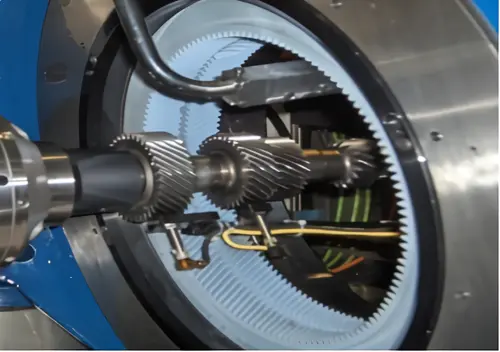
The table shows that 3D printed toys are best for early stage development. For functional prototypes or end-use parts, CNC machining delivers superior mechanical performance and repeatability.
When 3D Printed Toys Make Sense for Your Project
Using 3D printed toys is appropriate when the goal is visual proof of concept, fit testing, or small-batch gifts. The low entry cost and fast turnaround make them ideal for designers who need to iterate quickly without committing to hard tooling.
However, if the toy will be handled frequently, dropped, or exposed to stress, printed parts may crack or wear prematurely. In such cases, machining from engineering plastics or aluminum provides the necessary durability.
YPMFG often works with clients who begin with 3D printed prototypes and later require machined parts for functional testing or market launch. The engineering review process includes evaluating whether 3D printed toy geometry can be adapted for CNC production without losing design intent.
Common Materials for 3D Printed Toys vs CNC Machining
3D printed toys typically use PLA, ABS, PETG, or resin. These materials are inexpensive but have limited impact resistance and temperature tolerance. For outdoor or high-use toys, nylon or polycarbonate filaments offer better performance, but printing remains slower and less precise.
CNC machining supports a broader range of engineering-grade plastics such as Delrin, UHMW, and PEEK, as well as metals like aluminum and brass. These materials provide dimensional stability, wear resistance, and consistent mechanical properties across all axes.

When choosing between processes, consider the toy’s intended environment. If it must withstand impact, heat, or repeated assembly, machined parts are the safer choice.
Questions Buyers Often Ask About 3D Printed Toys
Can 3D printed toys be used for functional prototypes?
Yes, but the prototype will reflect the limitations of the printing process. For accurate mechanical testing, a CNC machined prototype from the same material is far more reliable.
How much does a 3D printed toy cost compared to CNC machining?
For one-off parts, 3D printing is usually cheaper. For runs above 50–100 units, CNC machining often becomes more cost-effective per part due to faster cycle times and better material utilization.
What tolerances can I expect from a 3D printed toy?
Typical tolerances range from ±0.2 mm to ±0.5 mm depending on printer calibration and geometry. CNC machining can hold ±0.05 mm or tighter, which matters for interlocking parts or gears.
Are 3D printed toys safe for children?
Safety depends on material and design. Some filaments are food-grade or non-toxic, but printed parts may have sharp edges or weak points. Always verify material certifications and post-processing requirements.
Can I combine 3D printing and CNC machining in one project?
Yes. Many engineers use 3D printing for complex internal geometry and then machine critical surfaces for accuracy. This hybrid approach is common in custom toy manufacturing.
How do I transition from a 3D printed toy to production?
Start by sending your CAD files to a CNC shop for design review. Modifications may be needed to eliminate unsupported features and adjust wall thickness or draft angles.
Making the Right Choice for Your Toy Manufacturing Project
Choosing between 3D printed toys and CNC machined parts depends on volume, material requirements, and performance expectations. 3D printing offers speed and flexibility for early-stage development. CNC machining delivers precision, strength, and consistency for production.
If your project requires tight tolerances, durable materials, or repeatable quality, YPMFG can help you evaluate your design and transition from printed prototypes to machined production parts. Send your specifications or CAD files for an engineering review and a no-obligation quote.