
Quick answer:
Yes, 5-axis machining can process both stainless steel and brass parts with high precision and efficiency. However, the two materials behave very differently under cutting conditions. Stainless steel is harder, generates more heat, and requires rigid setups and slower feeds. Brass is softer, machines faster, and produces fine chips. A capable 5-axis CNC machining service must adjust toolpath strategies, coolant application, and tooling choices for each material to avoid burrs, tool wear, or surface defects.
When selecting a supplier, the ability to handle both stainless steel and brass on 5-axis CNC machines is a strong indicator of process maturity. Each material demands different feeds, speeds, and chip control methods, and not all shops are set up to manage both well.
Why this matters for your project
If you are sourcing parts that combine stainless steel and brass in the same assembly, or if you need to switch between these materials across different production runs, you need a partner who understands the mechanical limits of each. Poor material handling leads to scrapped parts, missed tolerances, and unexpected costs.
How 5-Axis Machining Handles Stainless Steel
Stainless steel is a tough material to machine.
Its high work-hardening rate and low thermal conductivity mean heat stays in the cut zone. On a 5-axis CNC machine, this requires careful tool engagement angles to avoid rubbing instead of cutting.
Key considerations for stainless steel:
Use carbide tools with specialized coatings (e.g., AlTiN or TiAlN)
Maintain constant chip load to prevent work hardening
Apply high-pressure coolant to evacuate heat and chips
Reduce stepovers and increase toolpath smoothing for better surface finish
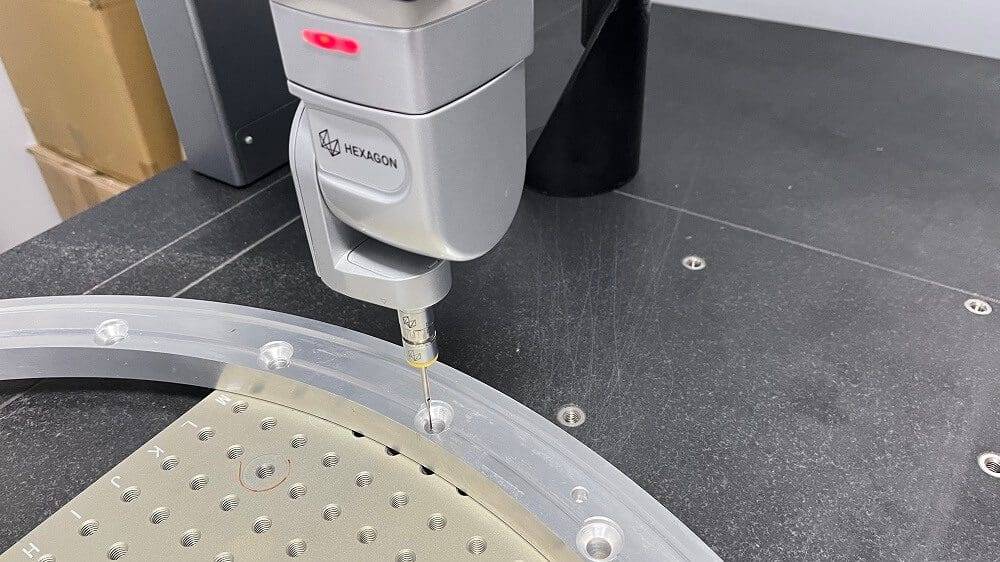
Why 5-axis helps
The ability to tilt the tool keeps the cutting edge at a consistent angle. This reduces tool deflection and heat buildup compared to 3-axis machining. For complex stainless steel parts with deep cavities or undercuts, 5-axis machining is often the only reliable method.
Risk if not done correctly
Tool breakage, poor surface finish, and dimensional drift are common when stainless steel is machined without proper parameters. Parts may also develop micro-cracks near machined edges.
How 5-Axis Machining Handles Brass
Brass is one of the most machinable metals.
It produces short,broken chips and allows for high cutting speeds. On a 5-axis CNC machine, brass parts can often be finished in fewer operations than stainless steel.
Key considerations for brass:
Uncoated or DLC-coated tools work well
High spindle speeds and feed rates are possible
Chip evacuation is less demanding, but fine brass dust can be an issue
Sharp tool geometries help prevent burr formation on edges
Why 5-axis helps
Brass parts often have complex geometries for fluid systems, valves, or connectors. 5-axis machining allows these features to be cut in a single setup, eliminating tolerance stack from multiple repositioning steps.
Risk if not done correctly
Burrs can form on sharp edges, especially at intersections of drilled holes and milled surfaces. Brass also has low rigidity in thin-walled sections, so clamping strategy matters.
Key Differences Between Machining Stainless Steel and Brass
Bottom line:
Stainless steel demands more control over heat and tool wear. Brass allows faster cycles but requires attention to burr control and chip handling. A shop that handles both well has proven process discipline.
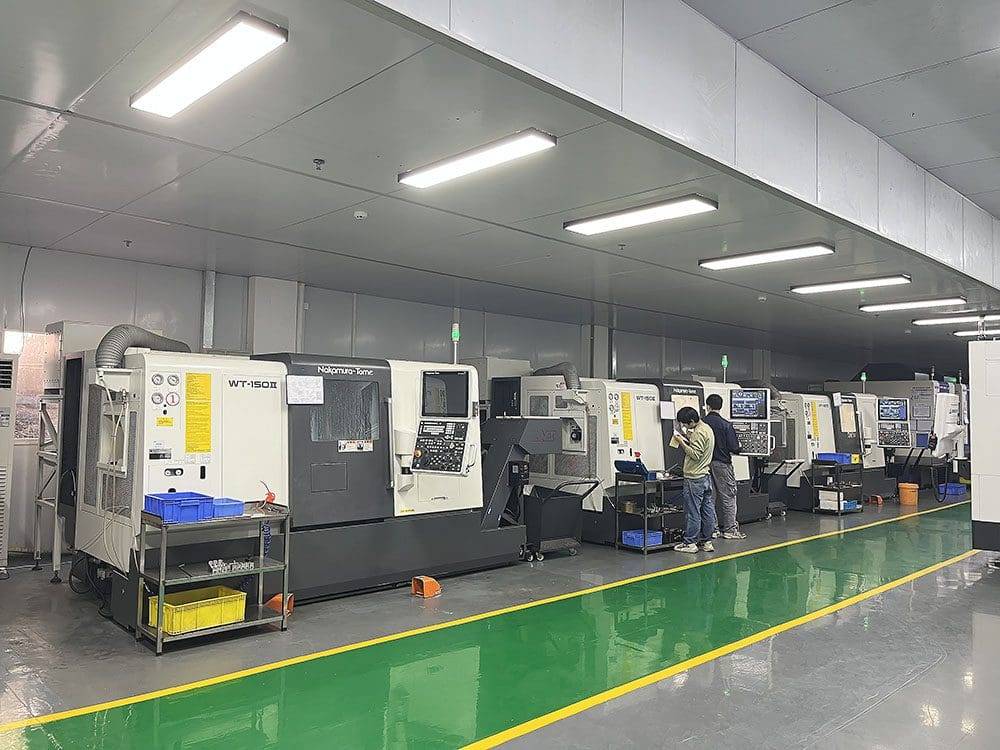
How YPMFG approaches both materials
YPMFG evaluates each material’s behavior before programming. For stainless steel, we prioritize toolpath strategies that reduce heat concentration. For brass, we focus on edge quality and chip management. This material-specific approach helps us deliver consistent results across mixed-material orders.
Selection Guide: When to Choose Stainless Steel vs Brass
When you need both in one assembly
Mixed-material assemblies are common in fluid control systems where brass fittings connect to stainless steel bodies. The 5-axis CNC machining process must account for different thermal expansion rates and galvanic corrosion risks.
What to check before ordering
Confirm that threads and sealing surfaces are machined to the same tolerance standard
Ask about surface treatment compatibility (e.g., passivation on stainless steel vs plating on brass)
Verify that the supplier has experience with both materials in the same program
YPMFG can review your assembly drawing and advise on material pairing, tolerance stacking, and finishing options before production begins.
Common Questions About 5-Axis Machining of These Materials
Can 5-axis machining handle stainless steel grades like 304 and 316?
Yes. Both 304 and 316 are commonly machined on 5-axis CNC machines. 316 has slightly higher work-hardening tendency, so toolpath smoothing and coolant pressure become more important. A rigid setup and balanced tool engagement help maintain accuracy across both grades.
Does brass require special tooling for 5-axis machining?
Not usually. Standard carbide tools work well for brass. The main concern is burr formation on intersecting features. Using sharp cutting edges and reducing the final pass depth can minimize burrs. For complex brass parts, 5-axis machining reduces the number of tool changes and repositioning steps.
Which material causes more tool wear in 5-axis machining?
Stainless steel causes significantly more tool wear. Its hardness and work-hardening behavior wear down cutting edges faster. Brass is much easier on tools. When switching between materials, tool life and tool selection must be adjusted per material, not used interchangeably.
Can I get tighter tolerances on brass or stainless steel with 5-axis machining?
Both can achieve tight tolerances, but stainless steel is more stable during machining due to its higher rigidity. Brass, especially in thin-walled sections, can deflect under cutting forces. Compensation strategies and proper fixturing help maintain tolerances in both materials.
Is it more expensive to machine stainless steel than brass on a 5-axis machine?
Yes, typically. Stainless steel requires slower cutting speeds, more frequent tool changes, and higher coolant consumption. Brass machines faster and uses less tooling. The cost difference depends on part complexity, but stainless steel parts often cost 30–60% more per piece than equivalent brass parts.
Do surface finishes differ between stainless steel and brass after 5-axis machining?
Yes. Brass can achieve a smoother finish with less effort, often down to 8–16 µin Ra. Stainless steel typically finishes at 16–32 µin Ra but can be improved with polishing or secondary operations. The 5-axis CNC machining process can improve finish on both materials by maintaining consistent tool engagement.
How do I prevent burrs on brass parts during 5-axis machining?
Using sharp tools, reducing the final radial engagement, and applying a small chamfer pass can reduce burrs. On a 5-axis CNC machine, tool orientation can be adjusted to minimize the exit angle where burrs form. Some shops also use vibratory deburring as a secondary step.
Can YPMFG machine both stainless steel and brass in the same production run?
Yes. YPMFG can sequence operations by material, adjusting feeds, speeds, and tooling per job. We review the part geometry and material grade to determine the most efficient approach. You can send your specifications to YPMFG for a full engineering review.
Choosing the Right Machining Partner for Mixed-Material Projects
Not all CNC shops handle material transition well.
Some specialize only in aluminum or steel. Others lack the process documentation to switch between materials without rework. If your project involves both stainless steel and brass parts, you need a partner who treats each material as a separate engineering problem.
What to look for in a supplier:
Clear material-specific cutting parameters on their process sheets
Experience with both corrosion-resistant and high-speed materials
Ability to review your drawing and flag material-related risks before quoting
Quality control steps that check for burrs, surface defects, and dimensional stability per material
How YPMFG can help
We evaluate each part’s material requirements during the quoting phase. If your design combines stainless steel and brass, we identify potential issues early and suggest adjustments to toolpath or tolerances. You can request a quote or send your specifications to YPMFG for a detailed feasibility review before committing to production.
Making a better long-term decision
Choosing the right material and the right machining approach affects your product’s performance, assembly fit, and total cost. A partner who understands both 5-axis machining and material behavior helps you avoid surprises in production. Contact YPMFG to discuss your next project, whether it involves stainless steel, brass, or both.