
Quick answer:
Yes, sand casting is often a viable choice for producing metal components with complex geometries, especially in low to medium volumes or when large parts are needed. Unlike CNC machining, which removes material from a solid block, sand casting forms parts by pouring molten metal into a sand mold. The two processes are frequently combined: sand casting creates a near-net shape, and CNC machining finishes critical surfaces. The best choice depends on your part size, material, quantity, and required tolerances.
Sand casting is a metal forming process where a pattern is pressed into a sand mixture to create a cavity. Molten metal is then poured into this cavity and allowed to solidify. Once the metal cools, the sand mold is broken away to reveal the rough casting. Common materials include aluminum, iron, steel, and bronze. Typical applications range from engine blocks and pump housings to machine bases and valve bodies.
For buyers accustomed to CNC machining, the sand casting process may feel less precise at first. But it offers unique advantages in cost and design flexibility that machining alone cannot match. Understanding where each process fits—and how they work together—can help you make a smarter sourcing decision.
How Sand Casting Differs from CNC Machining
The fundamental difference lies in how the part is formed. Sand casting is a subtractive-forming process: metal is melted and poured into a mold. CNC machining is a subtractive-cutting process: material is removed from a solid billet or bar.
Sand casting can produce complex internal cavities, undercuts, and large shapes that would be difficult or expensive to machine. However, the as-cast surface finish is rougher, and dimensional tolerances are wider.
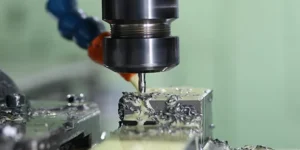
CNC machining offers tighter tolerances, smoother surfaces, and greater repeatability. But it generates more scrap, and the cost of machining a large part from solid stock can be prohibitive.
When to Use Sand Casting vs. CNC Machining
Use sand casting when your part is large,has complex internal passages, or is needed in volumes above 10–50 pieces per year. It is also a strong choice if the cost of machining from solid is too high.
Use CNC machining when your part requires tight tolerances, a fine surface finish, or when you need a small quantity of parts quickly without the upfront cost of a pattern.
In many cases, the two processes are not alternatives but complements. A sand casting can be machined to achieve the required precision on critical features.
Combining Sand Casting with CNC Machining
This is a common strategy in production manufacturing. The rough shape is created via sand casting, which keeps material and labor costs low. The casting is then sent to a CNC machining center for finishing.
YPMFG supports this hybrid approach. We can review your custom part specifications and recommend whether a sand casting with post-machining is the most cost-effective solution. This combination often yields the best balance of price, quality, and lead time.
Typical steps in a combined process:
Pattern creation for the sand mold
Sand casting of the rough part
Heat treatment if required
CNC machining of critical surfaces
Inspection and quality assurance
Key Material Considerations for Sand Casting
Not all materials behave the same in sand casting. Aluminum alloys are widely used because of their good fluidity and corrosion resistance. Gray iron and ductile iron are common for strength and wear resistance. Steel and bronze are also cast, but require higher pouring temperatures and different mold materials.

When selecting a material, consider:
The operating environment (temperature, pressure, corrosion)
Required mechanical properties (strength, hardness, ductility)
How the material responds to machining after casting
A material that casts well may still be difficult to machine. Discuss this trade-off with your engineering partner. YPMFG can help you evaluate material options during the engineering evaluation phase.
Tolerances and Surface Finish Expectations
Typical dimensional tolerances for sand casting range from ±0.030 inches for small features to ±0.125 inches or more for larger dimensions. Surface finish is usually in the range of 250–500 microinches Ra.
These values vary by material, mold quality, and part geometry. For comparison, CNC machining can achieve tolerances of ±0.005 inches or tighter, with surface finishes below 32 microinches Ra.
If your part requires tight tolerances on some surfaces, plan for post-casting machining services. The as-cast dimensions should be generous enough to allow for material removal.
Cost Factors: Sand Casting vs. CNC Machining
The initial tooling cost for sand casting is lower than for die casting or investment casting, but higher than for direct CNC machining from stock. The pattern cost depends on complexity and material. Once the pattern exists, the per-part cost decreases significantly with volume.
CNC machining has no pattern cost, but per-part cost remains relatively constant. For large parts, the material waste and machining time can make it more expensive than a cast-then-machine approach.
A simple rule: for small quantities of simple parts, CNC machining is usually cheaper. For larger quantities or complex shapes, sand casting plus finishing often wins.
Questions Buyers Often Ask About Sand Casting
How long does it take to get a sand casting part?
Pattern creation takes 1–4 weeks depending on complexity. The actual casting process takes days. Total lead time is typically 4–8 weeks for the first articles, including pattern approval and sample casting.
Can sand casting produce parts as strong as CNC machined parts?
Yes. The strength of a sand casting depends on the material and heat treatment. In many cases, cast parts have more uniform grain structure and equal or better fatigue life than machined-from-bar parts.
What is the minimum quantity for sand casting?
There is no strict minimum, but the economics improve above 10–20 pieces per year. For one-off prototypes, CNC machining is usually faster and cheaper.
How do I choose between sand casting and die casting?
Sand casting handles larger parts, lower volumes, and higher melting-point materials. Die casting is faster for high-volume, smaller parts in zinc or aluminum, but has higher tooling costs.
Will the sand casting process work for stainless steel?
Yes, but stainless steel has a higher melting point and requires special sand binders. Not all foundries offer this. Verify material compatibility early in the selection process.
Can I machine a sand casting after it is made?
Yes. This is a standard practice. Most castings are designed with machining allowances on surfaces that require tight tolerances. YPMFG regularly finishes cast parts to customer specifications.
How do I get a quote for a sand casting project?
Send your 3D model or 2D drawing to a qualified manufacturer. Include material, quantity, and tolerance requirements. You can request a quote from YPMFG for an engineering review and cost estimate.
Choosing the Right Approach for Your Project
Every part has a most efficient path to production. For some, sand casting followed by selective CNC machining is the clear winner. For others, direct machining from bar stock makes more sense. The decision depends on your part geometry, material, volume, and tolerance needs.
Rather than guessing, get an expert review. YPMFG works with buyers to evaluate the full picture: pattern cost, machining time, material selection, and quality requirements. You can send your specifications to YPMFG for a complete engineering evaluation. We will help you determine whether sand casting, CNC machining, or a combination delivers the best result for your application.