Quick answer:
CNC machines are categorized primarily by their operation method and motion axes. The broad types include milling machines, lathes, routers, and EDM machines. A [3-axis machining
center]is standard for prismatic parts, while[5-axis CNC machining]is essential for complex, curved surfaces like aerospace components. The right type directly dictates your project’s geometric possibilities, surface finish, andtotal production cost. Choosing incorrectly can lock you into higher unit costs, longer lead times, and quality compromises.
The decision fabricating a part often begins with a simple yet daunting question: Which machine is right for this job? For procurement managers and engineers, the stakes involve more than just functionality. They involve managing hidden costs, ensuring manufacturability, and mitigating the risk of project delays due to a mismatch between part design and machine capability. A generalized understanding of machine types is insufficient; discerning the practical implications of each category on your specific application is the critical first step toward a reliable, cost-effective supply chain. This exploration helps you move beyond basic catalog browsing to making an informed engineering decision.
Table of Contents
1. Decoding CNC Fundamentals: The Core Motion Systems
2. The Indispensable Workhorse: CNC Milling & Machining Centers
3. Rotary Precision: The Domain of CNC Lathes & Turn-Mills
4. For the Soft & Large: CNC Routers and Plasmas
5. Specialist Processes: When to Consider EDM & Others
6. Axis Count: Translating Degrees of Freedom into Design Freedom
7. A Strategic Comparison: Matching Machine to Material & Application
8. Partnering for Precision: Your Next Step After Analysis
Decoding CNC Fundamentals: The Core Motion Systems
All CNC machines operate on a fundamental principle: a computer controls the movement of a tool or workpiece along programmed paths. This movement occurs within a defined coordinate system (X, Y, Z). The sophistication of this movement—the number of axes and their interplay—defines a machine’s core capability. Is it a subtractive process where a rotating cutter removes material? Is it a thermal process that erodes metal? Understanding this foundational principle is the lens through which all machine types become distinct. It shifts the view from a collection of hardware to a set of specific, programmable motion capabilities that either enable or constrain your design intent.
Machines precisely follow G-code instructions, transforming digital designs into physical parts. The primary difference between a standard drill press and a CNC mill is this programmable, multi-axis coordinated movement. The machine’s controller acts as the brain, interpreting instructions and driving motors with exceptional repeatability. This automated precision eliminates human error from the cutting path. However, the initial programming and setup require skilled technicians, which represents a significant upfront time investment for any project.
The Indispensable Workhorse: CNC Milling & Machining Centers
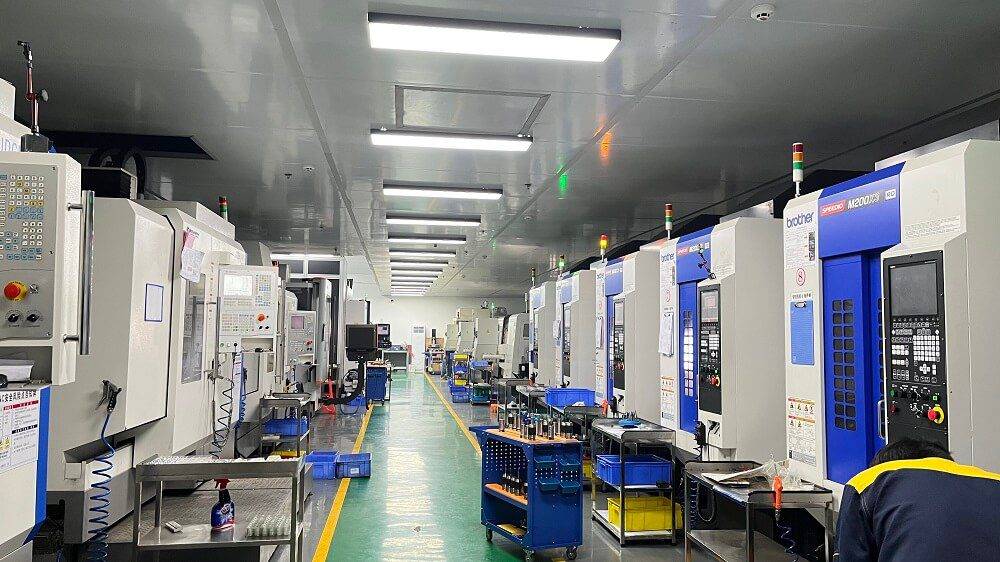
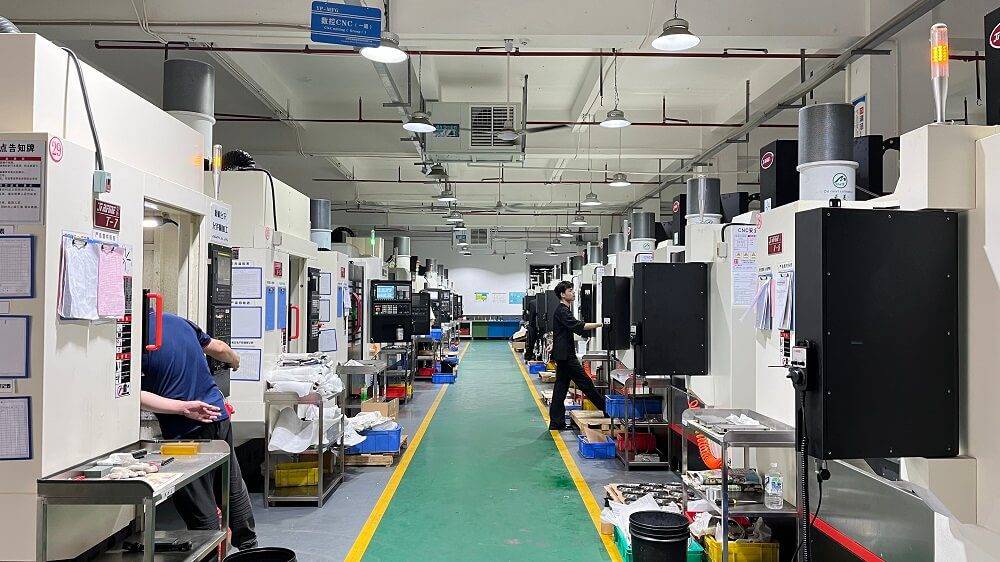
CNC mills, and their more advanced cousins, machining centers, use a rotating cutting tool to remove material from a stationary workpiece. They are the backbone of modern workshops for creating complex 3D shapes, slots, pockets, and holes. A vertical machining center (VMC) has a vertically oriented spindle, ideal for parts like mold bases or brackets. A horizontal machining center (HMC) has a horizontal spindle, often suited for high-volume production of parts like engine blocks, where chips fall away more easily.
The true power of a machining center lies in its automation features, such as an automatic tool changer (ATC) and a pallet changer. An ATC holds dozens of tools, allowing the machine to perform multiple operations—drilling, tapping, milling—in a single setup. This drastically reduces cycle time and improves accuracy by minimizing part handling. For a buyer, specifying a part that can be completed in one setup on a machining center is a direct path to lower per-part cost and faster delivery. YPMFG utilizes advanced machining centers to ensure such efficiency for complex components.
Rotary Precision: The Domain of CNC Lathes & Turn-Mills

CNC lathes, or turning centers, operate on the opposite principle: the workpiece rotates while a stationary cutting tool shapes it. This process is optimal for creating cylindrical or conical parts—shafts, bushings, fittings, and fasteners. The primary motion is the rotation (C-axis) of the workpiece, while the tool moves linearly. This makes lathes exceptionally efficient for parts with radial symmetry. The surface finish achievable on a lathe is often superior for round features compared to milling.
For parts requiring both turned and milled features, CNC turn-mill centers are the solution. These hybrid machines combine turning and milling capabilities, allowing a part to be completely finished in one chucking. This eliminates the errors and added cost of transferring a part between separate lathes and mills. When your component design includes off-center holes, flats,or slots on a cylindrical body, a turn-mill center should be a primary consideration. It represents a significant process consolidation that YPMFG can evaluate for your project to enhance geometric integrity and reduce lead time.
For the Soft & Large: CNC Routers and Plasmas
CNC routers and plasma cutters address applications where the workpiece material or size falls outside the realm of traditional metal-cutting mills. Routers typically use high-speed spindles to cut softer materials like wood, plastics, composites, and non-ferrous metals. They often feature a large worktable (e.g., 4′ x 8′) to handle sheet goods or large signs. Their stiffness and precision are generally lower than a machining center, making them cost-effective for certain applications but unsuitable for high-tolerance metal parts.
Plasma, laser, and waterjet cutters are 2D profiling machines. They use a focused energy beam or high-pressure stream to cut through sheet metal, plate, or other flat stock. They excel at quickly producing flat parts with complex contours but do not add 3D features. The key selection factor here is material type and thickness. For example, a plasma cutter handles thick steel plate well, while a laser offers a finer cut edge on thinner materials. These machines are gateways to fabricating frames, brackets, and panels before secondary assembly or machining operations.
Specialist Processes: When to Consider EDM & Others
For geometries impossible with a rotating tool, specialist processes like Electrical Discharge Machining (EDM) are essential. Wire EDM uses a thin, electrically charged wire to erode a path through conductive materials, capable of producing intricate shapes and sharp internal corners with extreme accuracy, regardless of material hardness. It is ideal for punching die components, medical tooling, and aerospace parts made from hardened tool steel.
Sinker EDM (or Ram EDM) uses a shaped electrode to burn its inverse shape into a workpiece, perfect for complex mold cavities or textured surfaces. Another specialist, Swiss-type lathes, are designed for high-volume production of tiny, complex, long-slender parts like medical screws or connector pins. These machines support the part very close to the cutting action with a guide bushing, minimizing deflection. Evaluating these options is not about everyday use but about recognizing the specific design constraints—like deep, square holes or micro-scale features—that demand a non-conventional solution.
Axis Count: Translating Degrees of Freedom into Design Freedom
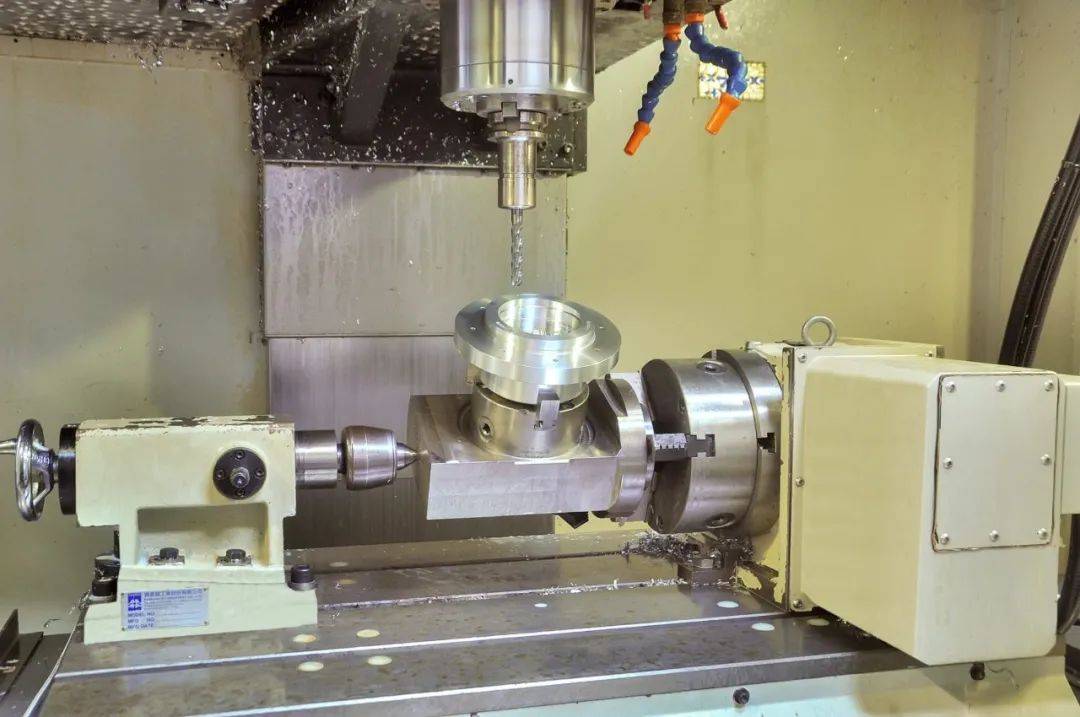
The number of axes a machine controls is a primary determinant of its geometrical capability and cost. A basic 3-axis CNC machine moves the tool in the linear X, Y, and Z directions. It can machine prismatic parts with features on up to five sides if manually re-fixtured, but this introduces potential error. A 4-axis machine adds a rotary axis (typically the A-axis), allowing the workpiece to rotate, enabling machining on its cylindrical surface or continuous indexing.
A 5-axis CNC machine is the pinnacle of subtractive complexity, offering two rotary axes (e.g., A and B or B and C) in addition to the three linear ones. This allows the cutting tool to approach the workpiece from virtually any angle in a single setup. This is not merely a luxury; for components like impellers, turbine blades, or complex organic shapes in molds, it is the only viable production method. It enables superior surface finish, eliminates multiple setups, and allows for shorter, more rigid tools that can machine deep cavities. The decision hinges on your part’s complexity and the geometric freedoms required.
A Strategic Comparison: Matching Machine to Material & Application
Choosing becomes clearer when core types are compared against key application drivers. No single machine is universally best; selection is a series of trade-offs between capability, speed, precision, and cost. The following table provides a high-level framework to guide initial screening.
| Machine Type | Best For (Primary) | Key Advantage | Typical Limitation |
| :— | :— | :— | :— |
| 3-Axis Machining Center | Prismatic parts (brackets, plates, enclosures) | Excellent value, wide availability, high precision for 2.5D features. | Requires multiple setups for complex 3D shapes; not for cylindrical turning. |
| 5-Axis Machining Center | Complex, contoured parts (aerofoils, molds, medical implants) | Single-setup completion of intricate geometries; superior surface finish on curves. | Higher machine cost, requires advanced programming (CAM) expertise. |
| CNC Lathe / Turning Center | Cylindrical parts (shafts, fittings, bushings) | Very fast, excellent surface finish for round parts, high material removal rates. | Cannot create non-rotational features without a secondary operation or live tooling. |
| CNC Turn-Mill Center | Complex parts mixing turned & milled features | Complete part in one chucking, highest accuracy for multi.