01What is the CNC coding language?
Do you know what is the key instruction set that drives industrial milling machines to precisely cut Metal blanks?
The answer is the ubiquitous CNC coding language in industrial production scenarios.
It is not a general-purpose programming language with complex features that exists on the market, but a command system carefully created for CNC equipment according to its special needs.
02 The initial stage of the 1960s
In the 1960s, workers in the workshop still relied on hand cranks to control equipment, and the accuracy error would easily exceed the millimeter level. This is the situation.
Personnel engaged in related work gradually found a way to compile fixed cutting paths with the help of simple G codes, and the rate of qualified products directly increased by 60%.
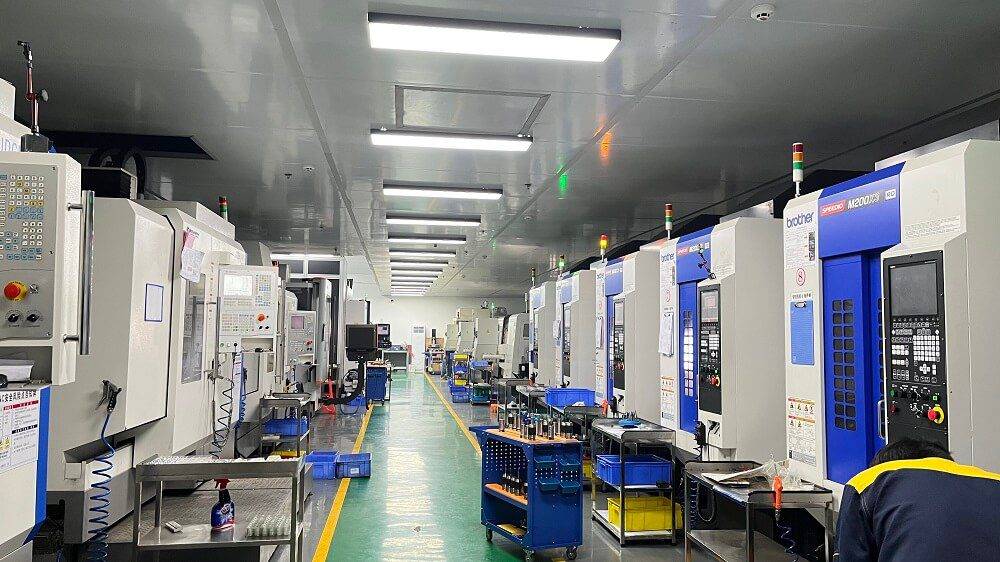
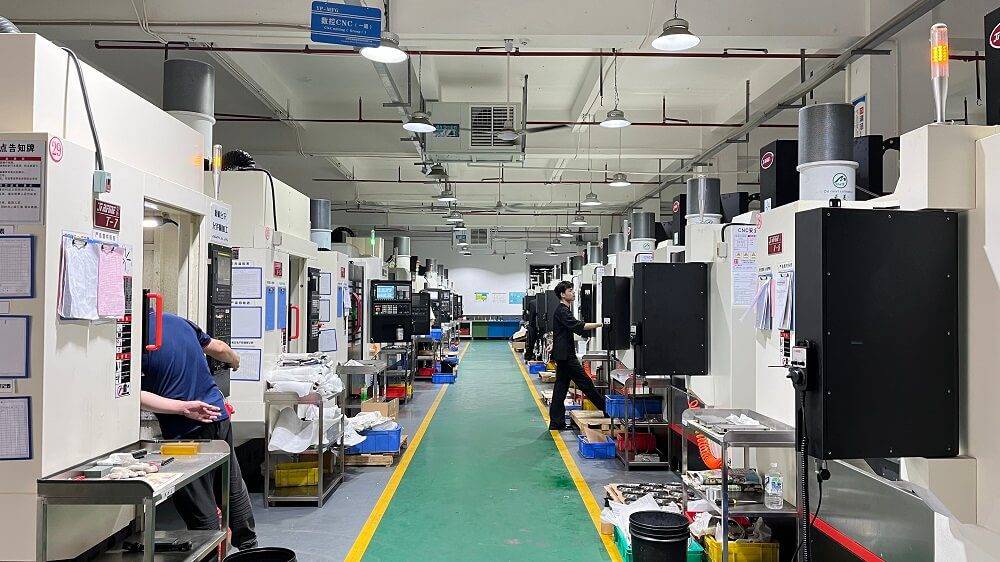
The YPMFG workshop was one of the first workshops to experience the benefits of this new coding language. Its production efficiency has tripled based on the previous level.
03 Popularization stage in the 1990s
After personal computers gradually entered industrial workshops, CNC coding language no longer relied solely on typing on the keyboard with hands, but inputting characters one by one.
Technicians at that time could automatically complete complex surface processing by simply dragging preset parameters and automatically generating codes. Can you believe it?
At that time, almost all processing manufacturers that built factories in batches in the Pearl River Delta relied on this coding logic that lowered the learning threshold to keep up with the explosive trend of global hardware foreign trade.
Did you know that in the 1990s, there were hundreds of thousands of machinists around the world who had just entered the industry. How did they master the core CNC coding logic in just one month?
They do not need to memorize hundreds of parameters. They only need to prioritize the thirty frequently used instructions that appear frequently and firmly remember them, and they can handle more than 90% of daily cutting needs.
This is also a widely circulated entry-level tip in the industry. For learners with zero foundation, there is no need to read the entire textbook with hundreds of pages from the beginning.
After 80 hours of practical follow-up in the workshop, you will be able to independently complete the complete processing coding of ordinary plates or bars.
For all beginners, the ultimate goal is to have practical applications, and these are all leading to that link. What kind of link is the actual mass production execution link. What should be turned into what should be done in this link? The code written on the paper must be turned into the beating and running cutting feed action in the workshop. Through this process, the production output of each qualified workpiece is actually completed.
Next, I would like to remind all novices to pay attention to the core blind spots:
Ignoring these three types of risks, even if you memorize all the codes, it will be difficult to survive the probation period in the workshop.
The first risk is that if there is not enough safety clearance for the G00 rapid movement section in the coding instructions, the milling cutter worth thousands of yuan will be damaged in an instant, and the loss caused by a single operation is at least worth three full months of the new employee's basic salary.
Risk 2: If the M code command is turned on without adding coolant, and dry cutting continues for ten minutes, the surface of the workpiece will directly collapse with irreparable cracks, and the delivery cycle of the entire batch of orders will be directly delayed.
Risk three: Wrong coordinate selection. After that, the initial zero point data of the X-axis, Y-axis, and Z-axis were not repeatedly checked. As a result, the overall dimensions of the workpieces that came out were all offset. Then, in just a few minutes, all the raw materials for the entire furnace were turned into scrap parts that could not be reused.
Have you ever witnessed a new employee in the same team next to you encounter three production accidents in a row in the first month?
Most newcomers make mistakes, and their root causes are all attributed to the fact that they are anxious when rushing to order, always trying to save trouble, and omitting a very important key step, that is, after completing the coding sheet, they must immediately conduct a second review line by line.
Technicians, those who have been through pitfalls, have jointly developed a fixed operating procedure based on their blood and tears experience, and everyone adheres to it to avoid stepping on mistakes.
There is nothing superficial about this process that works anywhere. It is all about solid, reliable and tough experience accumulated through trial and error over and over again.
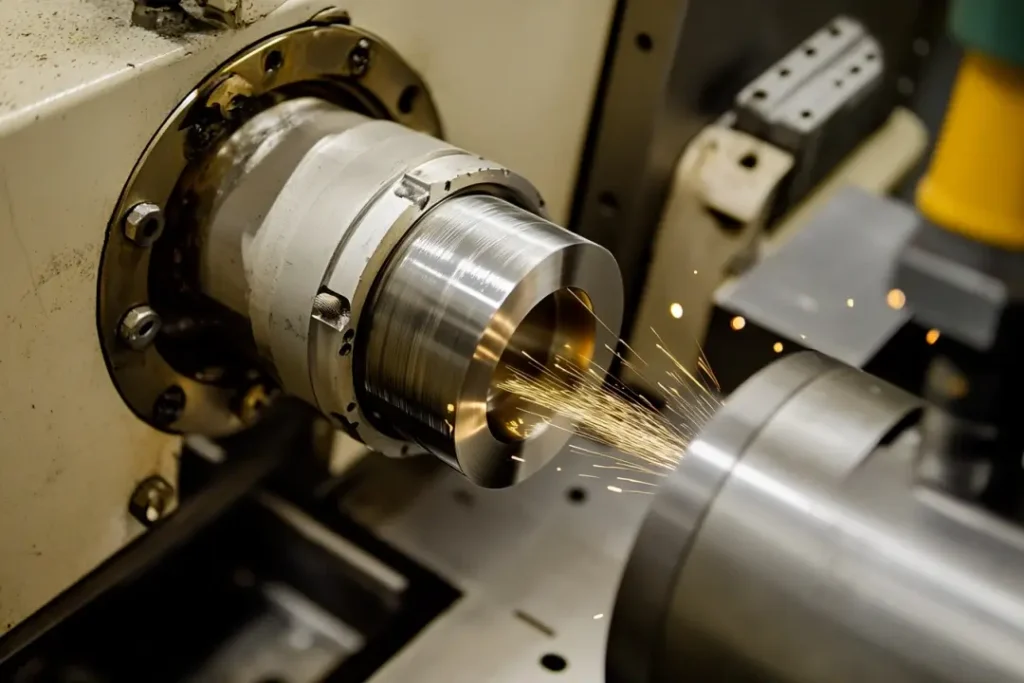
First of all, after writing all the code, never skimp on running simulation verification. Keep dry-cutting to verify, and don't stop until you will never hit any obstacles along the entire path.
In the second step, the single coordinate axis must be tested separately three times with small movement values. Each axis must completely match the preset processing point accuracy before it can be connected to the full continuous program.
First of all, in the third step, the operating speed must be preset in advance. The operating speed must be below 30%. Then, when the machine is officially turned on for the first time to test cut the first workpiece, never increase it to the full speed gear and confirm the status parameters.
For all those who are engaged in related industries and always adhere to these three strict iron laws, within the first half-year internship period, the possibility of an extremely serious accident such as a plane crash will be directly reduced to an extremely low level of almost zero percent.
Have you ever heard of such legendary talents and corresponding cases that just one month after entering the factory, they independently completed the first batch of workpieces and cut out accurate and qualified beautiful workpieces in one go?
In essence, they actually carry out these three steps of inspection and verification every time, without cutting corners or omitting steps.
Those skilled old engineers who have worked in the factory for more than ten years rarely make major mistakes such as batch defects. This does not rely on outstanding talent, but on decades of strict execution of standardized actions that have formed muscle instinct memory.
At this moment, go back and re-consolidate the basic understanding you had when you first started to get in touch with it, that is, CNC coding language. It is definitely not the kind of mysterious programming technology that is high in the eyes of ordinary people, far away from daily life, niche and rare.
It is a practical basic tool that is used every day by all factory production technicians. It is very simple to operate and easy to get started. There is no horrifyingly high threshold as exaggeratedly claimed.
When you are just getting started, you must not be frustrated at the beginning because of the fear of being unable to do something. You must adjust your mentality, be down-to-earth, and do it step by step, so that you can master it steadily.
Q/A quick overview of high-frequency questions
Q1: Can I learn to write CNC code directly without any industrial foundation?
First, it is extremely possible. Second, take the lead in carrying out the 30 most critical instructions that are frequently used in actual operations. Third, within a week, you can write code that can be implemented and processed.
Q2: Does learning this coding language require mastering the complex basics of advanced mathematics and English?
A: It’s not necessary at all. Just being able to recognize numbers and letters, and interpreting simple coordinates is enough to meet your needs. There is no threshold problem.
Question 3: Will the entire CNC machine be damaged and destroyed if the faulty code runs?
Generally speaking, broken knives and scrap parts account for a huge proportion and almost all possibilities. Quickly pressing the emergency stop button can stop the loss to the greatest extent, and the loss caused by the damage is completely within the controllable range.
Q4: Does daily single-axis operation verification dry run simulation take a long time to complete?
A: No, a set of regular and ordinary codes can be verified in three to five minutes. The cost of the time spent is extremely low, but the benefits are huge.
These are the key points of practical experience that have been handled by a large number of cases. They have been repeatedly verified and refined by countless practitioners. It is worthy for every novice who has just entered the pit and started with zero foundation to store them in their own professional knowledge base, put them first and first priority, and give priority to in-depth implementation.
At this moment, please be sure to listen carefully, remember it firmly, and remind it repeatedly. The third time it is emphasized: During the six months of entry, develop a good habit of performing a three-step verification immediately after each completion. This is the most important and priority key item among all advanced core competencies.
If you continue to maintain this habit for half a year, when you look back later, you will definitely feel grateful for the correct and far-sighted choice you are making at the moment.
The entire industry is moving forward rapidly in the direction of high efficiency. At the same time, it is also making strides in the direction of high operation, and it continues to advance rapidly in the direction of high precision.
Immediately type the first line of the simplest axis movement code you have learned into the machine tool control panel placed in front of you for trial operation practice.
In the first few days of next month, the person who can independently produce the first finished product that fully meets the standard requirements will undoubtedly be you, who is concentrating and reading this professional content carefully at this moment.