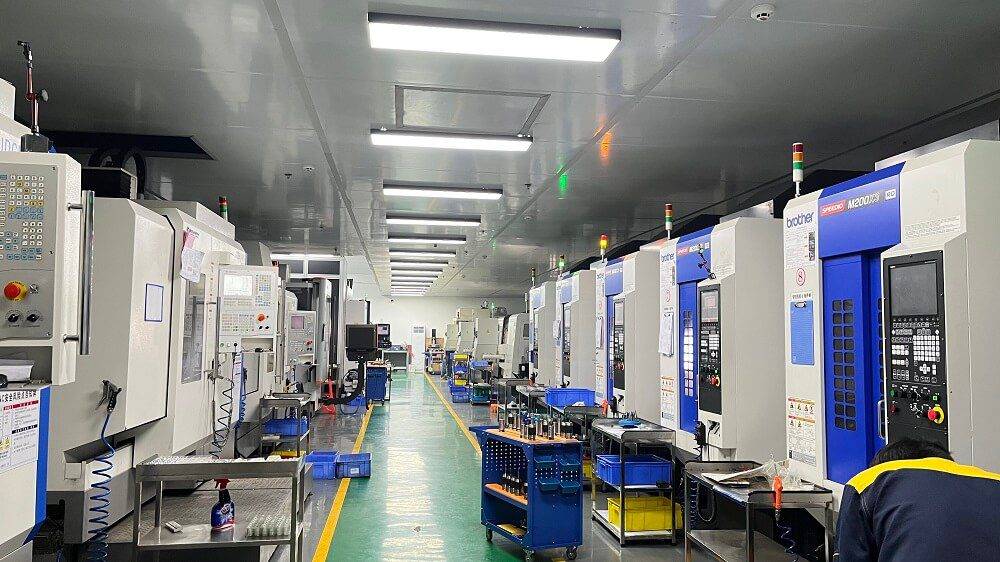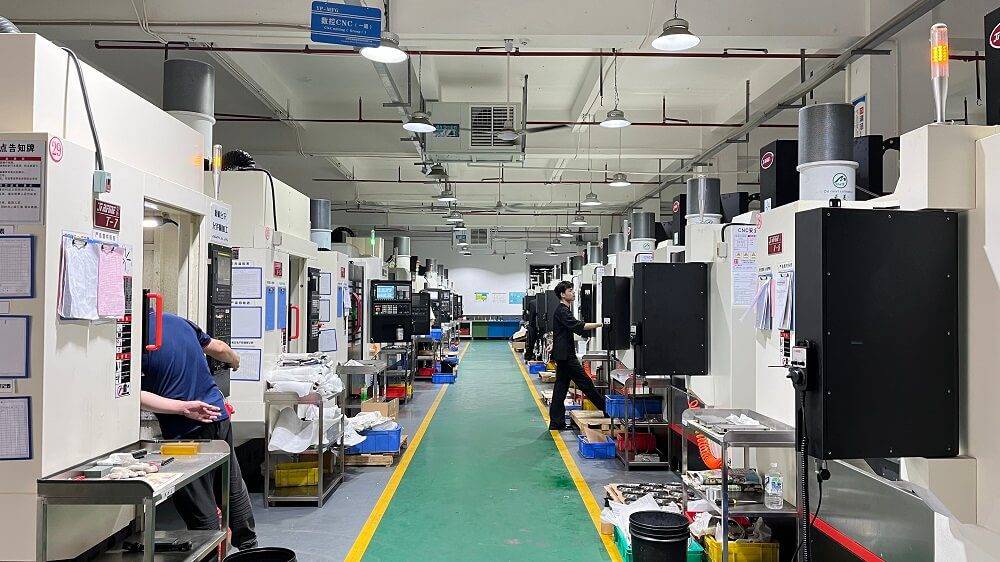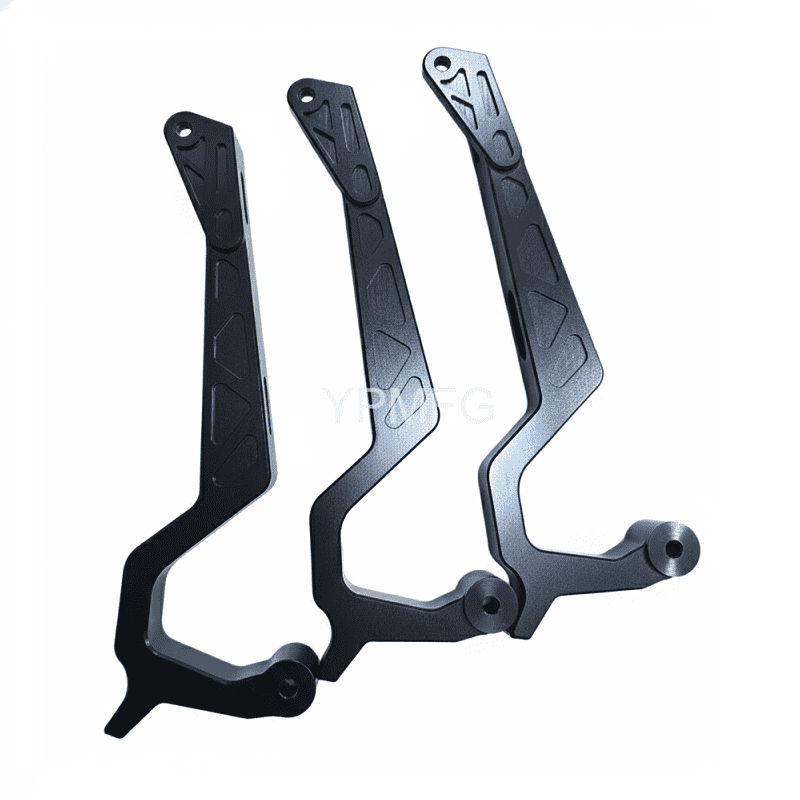
At midnight, in the hardware workshop, the light that has not yet been extinguished shines on the stacked cold-rolled steel plates. There are fine water marks on the steel plates. No one can tell clearly whether this batch of plates waiting to be cut can ultimately meet all the requirements of the design drawings in the hands of the client, which are full of red pen modification marks. As a process behavior deeply bound to all downstream aspects of industrial manufacturing, custom sheet metal fabrication is never a simple piece of bending and welding processes. It is a system production content that balances customization needs, integrates production costs and delivery timeliness under the constraints of millimeter tolerances. For students who are still in the stage of accumulating engineering practice, understanding its operating logic can often help them avoid the common misunderstandings that most people make when they first enter the industry.
The first stage: requirements anchoring in the draft stage
In the 1990s, when the first wave of manufacturing industry upgrades began to be launched along the southeastern coast, those scattered small hardware handicraft workshops received drawings of customized panels. However, the first thing they did was not to cut out the materials immediately and try making them. Instead, they squatted in front of the workbench. With the help of a yellowed caliper, check every unmarked R-angle and flange height on the drawing, and repeatedly confirm with the client where this component will ultimately be installed on the machine, and what the corresponding load-bearing indicators and exposure protection requirements are. At that time, custom sheet metal fabrication was still in the semi-manual stage of "cutting materials based on the feel". Many apprentices who were new to the industry failed to ask about the alignment error regulations of a mounting hole, resulting in the entire batch of cold plate parts with a thickness of 2 mm being scrapped. After that, for a long period of time, processing practitioners in the entire area formed a consensus of "don't operate the pliers and shears if the needs are not clear" to support the implementation of subsequent actual operation logic.
The key point that needs to be made clear is that in custom sheet metal processing, more than 70% of the ineffective losses occur in the insufficient transmission of early demand. Sheet Metal and Air Conditioning Contractors' National Association of the United States (SMACNA) clearly pointed out in the industry specification report released in 2001 that a complete early demand form should cover the four core modules of material requirements, tolerance control levels, surface treatment presets, and assembly adaptation dimensions. The lack of any one of them may cause the subsequent production path to deviate from the preset track. These decades of accumulated industry experience can help learners who have just started their journey into custom sheet metal fabrication to overcome the meaningless trial and error costs and directly grasp the core of the entire processing chain. During the subsequent practical operation, details that should have been accurately controlled evolved into a black hole of useless waste of materials that cannot be traced.
With all the early demand confirmation links forming a closed loop, what is the next threshold that must be crossed? Many beginners who have just started to get started will subconsciously give the answer, that is, learning about the operation of high-precision processing machine tools. However, the actual situation is far from that easy and simple. The transition period from the completion of demand docking to the formal cutting of materials is the core scene of the feasibility review of the processing technology. This plays a decisive role in whether the entire subsequent production process can be smoothly promoted. As a central key link, it has enabled countless structural review engineers who rely on experience to optimize processes and create millions of benefits to survive in the past ten years.
Sheet metal parts drawings are made by young designers who have just graduated and entered the industry. It is a common case during the process review stage. The inner R angle of the bend is set to zero, which is exactly the same as the thickness of the plate. No bending and stretch allowance is reserved. If it is put into production directly without being marked and corrected by a senior review position, the final bent side will definitely have irreparable cracks. There is a core logic behind the custom sheet metal fabrication link. This core logic never compromises the beautiful theoretical design without bottom line. Those drawing lines that are almost perfect in paper calculations, when they fall on a steel plate with a thickness of more than 0.8 mm, must be constrained by the physical properties of the material itself. This is an objective hard-core rule that every learner who is new to industrial manufacturing must accept in advance, and this is exactly what we are talking about here. The boundaries of each process are consensus records stacked from countless scrapped panels. If a custom sheet metal processing project does not undergo sufficient process review, there is a high probability that it will face a passive situation of repeated repair and welding in the future. SMACNA provides a material adaptation tolerance comparison table in the 2007 updated version of the process specification. The marked content on each page of the comparison table contains the weight of countless trial and error experiences accumulated by previous people. These weights are enough to support beginners in building a preliminary basic logical framework for custom sheet metal fabrication process optimization.
After the production process enters the actual operation stage of the machine, there is another subtle variable lurking in the corners of the machine tool work surface. This variable is easily overlooked, but has a profound impact. It quietly affects the delivery quality of the final product of custom sheet metal fabrication. College trainees who are new to sheet metal practical classes often ignore the setting details of the upper die's uniform feed speed parameters when operating a CNC bending machine for the first time, and blindly adjust the feed strength of the high-pressure cylinder just to catch up with the preset progress of the practical training class. In the end, eight of the ten test samples produced had irregular indentations on the surface of the folding edge. This type of case does not only appear in campus training situations. Among the many sheet metal processing workshops in the Yangtze River Delta with an annual output value of tens of millions, mature operating technicians with two or three years of service were not calibrated at one time and measured the material thickness parameters again before blanking. This directly caused the initial focus setting of the laser cutting machine to be messed up. This caused the surface cut width of the entire batch of 30 aluminum alloy shells to vary, making it impossible to meet the client's scratch-free delivery requirements. Therefore, it is not easy to deduce such an inevitable causal relationship. In all processes of custom sheet metal fabrication, the nodes for precision control fall in every parameter verification action at the minute-to-second level. There will not be any results, and technical equipment will be relied upon to automatically generate perfect finished products without defects. In 2019, the global custom sheet metal manufacturing industry released a quality control white paper, which clearly stated that it meets the mandatory audit rules of ISO 90, that is, Mandatory Verification Mechanism every quality Parameter requires that each process node of sheet metal processing must implement an independent verification transfer rights and responsibilities mechanism. Even extremely small errors in the previous process cannot be passed on to the next operation link. Only in this way can the quality control link of the entire process achieve the goal of defect-free delivery from processing to finished products. These control rules that truly cover the entire process will help beginners completely replace their previous one-sided and fantasy understanding of custom sheet metal fabrication with a practical framework that is consistent with production reality and can be implemented on the ground.
> Next, let’s talk about the content of the Frequently Asked Questions module that everyone has the most frequent questions about.
01 Summary of Q/A frequently asked questions
Q: What is the minimum controllable common thickness tolerance for custom sheet metal processing?
First of all, under normal working conditions, it can be stably controlled within the range of plus or minus 0.1mm. Secondly, it adapts to the demand standards of most general industrial assembly scenarios.
Q: Which common basic material is the most preferred for customizing sheet metal parts?
A: When there are no special scenarios, SPCC cold-rolled steel plate is the first choice. It has the advantages of processing adaptation cost and structural strength.
Q: Which type of basic surface treatment is preferred for customized sheet metal?
A: Under the conditions of conventional anti-rust basic requirements, electrostatic powder spraying is the first choice. It has the advantages of low overall cost, the protective performance can meet the standards, and it adapts to most needs on the market.
Q: For beginners who want to learn custom sheet metal, which process should they start with first? What is the best path?
At the entry-level stage, it is recommended that you first start with the actual operation of the laser blanking process to become familiar with the properties of material cutting, and then lay a solid foundation for subsequent full-process learning.
Q: What are the key points to control in customized metal sheet manufacturing?
A: Full-process precision traceability is the fundamental core of customized sheet metal processing and manufacturing. Only by covering the entire process link quality control can we avoid the risk of batch scrapping.
Each production process progresses to the end of the final inspection. The oily weld marks attached to the surface of the customized panels are wiped clean, packed into customized honeycomb cartons, and sent to the shipping truck. The entire custom sheet metal fabrication production link seems to have come to a complete end. However, for beginners’ systematic learning, there is a second new starting point for cognitive advancement hidden at the end of the exit. The workshop master who carries a steel vernier caliper in his pocket all year round. The caliper, which has a side length that is worn and polished and covered with tape, hides the judgment experience passed down from generation to generation. It is all the experience about the core details that will reveal defects in the subsequent assembly of the complete machine. The chart list in any book textbook cannot replace using the caliper in person to compare the actual size difference between scrapped and defective products and qualified finished products. The experience summary circulated in the industry repeatedly emphasizes the action logic of checking first and verifying first. This is exactly the logic of custom customization. sheet metal The most universal, precious, and unchanged core factor in the entire fabrication chain – the habit of double-checking the dimensions before each cutting, and verifying the correctness of the reference position before bending, will become the support for the full-dimensional quality reputation of the finished product delivered to the user, SMACNA latest version 202 The "Small and Medium Batch Customized Sheet Metal Production Control Guide" released on 5 is clearly written into the teaching material, which is the crystallization of the systematic arrangement of the above-mentioned practical rules. The student group directly refers to this authoritative industrial guideline that has been verified by countless practical cases for decades, and can avoid most meaningless cognitive detours.
Until the taillights of the shipping truck completely drove out of the workshop gate, there were still traces of light on the ground, corresponding to the silhouettes of countless different custom-made sheet metal panels that had been stacked and produced in the past. These had been running for more than ten years. At this time, the production imprint is still continuing to iterate new practical experience for young practitioners to pick up and refer to. The core customized sheet metal manufacturing logic that remains unchanged will always remind you of one clear thing: custom There are no unfounded shortcuts in sheet metal fabrication. Every rigorous and careful verification action you take to deliver will eventually turn into a reliable and reliable certainty in the accuracy of the finished product. Start starting today, open the notebook full of measured scale marks, find a piece of edge steel plate that has been idle in the laboratory, start by simply cutting out the small holes, and do it yourself to make your own custom sheet metal fabrication semi-finished product. In the process, all the theoretical knowledge you have learned before will be deposited into practical experience that is completely exclusive to you and will not be forgotten, and you will take the first step on the path of metal processing exploration that is completely your own, solid and steady.