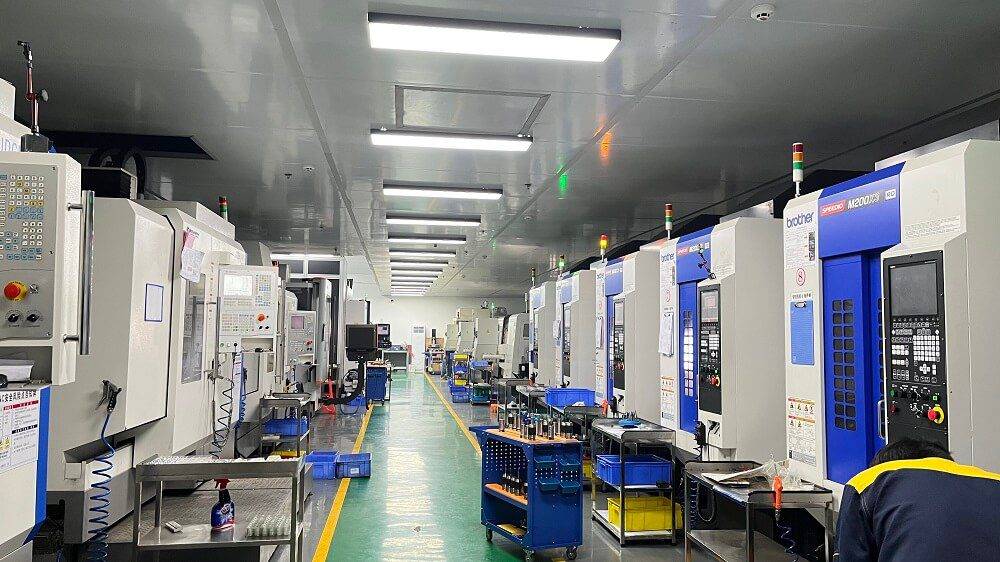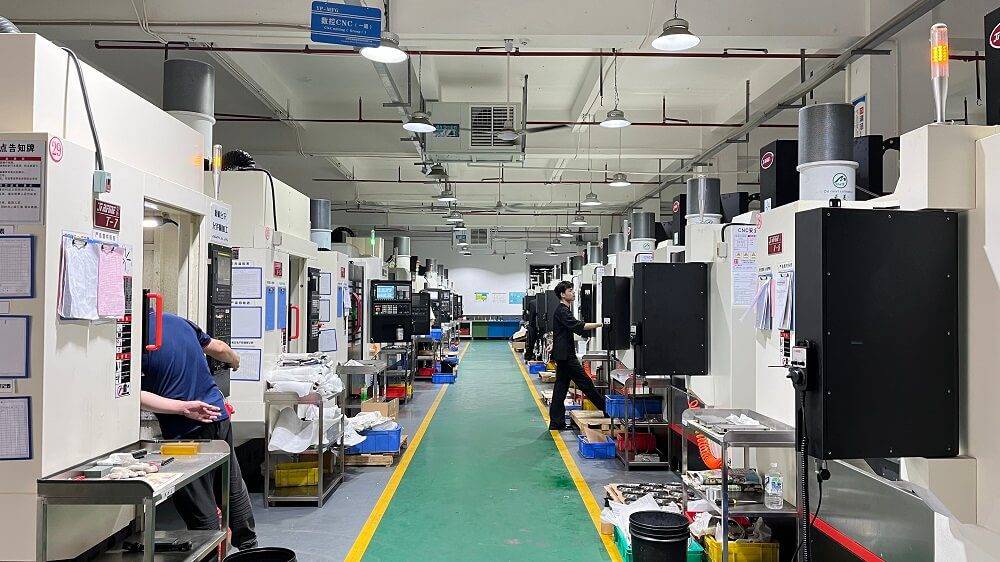
In the workshop, drawings are spread out on the table.
That exquisite aluminum alloy frame has just been CNC machined and shines with a metallic luster.
But the engineer's eyes were heavy.
[Case] There is a large-scale factory. A batch of bottom bracket tubes for mountain bikes are directly sent for oxidation treatment after completion of processing. What happened then? Its surface appears gray, as if suffering from a skin disease.
Why?
The problem lies in the chain formed by the "machining bicycle parts" section and the "aluminum anodizing" link.
The first mine: cutting fluid residue.
Do you expect the machine to do it in one go? Too naive.
During CNC machining, the cutting fluid will penetrate into the micropores of the aluminum alloy. If not cleaned, the oxide film will directly fall into an embarrassing situation.
→ The film layer blooms and the adhesion collapses.
→ Equal to white dry.
The second thunder: the stress is not released.
The processing caused "internal damage" to the parts.
A third-party test showed that the deformation rate of the 7075 aluminum tube that had not been subjected to stress treatment reached 18% after it was anodized!
This is not metaphysics, this is science.
So, what would a knowledgeable person do?
Q/A: Do I have to clean it immediately after processing?
Yes. Residual cutting fluid will block the oxidation reaction, and degreasing must be completed within 2 hours.
Q/A: How to deal with threaded holes to avoid chipping?
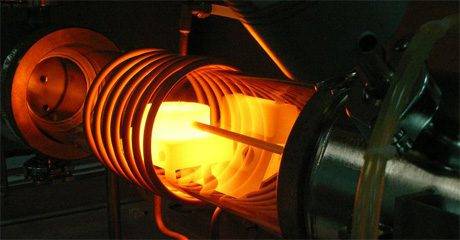
Leave a 0.1mm margin during processing, and then refine the thread after oxidation.
Change your perspective and look at the oxidation tank.
This is the "second battlefield".
The machining accuracy is not enough, how about oxidation? dream!
[Case]: A car shop customized the stem. The chamfering was not done properly during processing and the edge was as sharp as a knife.
What about after oxidation? The edges are "burned" – the current density is too high and the film layer is powdered.
This is a typical example of "digging holes in processing and taking the blame for oxidation".
Tips for article writing: machining accuracy
Let’s talk about the hanging points.
Did you know that a hanger seal can scrap a part?
Professionals all know: when designing a fixture, the "current projection area" must be calculated.
can't read? Very simple:
→ The smaller the contact point of the rack, the higher the risk of burns.
→ But the contact points are too large and cover too much surface.
This is dialectical reasoning.
What's the solution? It is a sacrificial anode method that uses aluminum as a hanger, so that the loss occurs on the tool rather than the parts.
Let me repeat the core point again: "machining bicycle parts aluminum anodizing" must be done well. Processing is the basic part, and oxidation is as important as the decoration link. If there is a deviation in the foundation, no matter how well the decoration is done, it will be like that dilapidated house covered with gold foil but with an unstable foundation.
Emotional transition :
Have you ever encountered parts with uneven colors?
They are obviously from the same batch, some are deep and some are shallow.
Don't worry, this is very common.
[Microscopic details] The difference in oxide film thickness exceeds 5 microns, and the color difference can be seen with the naked eye.
reason? The unreasonable design of the rack causes the current density distribution to look like a roller coaster.
> High-density area: thick film, dark color
> Low density area: thin film, light color
The irony is that many people spend a lot of money to buy imported dyes but are not willing to spend three hours optimizing the hanging equipment.
Tips for article writing: Oxide film uniformity
Future perspective :
Three years later, these "common senses" will be written into ISO standards.
But what now? Still manual work.
I have seen a master craftsman use an aluminum wire to fold out a perfect hanging device.
I have also seen "engineers" use 3D printing fixtures, but the entire slot was scrapped.
Emphasis on resonance: You are not alone. In this industry, a Rashomon-like situation of "oxidation reaction immediately following the processing operation" occurs every day.
The solution is actually not complicated:
【Action suggestions】
1. The "ultrasonic cleaning" process must be added after processing – don't save this money.
2. Chamfer the sharp edge to an R-angle, not less than 0.3mm – this is a lesson learned through blood and tears.
3. The contact points of the rack are designed in a "sawtooth" shape – reducing the contact area while ensuring conductivity.
4. Do "Hall tank test" for each batch – verify the status of the tank liquid, do not blindly trust the formula.
Q/A: What should I do if I find oil spots on the surface before oxidation?
Rework and clean immediately. Forced oxidation will form a "painted face" film, which can only be removed and started again.
Q/A: How to keep the color consistent between different batches?
Record the voltage parameter, record the temperature parameter, and record the time parameter. Every time it is calibrated through a standard sample, the production line will be stopped once the deviation exceeds 5%.
At this point in the article, it’s time to wrap up.
Take another look at your pile of parts.
Those perfect processing lines are waiting for their final transformation.
But don't expect oxidation to be magic.
The core point is once again emphasized, that is, machining and aluminum anodizing of bicycle parts. The act of machining determines the highest limit that can be achieved, while aluminum anodizing determines the minimum. It should be noted that the minimum here does not refer to the absolute low, but the relative lower limit in the entire relevant process range. Together with the upper limit determined by machining, it constitutes the key definition standard for product quality in this process.
Without good processing, oxidation is just graffiti.
Without good oxidation, processing is just streaking.
Call to action :
Check your cutting fluid cleaning routine now.
Go measure the chamfer dimensions of all sharp edges today.
Within the next week, all hanging fixture drawings will be redesigned.
Don’t wait for complaints to come before you cry.
Now, close the document and go into the workshop.
Your parts are waiting for you.