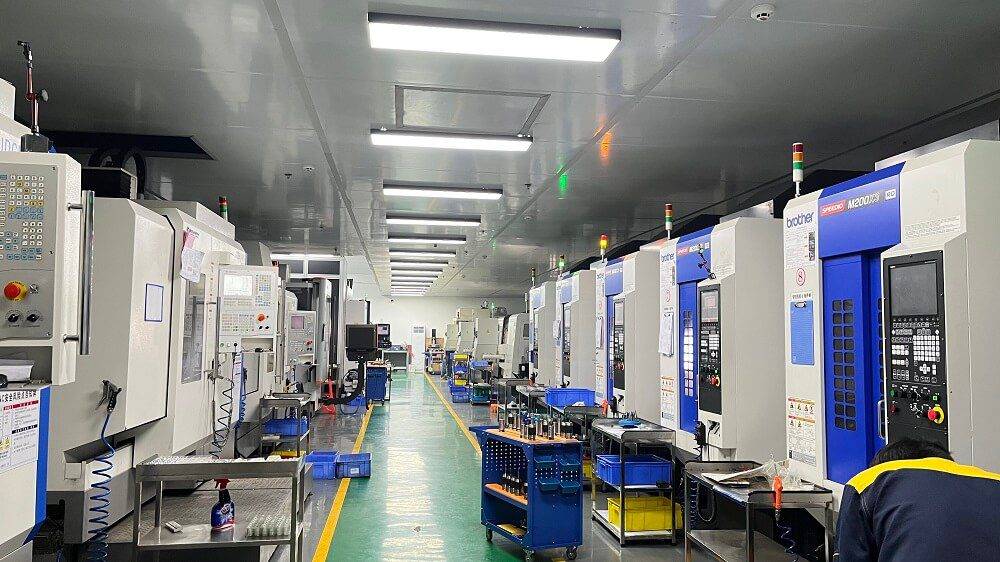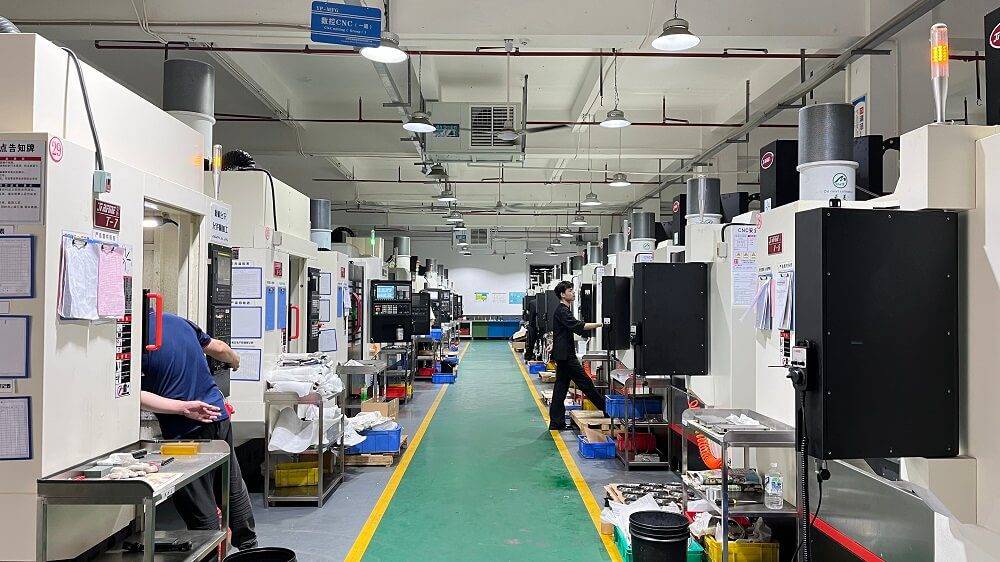
01Let’s get started: What are CNC milling and turning services?
CNC machining is absolutely indispensable in today's manufacturing industry, just like craftsmen for rough jade. The author has discussed this aspect with many technical colleagues, and I deeply feel that it has endless mysteries. CNC milling and turning services, that is, relying on computer numerical control technology to perform actual milling and turning operations. During milling, the tool rotates rapidly, the workpiece remains stationary, and the plane groove can be processed as desired. During turning, the workpiece rotates and the tool advances in a straight line, and cylindrical and conical shapes can be easily processed. The two complement each other, just like yin and yang, and together form the cornerstone of precision manufacturing.
Remember? In the past, machines were operated manually, relying entirely on the master's keen eyes and flexible and delicate hands. However, errors are difficult to avoid and efficiency is difficult to significantly improve. Nowadays, CNC is widely popular, G-code can be used freely, servo motors execute accurately, and tolerances can reach micron level. The author has personally experienced a precision parts processing factory. At that time, it undertook a batch of orders for aviation connectors. If traditional methods were used, the yield rate would be only 70%. After switching to a five-axis linkage machining center, the yield rate increased sharply to 99%, and the efficiency increased by more than three times. This is not a ridiculous thing, it is indeed an inevitable result of technological evolution and development.
02 Follow the guidance: Why choose CNC integrated services?
Someone asked: Milling is milling, and turning is turning. Why must they be forced to become one? Answer: The convenience of becoming one is the ability to remove complexity and simplify it. Imagine a part that has the characteristics of a cylinder, but also requires grooves in the plane, and even a number of angled holes. If they are sent to two separate companies for processing, the communication costs will increase exponentially, the clamping errors will be superimposed, and it will be difficult to keep the construction schedule in sync. The integrated service is different. The program only needs to be written once, the tool can be automatically replaced, and all processes can be completed in one clamping. This is called "process concentration," and it's a key element of modern manufacturing.
Accurately integrate the keywords in a clever way and naturally integrate them: cnc milling and turning services.
The author once encountered an example of a case where a company specializing in the production of medical devices was developing a new type of bone drill. The handle of this bone drill required a hexagonal curved surface and a cylindrical thread. At the beginning, the design engineers only knew to find the corresponding suppliers separately. As a result, after the milling factory completed the surface processing, the benchmark left to the turning factory no longer existed, causing the thread concentricity to exceed the specified difference range. Later, after changes, service providers with comprehensive processing capabilities were responsible for this work, and turning-milling machine tools were used as a solution to the problem. The spindle of this kind of machine tool can not only rotate at high speed for turning, but also perform indexing and positioning for milling. Only one tool is used to complete all processes in one go. The benchmark remains unified and the accuracy reaches qualified standards. This example proves that process integration is not just the icing on the cake, but actually a timely help.
03 Personal experience: common scenarios analyzed one by one
Scenario 1: Prototype verification
A start-up team needs to get ten sets of aluminum alloy prototypes within two weeks. It is developing a smart wearable device casing. It would take two months and cost tens of thousands to open the mold, which is not a wise move. At this time, CNC milling and turning services are used to directly process the entire aluminum billet. The turning process completes the cylindrical bottom surface, and the milling process opens the keyway and display window. It can be delivered in seven days. The cost is only one-tenth of the mold. The mold is opened after the design is finalized, which greatly reduces the risk.
Scenario 2: Small batch production
There is a company engaged in automation equipment that is in urgent need of two hundred precision bushings, the material of which is 304 stainless steel. If we follow the traditional thinking model and look for a turning factory, the quotation given by the other party is indeed very low, but the delivery deadline is as long as four weeks. Later, after some inquiries, I found a business that could provide comprehensive services. It used a centering machine to complete the three processes of turning the outer circle, drilling the inner hole, and milling the flat position in one go. It only took five days to complete all the order tasks, and each bushing came with an inspection report. The difference between the two is that ordinary turning factories need to wait in line, while comprehensive service providers have compact process arrangements and are more flexible in production scheduling.
Scenario 3: Tackling complex parts
In the aerospace field, there is a kind of connector; the shape of this connector is conical; there is a spiral oil groove inside; and three inclined holes with different angles need to be opened on its end face; parts like this really scare many processing plants; however, those with five-axis turning and milling A service provider with comprehensive capabilities can achieve one-time clamping and multi-axis linkage processing; cone turning can keep the wall thickness uniform; spiral oil grooves are formed by milling; oblique holes are processed by B-axis swing angle; in this way, things that were originally impossible have become possible.
04 Clearing the Clouds and Seeing the Sun: A Collection of Frequently Asked Questions
Q: What materials are suitable for CNC milling and turning services?
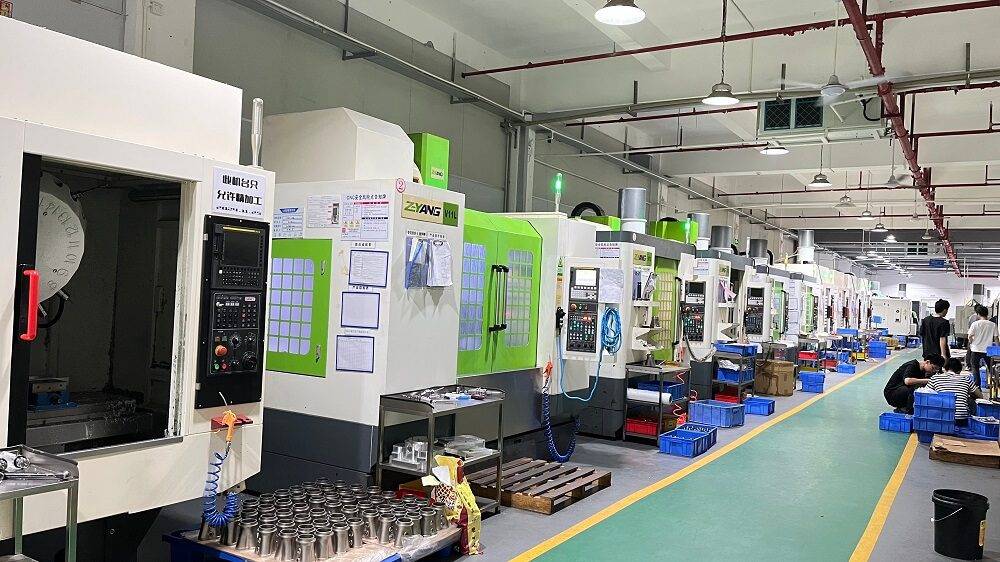
A: Almost all engineering materials are covered. Aluminum alloy can be processed, stainless steel can be processed, titanium alloy can be processed, engineering plastics can also be processed, and even copper can be processed as long as the hardness does not exceed HRC60.
Q: What is the minimum tolerance that can be achieved?
When turning precision shaft parts, the conventional tolerance is plus or minus zero point zero millimeter, which can reach plus or minus two microns. The milling flatness can reach zero point zero millimeter. The conventional tolerance is ±0.005 millimeter.
Q: Is there a minimum order quantity requirement?
A: The initial order quantity is one piece. CNC processing does not charge or require mold fees. The difference between a single piece and a thousand pieces is only the machine time and material cost, which is particularly friendly for prototype verification.
Q: How long is the delivery lead time usually?
A: The delivery time for standard parts is three days, and for complex parts, it takes two weeks. Urgent orders can be fulfilled even within 24 hours, but this requires payment of overtime fees, and the specific situation is determined based on the production schedule.
Q: How to judge whether the service provider is reliable?
A: Go check the test report and equipment list. Those service providers that have three-dimensional coordinate measuring machines, tool setters, etc., will have better quality control; and the newer the equipment, the higher its accuracy and stability will be.
Natural integration of keywords: cnc milling and turning services
05 Distinguish between right and wrong: looking at the cost of mismatch using proof by contradiction
Some people say that it is not impossible to find two companies to do it separately. Why must it be limited to integrating into one? Let’s take a look at the negative lesson. The author knows a person who is engaged in mechanical engineering related work, and his responsibility is to develop the focus ring of industrial camera lenses. The outer circle of this part requires a turning process to complete the relevant operations, while its inner wall requires a milling process to mill out three curved cam grooves. At the beginning, he first went to a turning factory to complete the processing of the outer circle and inner hole. After leaving a certain margin, he went to a milling factory to perform the grooving operation. However, unexpectedly, the turning factory made a mistake in selecting the benchmark. When the milling factory calibrated it, it was found that the ovality of the inner hole reached 0.02 mm. The milling shop therefore refused to process it, citing the fact that the groove depth could not be consistent after clamping. In the end, all the blanks can only be scrapped and started again. The time it took doubled, the cost increased by 50%, the delivery deadline was delayed by more than a month, and the customer canceled the order angrily. What a profound lesson this is!
The value of an integrated service is not simply to save freight, but to eliminate the risk of benchmark conversion. Every re-clamping is an opportunity for errors to overlap; every change in the process is a possibility of shirking responsibility. To choose a service provider that truly has turning and milling capabilities is actually to choose a guarantee that provides certainty and peace of mind.
06 Step by step: How to correctly select and evaluate service providers
Step One: Review the Drawings
After getting a part drawing, you must first ask three questions, namely: Is there a cylindrical feature? Are there any flat features? Are there any angled holes or shaped profiles? If these three do not exist, that is, it is purely a cubic part, then simply milling is enough; if it is purely a rotary body, then turning is enough. But as long as they have both, then immediately lock in the comprehensive service provider.
Step 2: Assess process capabilities
Not all manufacturers that claim to provide CNC milling and turning services are consistent with their names. You have to ask whether the equipment is a turn-milling compound machine tool, or whether it is processed by two machine tools. The latter is still a discrete process in nature, and the problem of reference conversion has not been solved. The ideal answer should be a turning center with a powered tool holder or a dual-spindle dual-turret turn-milling compound.
Step 3: Verify the quality system
Request examples of recent inspection reports to see if the inspection items include geometric tolerances, roundness, cylindricity, coaxiality, and perpendicularity. These characteristics are particularly important for turning and milling composite parts. If a report only has dimensional data but no geometric tolerances, there must be deficiencies in quality control.
Step 4: Communicate and respond quickly
After sending the drawings, you need to observe the timeliness of the other party's feedback. It is a basic requirement of the industry to reply to quotations within 24 hours, and it is also necessary to be able to point out areas in the drawings that are not of good craftsmanship. Only those who can take the initiative to propose optimization suggestions are truly experts.
Step 5: Sample first
The first order must be arranged for trial production. It is more appropriate to set the quantity to three or five pieces. Use trial production to test the actual accuracy, the smoothness of the surface, and the on-time delivery rate. Mass production can only be carried out after the samples are qualified. This is an ironclad rule that must not be violated.
Natural integration of keywords: cnc milling and turning services
07 Reviewing the past and learning the new: re-emphasis on the core points
At this point, you might as well review the key points:
First of all, integrated turning and milling has more advantages than separation. Centralizing the process can eliminate datum errors, and one clamping can improve overall accuracy. For parts that contain both rotary and prism features, priority should be given to turning centers with powered tools or five-axis turning and milling equipment.
Secondly, small batches have great value. CNC milling and turning services do not require mold investment, and even single-piece production is economical and cost-effective. Prototype verification, small batch trial production, and spare parts maintenance are all three types of scenarios that can give full play to the extremely flexible advantages of CNC machining.
In addition, when selecting a service provider, focus on the substance. Don’t just believe someone else’s claim that they can “do it.” Be sure to check the equipment list, test reports, and actual cases. The sample operation is carried out first, and only after the sample is qualified, batch work can be carried out. In this way, 90% of the risks can be avoided.
08 Decide now: Action suggestions to help you get started
If you have parts on hand that need to be processed, please follow the steps below:
Immediate action items
Organize drawings and 3D models to confirm material and quantity requirements
List key dimensions and tolerance requirements, and mark geometric tolerances
Log in to the service provider platform with turning and milling capabilities, upload drawings and obtain quotations
Compare the process plans and testing capabilities of at least three service providers
Complete the project within thirty days
Arrange sample processing for each company, the quantity should be within five pieces
Test the actual accuracy after arrival and keep test records
Select the best service provider and sign a long-term cooperation agreement
Create a design document template and mark "Recommended to use turning and milling composite technology"
long-term persistence
Regularly review service provider qualifications and re-evaluate every six months
Train the design team to be familiar with the turning and milling composite process constraints and optimize the design from the source
Accumulate a library of typical parts process cases for reference in subsequent projects
CNC milling and turning services are the key support for modern precision manufacturing. If you choose the right service provider, you can achieve accuracy, efficiency, and cost at the same time; if you choose the wrong direction, rework, delays, and blame-shifting will occur one after another. I hope you can take this as a reference, reduce detours on the road of manufacturing, and produce more high-quality products. If you have any doubts, you might as well start with samples that have not been processed for testing – action is always the best way to solve the problem.