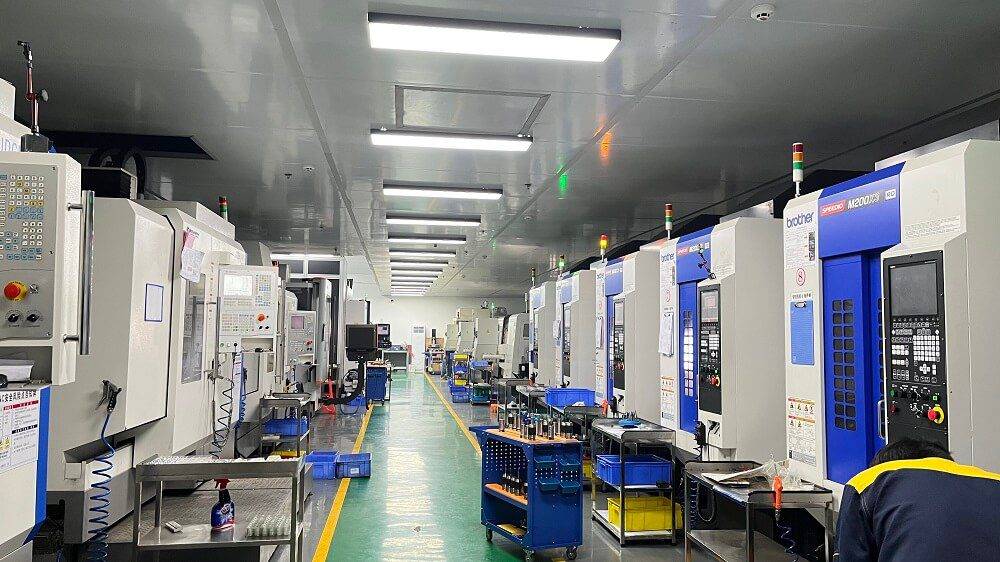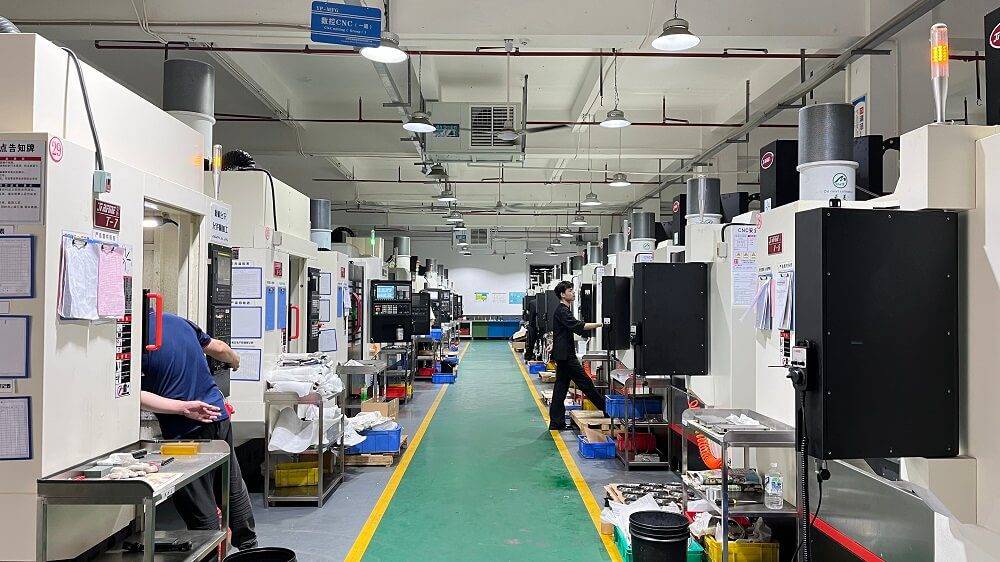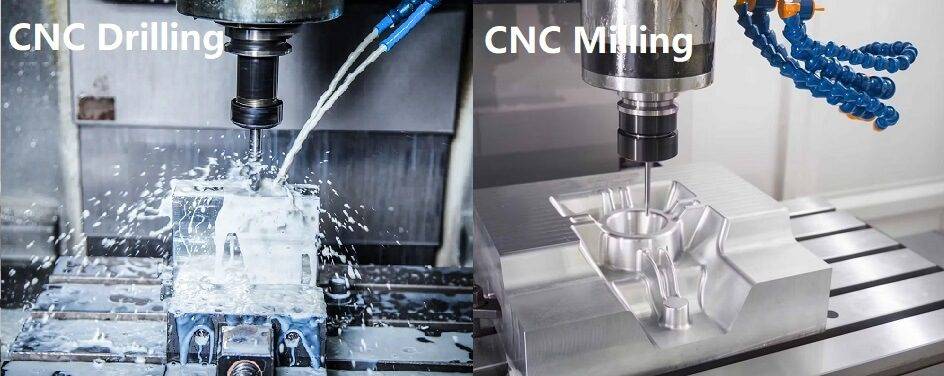
Are you worried about the brass parts drawings in your hand?
I can't find a reliable processing factory, I'm afraid that the accuracy won't be achieved, and I'm worried that the delivery date will be delayed again and again.
Come on, this is the topic we want to talk about today – CNC brass processing services.
This is by no means empty talk.
Behind it lies a complete solution for how to transform a rough brass rod into a part with smooth properties, precision and usability.
Why brass?
Brass is a material that is both easy to process and troublesome.
It sticks to the knife easily.
The chips it produces are like tiny needles that prick your hands and wrap around your knife.
It is extremely sensitive to cutting fluids.
But there is no way. Who made it have good electrical conductivity, corrosion resistance, and also carry a low-key golden luster?
Connectors in electronic products are indispensable.
Valves in precision instruments are inseparable from it.
Even those seemingly inconspicuous pipe joints have brass at their core.
So, the problem lies here.
Can a CNC machining center really crack the "hard nut" of brass?
Yes, of course. But it depends on who is going to chew it and how.
A real case.
A robotics club in some colleges and universities needs to customize a batch of specially-made connecting nuts for the robots they use for competitions.
The material is brass.
There aren't many, only fifty.
However, the tolerance requirements are very strict, within plus or minus 0.01 mm.
They found the school-run factory. The master looked at the drawings, shook his head, and said, they can't do this job. It's too delicate, and our milling machine will eat up this tolerance.
Later, they tried a small online workshop that claimed to do "quick proofing."
The price is quite cheap.
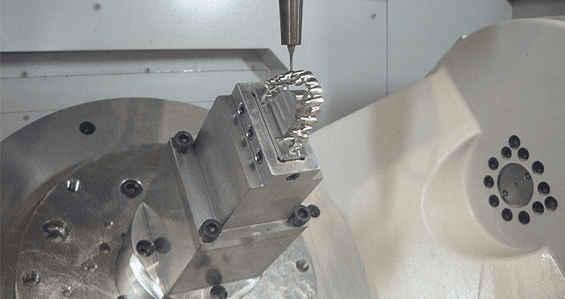
What exactly is the situation? Among the samples sent, the threaded holes were full of irregular burrs with sharp edges, and in many places even the screws could not be screwed in. What's even more annoying is that the outer surface shows very obvious and clear knife patterns in circles, just like that record!
The competition is imminent, but the parts are not available.
What do you think this is?
They searched and found a professional CNC processing service provider.
Note, I said "professional".
The first step is not to just get on the machine and do it.
Instead, use the software to run virtual processing first.
Analyzing the characteristics of brass, specially designed sharp knives with large rake angles.
The tool path has been optimized, using the down milling method, and paired with high-pressure, high-flow cutting fluid. The only goal is to wash away the chips smoothly and cleanly, and never allow them to stay in the cutting area.
The result?
Fifty parts, all qualified.
The thread gauges passed smoothly one after another, and the surface roughness has reached Ra0.8, and the tactile feeling is like a mirror surface.
From confirming the drawing to receiving the parts, it only took five days.
Their robot eventually won the championship.
You said, is a key part important?
This is the difference between professional CNC brass processing services and an ordinary machining shop.
So, what exactly is a good “CNC brass machining service”?
Don't worry, let's peel it off layer by layer.
The first level is "understanding the materials".
There are many different brass grades, including H59, H62, H65, and lead brass HPb63-3.
Did you know? Because lead brass contains lead, the chips are crumbly and relatively easy to handle.
However, ordinary brass has good plasticity and is prone to "built-up edge".
If you don't understand these and directly operate the parameters used to process aluminum alloys, the tool will become dull very quickly, and hair will definitely appear on the surface of the part.
A professional service provider will ask you clearly for your brass grade.
This is not a redundant interrogation, but the beginning of responsibility.
The second level is "can program".

The same drawing, given to two programming engineers, may produce completely different tool paths.
One might choose to be conservative and mill down layer by layer.
Another one may conceive and design an efficient "trochoidal machining" tool path or a "dynamic milling" tool path based on the characteristics of brass.
The processing time of the latter can be shortened by more than 30%, and the tool life is actually longer.
This is experience and more importantly science.
Do you want your parts processing fees to be more expensive when the machine tool is running idle?
Of course not.
The third level is "control accuracy".
Brass expands when heated.
There is a hole that appears to be 10 mm. When the indoor temperature is 25 degrees, the result is accurate. However, when the temperature cools to 20 degrees, the hole may change to 9.998 mm.
A professional workshop will control the ambient temperature.
Sufficient time will be left for the workpiece to cool to room temperature on the machine tool before the final fine processing is carried out.
Although the details are small, what you get is either a substandard part or a discarded defective product.
The fourth layer is "deburring".
This is the step that most people ignore, but affects the experience the most.
A brass part, no matter how well it is used, will feel full of thorns as soon as the operator reaches out and touches it, and may even prick the operator's hand, then the evaluation of such a part will be zero.
For professional services, specialized personnel and processes will be arranged for deburring.
Either use chemical methods to remove burrs, or use high-temperature methods to remove burrs, or the most simple method is to manually use a rotary file to go along all the edges.
The parts delivered to you at the end should have the characteristics of being warm and smooth, and can be placed directly in your hands for play.
Now, let's get back to the original question.
What kind of CNC brass machining service do you need?
The answer is actually very clear.
What you need is not a "machine operator" who can only run the machine.
What you need is a "manufacturing partner" who can review drawings, optimize designs, recommend materials, control costs, and ensure delivery on time.
This is the value of professional services.
Frequently Asked Questions (Q/A)
Q1: I only have a hand-drawn sketch, can I do CNC brass processing?
A professional service provider will assist you in converting the sketch into a standard 3D engineering drawing, and will also confirm all key dimensions. A1 means it can be done.
Q2: What problems are you most afraid of when processing brass parts?
A2: The most fearful thing is burrs and the performance of out-of-standard dimensions. The presence of burrs will make it impossible to assemble the parts, and excessive dimensional tolerance will directly cause the function to lose its effectiveness and prevent it from functioning properly.
Q3: How soon can I get a simple brass bushing?
The fastest is 24 hours. If you want to apply for the "extremely fast proofing" service, you must use a standard material rod, get it on the machine on the same day, and ship it the next day.
Q4: Does machining brass require special cutting fluid?
If model A4 is required, it is recommended to use an emulsion containing extreme pressure additives. The cooling and lubrication effects of this emulsion are far better than ordinary cutting fluids.
Q5: How to judge whether a service provider is professional?
See if they will take the initiative to ask you about the grade, tolerance requirements, and surface treatment requirements. If you don't ask these, it will definitely not be called a professional.
What should you do next?
Very simple.
The first step is to find the drawing in your hand.
Whether it's a PDF, a CAD file, or even just a photo, it doesn't matter.
The second step is to find a service provider that, like YPMFG, has these four levels deeply imprinted in its bones.
The third step is to send the drawings.
You will get a clear feedback.
There may be questions about whether a certain tolerance is reasonable.
It may be a suggestion that a certain sharp corner cannot be machined.
It could also be a detailed quote that includes workmanship, labor hours, materials and total price.
Either way, it is ten thousand times better than looking at the drawings alone and frowning.
Remember, parts don't grow on their own.
But a correct CNC brass processing service will make the path from drawings to physical objects go extremely smoothly.
Don't let unreliable processing ruin your good design.
Now, take action.