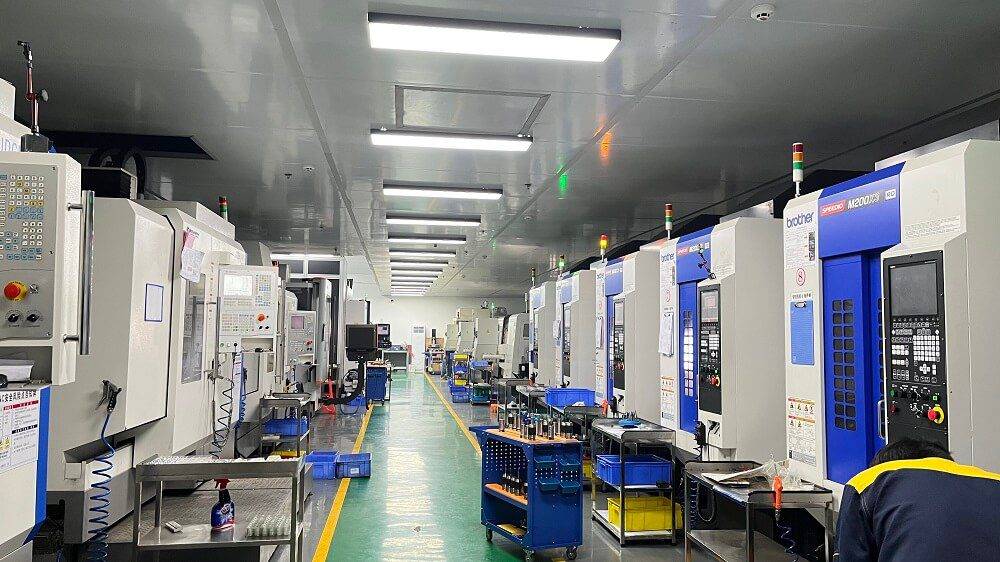
Parts that are called high-precision CNC processing generally refer to mechanical parts with a tolerance range within ±0.005mm and a surface roughness Ra≤0.8μm. If you are purchasing or designing such parts, the core conclusion is: achieving high precision does not rely solely on equipment, but requires closed-loop control of machine tool rigidity, tool dynamic balance, constant temperature environment, and online detection. This article is based on the ISO 286 tolerance standard, based on the ASME B46.1 surface roughness specification, and combined with industry measured data, to provide you with a comprehensive analysis of the full-link knowledge starting from accuracy definition, through process control, and all the way to supplier capability assessment.
01Definition and core indicators of high-precision CNC machining parts
The essential difference between high-precision CNC machined parts and ordinary CNC parts lies in the dimensional tolerance level and surface integrity. According to the international standard ISO 2768-1, the linear tolerance of ordinary untoleranced parts is ±0.1mm to ±0.5mm. For high-precision parts, IT6 or even IT5 level tolerances are usually required. For example, for a shaft with a diameter of 10mm, the width of the IT6 tolerance zone of the shaft is only 9μm (±4.5μm). For more stringent applications, such as hydraulic valve cores in the aerospace field, it can be required to reach IT5 level, with a tolerance band width of 5μm.
Three core indicators that must be mastered:
Dimensional tolerances, according to the ISO 286 system, often use H7/h6 fit, in which the tolerance grade of the hole is IT7 and the tolerance grade of the shaft is IT6. For a diameter of 10 mm, the tolerance for the hole is plus 15 μm to 0 μm and the tolerance for the shaft is minus 9 μm to minus 18 μm.
Geometric tolerances cover flatness, roundness, cylindricity, parallelism, perpendicularity, position, etc. The position of high-precision parts is usually less than or equal to 0.02mm.
In terms of surface roughness, Ra value is the most common parameter. When performing high-precision processing, it can reach Ra0.4 to 0.8μm, while ultra-precision processing can reach Ra0.025μm (this is the level of mirror surface).
The authoritative data sources are ISO 286-1:2010 issued by the International Organization for Standardization (ISO), which is the "Product Geometric Technical Specification GPS Linear Dimensional Tolerance Code System", and B46.1-2019 issued by the American Society of Mechanical Engineers (ASME), which is the "Surface Roughness Standard".
02Five key process control points to achieve high precision
Many users think that as long as they buy a five-axis machine tool, they can produce high-precision parts. This is a common misunderstanding. There are five control points below, any one of which is indispensable. The deviations generated in each link will be gathered on the final part.
1. Equipment rigidity and spindle thermal stability
3) The machine tool spindle has the requirement that the radial runout value must be less than 2μm at 300mm, and the spindle cooling system has the ability to control the 24-hour temperature rise within the range of ±1°C. For example, at an automobile transmission parts supplier, when the workshop temperature reached 32°C in summer, the outer diameter of the parts was out of tolerance by 0.008mm. After installing a constant temperature control system (22±1°C), the product qualification rate increased from 78% to 97%.
2. Tool selection and dynamic balancing level
According to the ISO 1940 standard, the dynamic balance level of tools required for high-precision machining must reach G2.5@15000rpm or above. Using unbalanced tools will produce vibration marks on the workpiece surface, which will cause the roughness to deteriorate from Ra0.4μm to Ra1.6μm.
3. Cutting parameters and path optimization
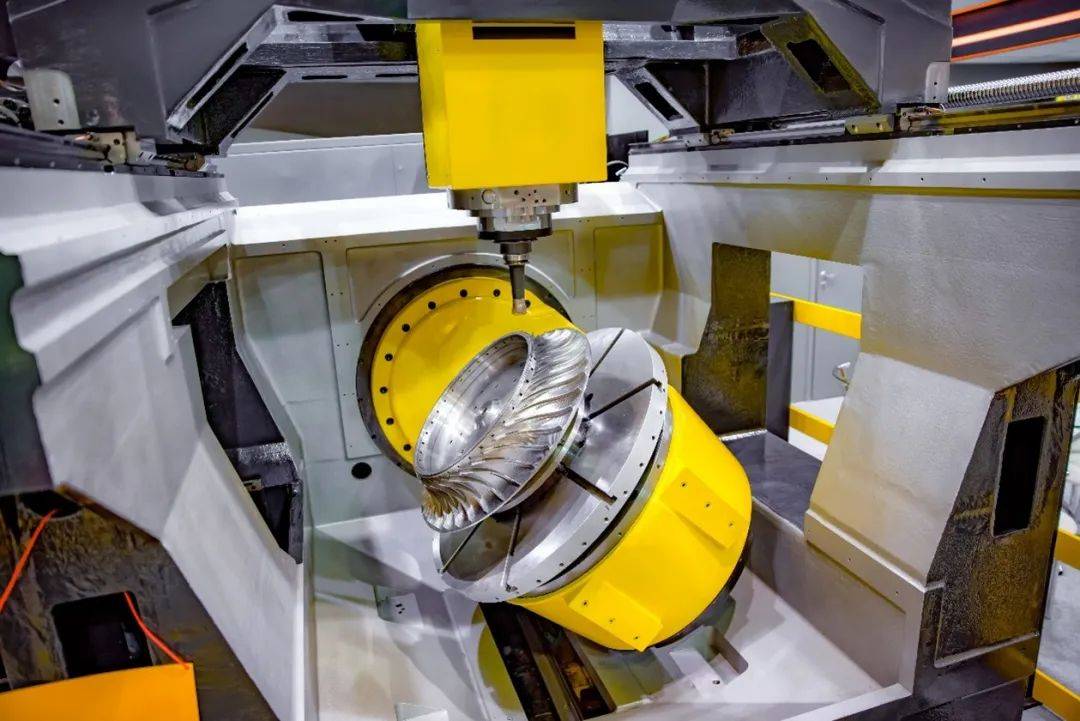
The feed rate, as well as the depth of cut, as well as the spindle speed must be verified through actual cutting tests. For example, when finishing aluminum alloy, the feed per tooth is 0.02mm, the depth of cut is 0.1mm, and the rotation speed reaches 18000rpm, which can obtain a surface of Ra0.4μm. At the same time, it is necessary to use highly stable tool path strategies such as trochoidal milling or spiral milling to avoid sudden loads.
4. Cooling, lubrication and chip control
A high-pressure cooling system with a pressure greater than or equal to 70 bar can effectively take away the cutting heat and prevent thermal deformation. At the same time, the use of minimum quantity lubrication, also known as MQL technology, can reduce the interference caused by cutting fluid residues on dimensional measurement.
5. Full process detection and compensation
When processing high-precision parts, online detection, also known as in-process gauging, must be used during the processing. Common solutions are spindle contact probes or laser tool setters, which automatically correct tool wear every three to five workpieces processed. In the case of a certain medical device part, the probe was used to recalibrate before finishing, and the position error was reduced from 0.025 mm to 0.008 mm.
03Common application scenarios and accuracy requirements for high-precision CNC machined parts
The following are typical specification requirements for high-precision CNC machining parts in different industries (data derived from various industry standards and public technical documents):
04Six practical steps to evaluate suppliers’ high-precision machining capabilities
If you are in the stage of selecting CNC machining suppliers, then follow the following sequence to verify their true capabilities and avoid making decisions based solely on promotional materials.
Step 1: Request a mass production part measurement report
We will provide full-size inspection reports for any three parts in the past three months, covering at least 20 dimensions and tolerances, and must contain CMM (coordinate measuring machine) original data files, not manually filled out reports.
Step 2: On-site inspection of environmental temperature control and shockproof
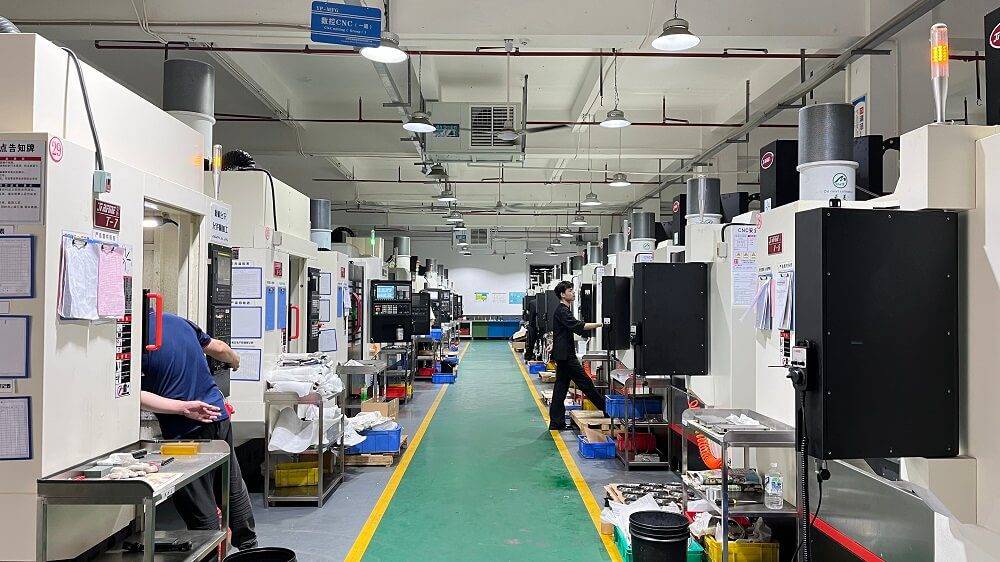
Those workshops with high-precision processing capabilities must be equipped with a constant temperature-related system. The recommended temperature range of this system is 20°C plus or minus 1°C. The floor of the workshop must have an independent earthquake-proof foundation. Remember this: if there is no suitable constant temperature in the workshop, there is no way to stably produce parts that meet IT6 level precision standards.
Step 3: Check the validity period of the calibration certificate
It is proposed to provide a third-party calibration certificate for the machine tool, a third-party calibration certificate for the tool presetter, and a third-party calibration certificate for the CMM, and the calibration date must be within 12 months of the current date. Reports issued by calibration laboratories accredited in accordance with ISO 17025 have more authoritative advantages.
Step 4: Trial cutting verification
Submit your drawings and ask the supplier to process a trial cut piece, and you will designate a third-party testing agency for retesting. This is the "demon mirror" to identify the supplier's true level. In a case involving electronic equipment casings, the supplier had made a promise of ±0.01mm, but the actual test cut piece was measured to be ±0.033mm. The reason was that they ignored the deformation caused by the stress release of the material.
Step 5: Understand its failure handling process
When performing high-precision machining, out-of-tolerance parts will definitely appear. Qualified suppliers should have a clear FRB (Failure Review Board) process and keep all nonconformity records, as well as root cause analysis reports.
Step 6: Examine its tool management and passivation standards
When asked, "Is the replacement cycle of finishing tools based on actual wear, or is it based on fixed tool life?" The appropriate answer is: take the actual edge wear ≤0.005mm measured by the tool setter as the basis for replacement. Only suppliers using a proactive maintenance strategy can prevent batch out-of-tolerance.
05Frequently Asked Questions Q/A
Q1: What is the minimum tolerance of high-precision CNC machined parts?
Plus or minus 0.0025 mm, which is IT4 level, it is the limit that can be achieved by conventional precision machining industry. If the tolerance is smaller than this, ultra-precision machining will be required, and the cost will be extremely high.
Q2: Which is more difficult for high-precision machining of aluminum alloy or titanium alloy?
Titanium alloy is more difficult to process. It has low thermal conductivity. The heat generated during cutting will accumulate, which will cause the workpiece to expand. After cooling, the degree of shrinkage exceeds the tolerance range.
Q3: How to distinguish between "prototype accuracy" and "mass production accuracy"?
It is required to give the situation that CPk is greater than or equal to 1.33, and this is presented by at least 30 consecutive pieces of measurement data, as evidence of mass production capabilities, and single samples can be specially debugged.
Q4: Which surface roughness, Ra0.4 or Rz1.6, represents smoother?
Under the same conditions, Ra is approximately equal to 1/4 of Rz, where Ra is an expression of the average deviation, Rz is an expression of the five-point peak average, and Ra0.4 will appear smoother.
Q5: Will the detection error of the three-dimensional coordinate measuring machine (CMM) affect the judgment?
OK. It is required to use CMM with MPE less than or equal to 1μm to measure tolerances greater than 0.005mm, otherwise the measurement system does not comply with the 1/10 rule.
Q6: Does high-precision CNC machining require additional stress relief processes?
It is necessary to perform tempering treatment after quenching, and also perform cryogenic treatment, that is, in an environment of minus 190 degrees Celsius, or aging treatment, otherwise the release of internal stress will cause long-term deformation.
06Action suggestions and restatement of core views
To re-elaborate the core point, high-precision CNC machining parts are not something as simple as "just buy a good machine tool and make them." It is actually a six-digit integrated system engineering consisting of equipment rigidity, thermal stability, tool dynamic balance, constant temperature environment, online detection, and stress control. If any one of these links is missing, eventually the part will be out of tolerance.
Four suggested actions for purchasers/engineers:
1. Clearly state the process requirements in the technical agreement. This process requirement covers the ambient temperature, which ranges from 20±1°C, and also includes the tool dynamic balance level, which is G2.5. There is also the frequency of online inspections. The frequency requirement is at least 3 calibrations per shift, and do not just write down the finished product size.
2. During the first article verification, simultaneously measure the dimensional difference between "in process" and "after 24 hours", which can directly expose problems with internal stress release. For example, for a certain valve body part, the roundness was measured to be 0.004mm immediately after processing. However, after 24 hours, the roundness became 0.011mm, which indicates that a stress relief process needs to be added.
3. Construct the consistency verification of the CMM measurement system. Send the same standard parts to your designated institution and supplier for measurement. If the deviation exceeds 1 μm, then recalibration is required.
4. Make a priority choice and choose the supplier that has the quality system certification of ISO 9001:2015 and IATF 16949 (related characteristics categories in the automotive field) or AS9100D (this category refers to the aviation direction). These standards have mandatory statistical process control (SPC) requirements for process control.
Please keep in mind one truth: the touchstone of high-precision capabilities is not promotional samples, but the CMM report in the constant-temperature workshop and the CPk data of 30 consecutive pieces. Based on the six evaluation steps and action suggestions given in this article, you can accurately identify partners who truly have the ability to mass produce high-precision CNC machining parts.