
This guide provides essential information about non-standard screw nut hardware parts for engineers, procurement specialists, and maintenance professionals. You will learn definitions, specifications, materials, quality control, and practical solutions for custom threaded fasteners.
01 What Are Non-Standard Screw Nut Hardware Parts?
Non-standard screw nut hardware parts refer to threaded fasteners that deviate from published standards such as ISO, DIN, ANSI, or JIS. Unlike standard metric or imperial screws and nuts, non-standard components have unique dimensions, thread forms, head styles, lengths, or materials tailored to specific applications.
Common examples include:
Custom thread pitches (eg, M8 x 1.25mm instead of standard M8 x 1.25? Actually standard M8 coarse is 1.25, fine is 1.0. Non-standard could be M8 x 1.5)
Oversized or undersized diameters
Non-standard head shapes or drive recesses
Combination threads (different pitches on same bolt)
Left-hand threads where right-hand is standard
Why choose non-standard? Standard parts cannot always solve unique assembly constraints, load requirements, or space limitations. For instance, a machinery repair case: a production line had frequent loosening of standard M10 nuts under vibration. Switching to a non-standard fine-pitch thread (M10 x 0.75mm instead of standard 1.5mm coarse) increased clamping force and solved the issue.
02 Key Specifications You Must Define
When ordering non-standard screw nut hardware, provide complete specifications to avoid mismatches. The following parameters are critical:
Verifiable source: Thread dimensions should comply with fundamental principles of ISO 68-1 (general purpose screw threads) even when non-standard, unless fully custom thread form is required.
03 Material Selection for Reliability
Choose material based on operating environment, load, and corrosion resistance.
Carbon steel (Grade 8.8, 10.9, 12.9) – Highest strength, suitable for structural joints. Grade 12.9 offers tensile strength up to 1220 MPa. Use with corrosion protection.
Stainless steel (A2-70, A4-80) – Good corrosion resistance. A4-80 (316 grade) for marine or chemical environments.
Brass – Decorative, low friction, non-magnetic, moderate strength.
Alloy steel with surface treatment – Zinc plating (up to 72h salt spray), zinc-nickel (up to 720h), or Dacromet (1000h+).
Case study: A food processing plant needed non-standard M6 x 0.8mm screws (standard pitch is 1.0mm) to fit delicate equipment. Using A4-80 stainless steel prevented rust from daily washdowns, and the fine thread allowed precise tension without stripping the soft aluminum housing.
Regarding the keyword "tolerance," you must specify thread tolerance class. For non-standard threads, classes like 4h6h (external) or 4H5H (internal) become even more critical because mating parts have no off-the-shelf substitutes. Always request a first-article inspection report verifying pitch diameter, major/minor diameters, and flank angles.
04 Quality Control for Non-Standard Parts
Since non-standard screw nut hardware lacks mass production validation, implement these QC steps:
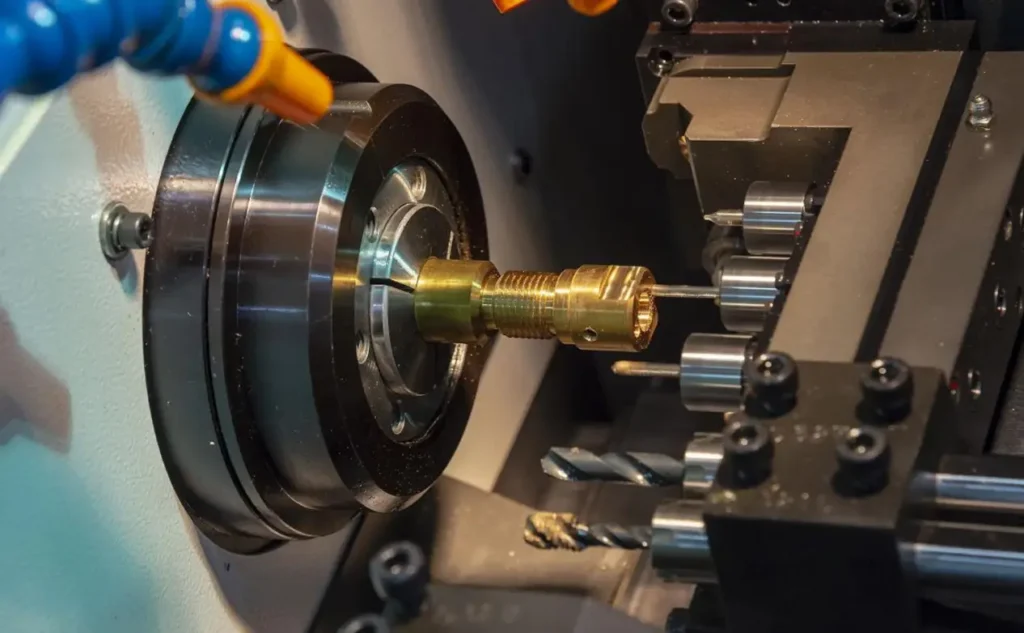
1. Supplier capability audit – Verify they have thread rolling or cutting equipment with CNC control.
2. Material certification – Require mill test reports (MTR) showing chemical composition and mechanical properties.
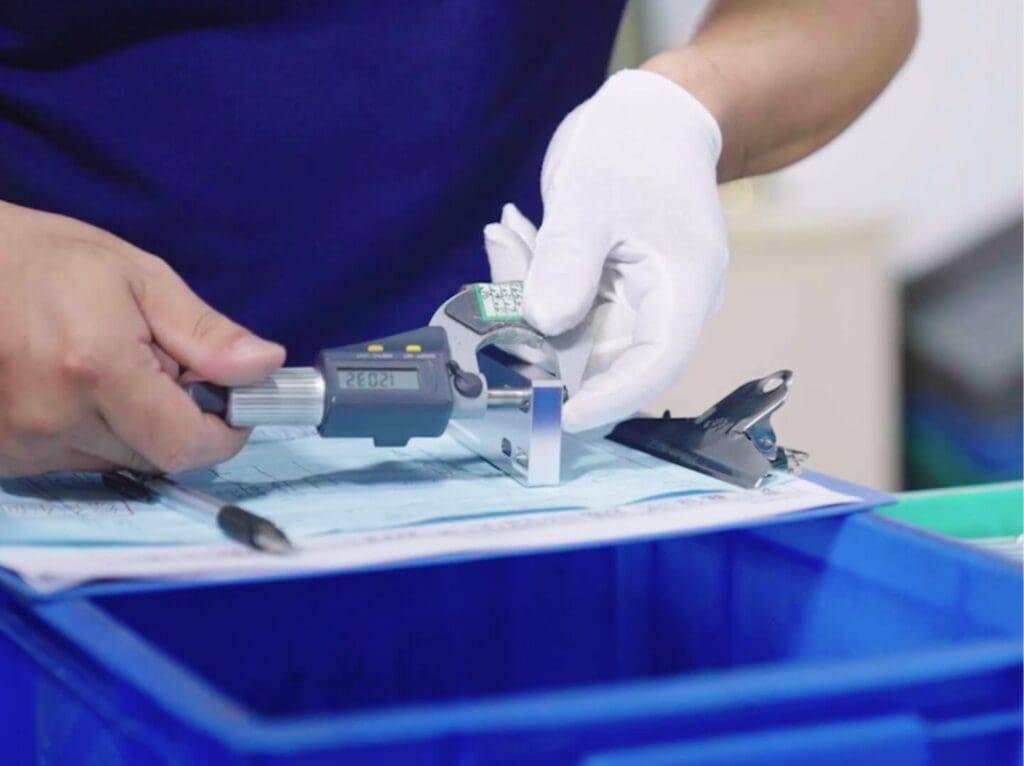
3. First-article inspection (FAI) – Measure all critical dimensions using calibrated gauges or CMM. Acceptable tolerance typically ±0.05mm for diameters, ±0.02mm for pitch.
4. Functional test – Assemble the non-standard nut and screw together. Torque to specified value and check for galling or loosening.
5. Sample batch testing – For orders over 1000 pieces, test 10% of the batch.
Common failure mode: A customer ordered non-standard M12 left-hand nuts but received right-hand parts because the drawing did not clearly mark "LH". Always add "LEFT HAND THREAD" on every view and note.
05 Applications and Industry Use
Non-standard screw nut hardware parts appear in:
Automotive racing – Lightweight titanium lug nuts with non-standard pitch for wheel hubs.
Medical devices – Miniature screws with 0.2mm pitch for orthopedic implants.
Mold and die – Ejector screws with extra-long thread runout.
Aerospace – High-temperature alloy nuts with offset threads for safety wire holes.
Heavy machinery – Oversized flange nuts with non-standard wrench flats.
06 Frequently Asked Questions (Q/A)
Q1: Can I use a standard nut on a non-standard screw?
A: No. Non-standard screws have unique thread dimensions. Mating parts must be custom-made together; mixing standard and non-standard will cause thread damage or failure.
Q2: What is the minimum order quantity for custom screw nut hardware?
A: As low as 100 pieces for simple dimensions, but 500–1000 pieces typically reduces per-unit cost. Contact YPMFG for batch size quotes.
Q3: How long does production take?
A: 2–4 weeks for tooling and first article, plus 1–2 weeks per 1000 pieces, depending on complexity and material.
Q4: Do non-standard threads cost more?
A: Yes, 30–200% higher than standard due to custom tooling, setup, and inspection. However, solving a critical assembly issue justifies the premium.
Q5: Which thread standard should I reference for non-standard design?
A: Base your drawing on ISO 68-1 for thread profile (60° angle) and ISO 965-1 for fundamental tolerances, then modify pitch or diameter as needed.
Q6: How do I ensure interchangeability?
A: Define all dimensions on a detailed drawing with GD&T. Request a sample pair for assembly validation before full production.
Q7: Can non-standard hardware be heat treated?
A: Yes. Specify required hardness (eg, 38–42 HRC) and provide material grade (eg, 4140 alloy steel). YPMFG offers through-hardening and case hardening.
07 Actionable Conclusions & Next Steps
Non-standard screw nut hardware parts provide tailor-made solutions when standards fall short. To succeed:
1. Document every dimension – Drawings must include thread pitch, diameter, length, head style, material, and tolerance. Never rely on verbal specifications.
2. Validate with prototypes – Order first-article samples and perform assembly tests before full production.
3. Partner with experienced suppliers – YPMFG specializes in non-standard threaded fasteners with full in-house metrology.
4. Plan lead time – Custom parts require 3–6 weeks from order to delivery. Schedule accordingly.
Final core point: Properly specified non-standard screw nut hardware, combined with rigorous quality control, reliably solves unique fastening challenges. Start by completing a detailed engineering drawing, then request a quotation from YPMFG with your material and quantity requirements.