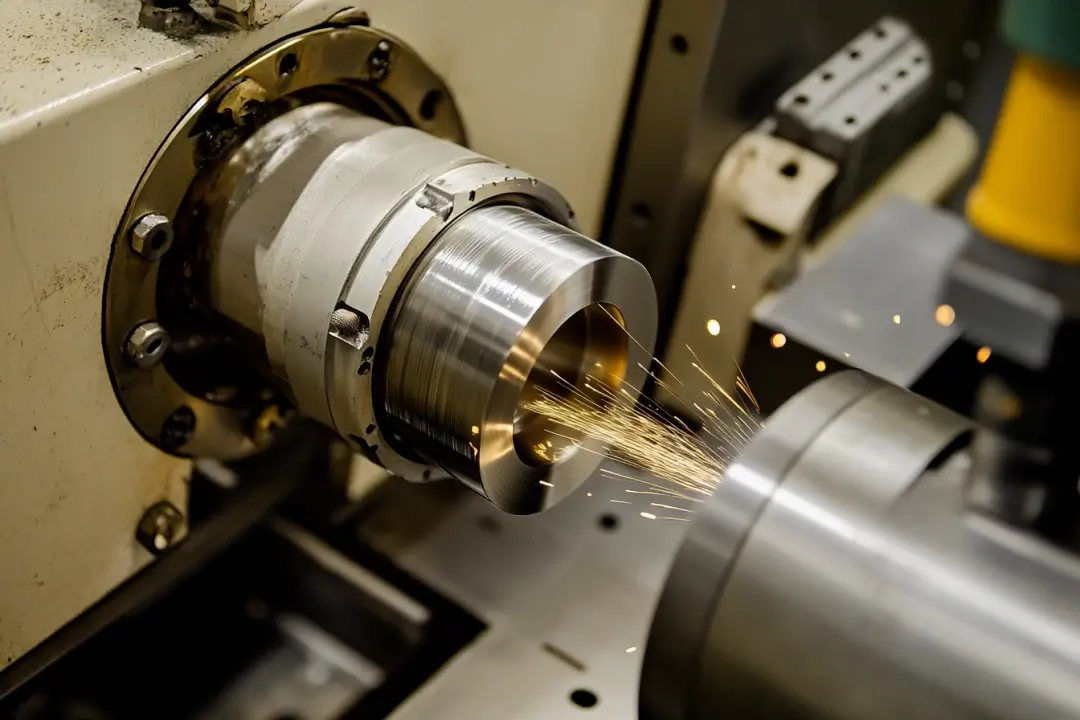
015-axis CNC milling machine: full analysis of definition, core advantages and selection
A CNC machine tool specially used for linked processing, that is, a 5-axis CNC milling machine. It can control the three linear axes of X, Y, and Z at the same time, and can also control the two rotation axes of A and B (or the A and C axes). Compared with traditional 3-axis machining, 5-axis technology can achieve precision milling of complex curved surfaces, deep cavities, undercuts and other surfaces in one clamping operation, which can significantly improve the accuracy and efficiency of processing. Based on industry technical standards and actual measured cases, we will provide you with complete answers to the principles, applications, selections and common questions of 5-axis CNC milling machines. It will be an assistant that can help you make the right decision quickly.
1. The core working principle of 5-axis CNC milling machine
The essence of 5-axis machining is to achieve real-time control of the tool attitude. When the workpiece is in a fixed state or the workbench is rotating, the tool can move along the three linear axes of X, Y, and Z. At the same time, it is equipped with two rotation axes, which is the universal workbench rotation axis. That is, the A axis revolves around the X axis. Rotation, the second is that the B axis rotates around the Y axis, or the C axis rotates around the Z axis, so that the tool always cuts into the material at the best angle. This "linkage" capability avoids the cumulative error caused by multiple clampings during the 3-axis machining process, and allows the use of shorter tools, thereby improving rigidity and reducing vibration.
The key data of the standard derived from the authoritative ISO 10791 is that the positioning accuracy of 5-axis linkage can generally reach plus or minus 0.005mm, and the repeated positioning accuracy is plus or minus 0.003mm. For complex parts such as aero-engine blades, impellers and medical bone plates, 5-axis is the only technical path that can achieve qualified processing.
2. Core advantages of 5-axis machining (with real cases)
2.1 One-time clamping eliminates multiple positioning errors
For traditional 3-axis machining of complex parts, 3 to 5 clamping times are often required, and each re-alignment will introduce errors caused by human operation. There is a mold company that processes automobile panel stamping molds. The size of the mold is 800x600x200mm. If a 3-axis processing is used, 4 clampings are required, and the accumulated position deviation can reach 0.03mm. However, after switching to 5-axis and one-time clamping, the deviation dropped to 0.008mm, and the pass rate increased from the original 82% to 98%.
2.2 Use shorter tools and improve cutting parameters
The 5-axis can tilt the workpiece or tool, thereby reducing the tool length by 40% to 60%. Taking deep cavity machining as an example (the Q/A section will describe this in detail), the short tool has high rigidity, which allows the speed to be increased by 30% and the feed to be increased by 25%, while reducing the risk of tool breakage. There are actual measurement cases: for a cavity with a processing depth of 120mm, the 5-axis uses an 80mm-long tool, while the 3-axis requires a 150mm-long tool, and the processing time is shortened from 35 minutes to 21 minutes.
2.3 Realize complex surfaces and undercut features
The impeller has a streamlined surface and an undercut structure, which cannot be processed by the 3-axis. The propeller, which also has a streamlined surface and an undercut structure, cannot be processed by the 3-axis. Artificial joints and other parts also have a streamlined surface and an undercut structure, which cannot be processed by the 3-axis. As for the 5-axis machine, the tool axis is continuously adjusted through the rotating axis to ensure that the cutting point is always in the best contact area with the tool side edge. According to data from the Journal of Mechanical Engineering, during 5-axis machining, the surface roughness of the impeller can reach Ra0.4μm, without the need for subsequent polishing.
Precise machining is what the essence of 5-axis technology requires. In the case of five-axis linkage, the movement of each axis must be strictly synchronized with the interpolation cycle of the CNC system. If any single axis lags behind, it will cause overcutting or undercutting of the workpiece. Therefore, when choosing a 5-axis device, you must verify the dynamic response accuracy of its RTCP (rotating tool center point) function.

3. Six core parameters that must be paid attention to when selecting a 5-axis CNC milling machine
According to the YPMFG technical white paper (2025 version) and industry procurement specifications, the following parameters will directly affect whether the equipment can meet your processing needs:
Please pay special attention: do not believe in the so-called "theoretical accuracy" easily. It is necessary to ask the supplier for the actual tested S test piece used to provide specific cutting reports. This test piece must comply with the NAS 979 standard. It is specially used to verify the 5-axis dynamic accuracy. The qualification standard is that the contour error must be less than or equal to 0.06mm.
To process complex curved surface parts such as artificial hip joints and turbine disks, there are extremely high requirements for the linkage smoothness of 5-axis machine tools. When processing such curved surfaces, the pre-reading function of the CNC system needs to process more than 2,000 program segments per second, otherwise crawling tool marks will appear. Therefore, when selecting, priority should be given to systems with high-speed and high-precision algorithms such as nano-interpolation.
4. Main application areas and process points of 5-axis CNC milling machines
For aviation blisk-related objects, there is such a specific situation. This processing needs to go through several procedures with clear sequence. The process chain is presented as milling grooves to varying degrees from rough to fine, then milling the flow channel with moderate accuracy and then improving it. Finally, to complete the fine milling of the blade profile, each individual program must use the tool center point compensation function to prevent non-linear errors from occurring during the movement of the rotating axis.
Achieving all processing in one clamping is a demonstration of the core value of 5-axis technology. To achieve this goal, the accessibility of all features of the part must be planned during the programming stage. That is to say, the interference area must be avoided by using an angle head or a special fixture. Statistics show that after adopting the one-time clamping strategy, the auxiliary time is reduced by 70% on average.
5. Frequently Asked Questions Q/A (direct conclusion in the first sentence)
Q1: Is a 5-axis CNC mill slower than a 3-axis?
A: Quite the opposite. Because one clamping can reduce downtime and the short tool can allow higher cutting parameters, the overall efficiency will increase by 30 to 150 percent.
Q2: Is it necessary for a small factory to buy 5 axes?
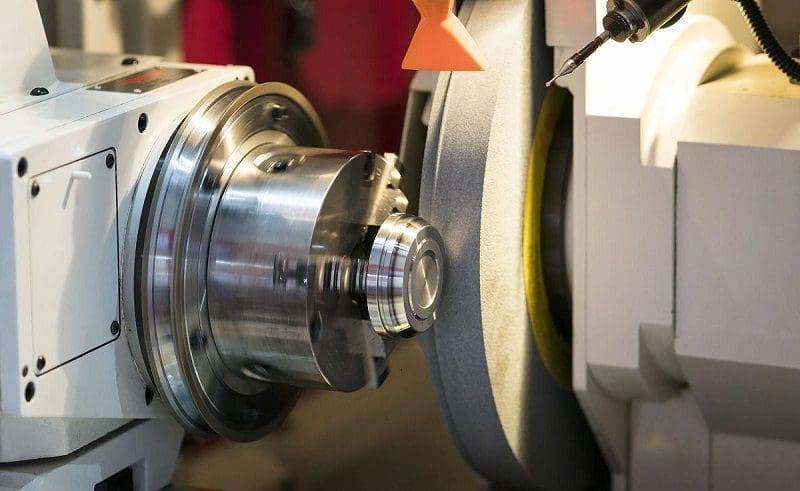
A: It is necessary. The 5-axis can replace multiple 3-axis machines and requires manual clamping for multiple times. This can save the cost of fixtures. It is suitable for single-piece production of complex parts or small batch production.
Q3: Is 5-axis programming difficult?
A: The threshold is high, but CAM software, such as Hypermill and NX, has dedicated 5-axis modules, and post-processing requires experience. It is recommended that suppliers provide training punctuation marks.
Q4: How to judge whether the machine tool is a true 5-axis or a pseudo-5-axis?
A made a request to perform a "RTCP dynamic test", that is, tilt the A-axis and then move the X-axis. In this case, the tool tip should be stationary. If there is a deviation, it is a false 5-axis.
Q5: How much is the maintenance cost?
A: The bearings of the rotating axis and the grating ruler need to be lubricated and cleaned every month. The annual cost is about 1.5 times the cost of the 3-axis equipment. However, there are fewer downtimes due to failures, and the overall total cost is relatively low.
Q6: Is it suitable for high-speed processing of aluminum alloy?
For A, it is suitable to select a spindle speed greater than or equal to 18000 rpm, a feed greater than or equal to 10m/min, and cooperate with MQL minimum quantity lubrication, so that the cutting depth can be greater than or equal to 2 times the tool diameter.
Q7: Can 5-axis machine threaded holes?
A: Yes. Use an angle head or tilting table to achieve thread milling at any angle, but pay attention to the impact of the rotation axis positioning accuracy on the tooth profile.
Q8: How long is the equipment lifespan?
A: With good maintenance, the structure of a machine tool can have a service life of more than 15 years, while the service life of its electrical system is 8 to 10 years. In addition, the accuracy of the rotation axis requires laser calibration every three years.
Q9: Should I buy a cradle style or a swinging head style?
When the weight of the workpiece is greater than or equal to 500 kilograms, choose the swing-head type, which is the type with a fixed workbench; for precision small molds, choose the cradle type, which has a double rotary table and high rigidity.
Q10: How long does it take to train operators?
A: For those who already have 3-axis experience, it will take 2 to 4 weeks to master safe operation and RTCP tool setting, and 3 to 6 months to master programming.
6. Repeat core ideas and action suggestions
The core point needs to be emphasized again: the 50% CNC milling machine is not just a high-end equipment specially designed for large enterprises. It is a standard solution that can solve the pain points of complex parts in the three aspects of "accuracy, efficiency, and clamping." With the help of one-time clamping and the use of short tools to achieve RTCP linkage, even small and medium-sized factories with less than 100 employees can shorten the processing cycle of complex-shaped parts by more than 40% and reduce the rework rate to less than 2%.
Based on the above, I give you 4 action suggestions that can be implemented immediately:
1. Evaluate the characteristics of the parts and list the parts that you need to clamp more than three times. Also list the parts with too long tools (length-to-diameter ratio greater than five). These parts belong to the first priority range of five-axis transformation.
2. For the actually measured S test piece, ask the supplier for the video of the NAS 979 S test piece cutting on the five-axis machine tool and the three-coordinate inspection report. At the same time, attention should be paid to whether the contour error is less than or equal to 0.06mm.
3. To calculate the return on investment, select a typical complex part and compare the man-hour cost of "3 axes plus 2 manual clamping" with the man-hour cost of "5 axes with one clamping". Under normal circumstances, the cost difference can be recovered within 6 to 12 months.
4. Require post-processing verification: clearly state the requirement in the purchase contract and require the supplier to provide a debugged post-processing program. The post-processing program should be specific to your CAM software and run a five-axis linkage cone test program during equipment acceptance.
By following the steps outlined above, you will have the ability to confidently select and apply 5-axis CNC milling technology, taking your machining capabilities to the next level. If you have further needs to obtain a technical parameter comparison table or request an acceptance checklist, please refer to the "Complete Technical Specifications for Five-Axis Equipment Selection" (2026 Edition) issued by YPMFG.